 Eurasia Press & News
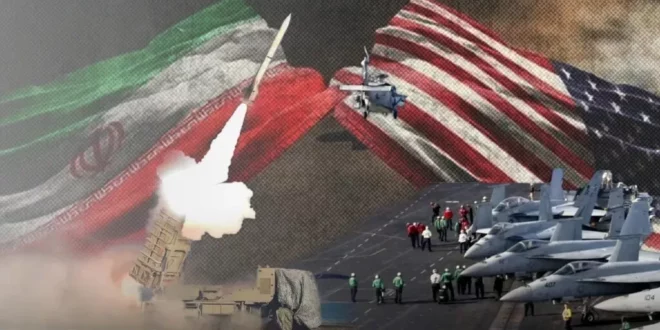
Trump’s war on Iran hasn’t just redrawn battle lines; it has fractured the very architecture of the post-Second World War global order: a transatlantic alliance pushed beyond limits and internally too fractured to be repaired, a rapidly remade Middle East, shifting rules of global oil transit, and a stark exposure of the limits of US power, leaving strategic space that China and Russia will be keen to fill in both geopolitical and geoeconomic ways.
The Fracturing of the Western Alliance System
The most immediate and consequential rupture has occurred within the Western alliance system itself. NATO—long considered the institutional backbone of transatlantic security—has been pushed to the brink by Washington’s unilateral prosecution of the war. European allies not only refused to participate militarily, but in several cases actively restricted US operational access, underscoring the depth of strategic divergence.
In fact, in many ways the US-Iran war — and still is — about securing US dominance worldwide. Iran’s fall would have caused the entire Middle East to fall to US dominance
This is not merely a tactical disagreement; it signals a structural shift. European leaders have been explicit that the Iran war is “not NATO’s war,” rejecting its incorporation into the alliance’s collective security framework. At the same time, Washington’s threats to punish non-compliant allies—through troop withdrawals or political pressure—have further corroded alliance cohesion.
The result is a twofold crisis. First, NATO’s foundational principle of collective defense has been hollowed out by conditionality and mistrust. Second, the broader US–Europe relationship is undergoing a profound recalibration. European leaders, including Emmanuel Macron, have openly questioned Washington’s reliability, warning that inconsistent US policy is undermining the credibility of the alliance itself.
What is emerging is not simply transatlantic “burden-sharing fatigue” but a deeper political estrangement. Europe is increasingly exploring alternative security arrangements that are less dependent on US leadership development that would have been almost unthinkable a decade ago. In effect, the war has exposed a critical reality: the United States can no longer assume automatic alignment from its closest allies. The Western bloc, once the central pillar of global order, is now internally divided—strategically, politically, and normatively.
A Reconfigured Middle East
If the transatlantic alliance has fractured, the Middle East has been fundamentally reordered. Iran has emerged from the conflict battered but strategically empowered, most notably through its enhanced leverage over the Strait of Hormuz, a chokepoint through which a significant share of global energy flows.
Iran’s control over this corridor now rivals, and in some respects exceeds, the geopolitical significance traditionally attached to nuclear capabilities. Unlike nuclear weapons, which function primarily as deterrents, Hormuz offers Iran an active instrument of through which it can impose high economic costs on rivals, with immediate global repercussions.
This shift has had a profound effect on Iran’s relations with the Gulf Arab states. Prior to the war, there were tentative efforts at de-escalation and regional accommodation. Those dynamics have now been decisively reversed. Gulf states, deeply vulnerable to Iranian missile and drone capabilities, must now deal with Iran’s control of the energy corridor.
More significantly, the region’s sectarian geopolitics—long defined by a Sunni–Shia divide—are being reconfigured within a broader great-power competition. Sunni-majority Gulf states are increasingly embedded within a US-aligned security architecture, while Iran, as the leading Shia power, is consolidating its position within a China- and Russia-leaning geopolitical orbit. This does not imply a rigid bloc structure, but it does suggest that sectarian identities are now intersecting with, and being reshaped by, global power rivalries. The implications are far-reaching. The Middle East is becoming a central theater in a wider contest between competing visions of global order. In this emerging landscape, regional conflicts are less likely to be resolved locally and more likely to be subsumed into great-power competition.
The End of Unipolar Credibility
Perhaps the most enduring consequence of the war lies in what it reveals about the limits of American power. Despite overwhelming military superiority, the United States has failed to achieve its core strategic objectives—whether regime change, nuclear rollback, or the durable neutralization of Iran’s regional influence.
At the same time, Washington has struggled to mobilize international support, even among its closest allies. Its inability to assemble a credible coalition to secure the Strait of Hormuz—despite direct appeals—has underscored a broader erosion of influence. This dual failure—of outcomes and of coalition-building—marks a critical inflection point. For decades, US power rested not only on material capabilities but also on perceived legitimacy and leadership. That perceived leadership and legitimacy have eroded, giving China and Russia a crucial opening for expanding their geopolitical and geoeconomic footprint globally.
In fact, in many ways the US-Iran war — and still is — about securing US dominance worldwide. Iran’s fall would have caused the entire Middle East to fall to US dominance. It would choke China’s access to energy. A US control over the flow of energy from the Middle East would have given it massive leverage over Russia’s ability to influence the global energy market, too. That has not happened, meaning the US bid to bomb its way to unchallenged hegemony has been defeated, bringing the end of unipolarity.
The broader lesson is stark. The architecture of global order is not dismantled in a single moment; it erodes through a series of decisions that cumulatively undermine its foundations. The war on Iran represents one such moment—perhaps not decisive in itself, but undeniably transformative. What follows is unlikely to be a stable multipolar equilibrium, but rather a more fragmented and contested international landscape in which power is diffuse, alignments are fluid, and the rules of the game are increasingly uncertain and unstable.