 Eurasia Press & News
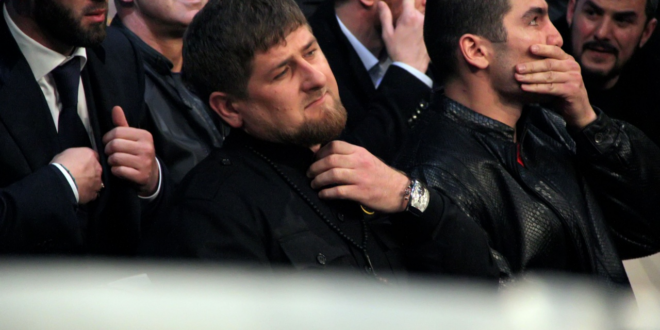
Russia’s strained wartime budget and the prospect of Ramzan Kadyrov’s succession make Chechnya’s future in Russia an open question.
As if Russian President Vladimir Putin doesn’t have enough problems. The war with Ukraine is going badly, the consumer economy is in recession, and Ukrainian drones are targeting Russia’s capacity to export oil and benefit from the price rise caused by the US-Israeli war with Iran. And now ever-troublesome Chechnya may be on the verge of causing even more trouble for Putin.
The strongman system built under Ramzan Kadyrov is showing visible signs of strain. Questions over Kadyrov’s health have intensified. His sons have been elevated into prominent posts. And the regime has been carefully managing the public image of succession, including the reappearance of Adam Kadyrov after much speculation following reports of a car accident in January.
None of this means Chechnya is on the verge of revolt. But it does suggest that one of the Russian Federation’s most volatile regions is entering a more fragile phase just as Putin has less money, less political bandwidth, and fewer security reserves to manage unrest if it breaks out.
Since 2007, Kadyrov has ruled Chechnya as a heavily armed personal domain with unusual autonomy inside the Russian system. Moscow has tolerated that arrangement because Kadyrov delivered order in one of Russia’s most historically rebellious regions. But the bargain has always depended on two things: Kadyrov’s personal authority at home and the Kremlin’s ability to keep funding and backing him. Both now look less secure.
Recent events suggest the system is under pressure. In January, Kadyrov elevated his 20-year-old son Akhmat Kadyrov to the post of acting deputy prime minister, a move later ratified by Chechnya’s parliament. He has also reshuffled elite ranks, sidelining longstanding power brokers while promoting loyalists, family members, and key propagandists as rumors around his health have intensified.
This may look like orderly succession planning. But it may also reflect a more brittle reality: in personalist systems, power does not always pass smoothly from father to son just because the ruler wants it to. In Chechnya’s case, rival clans, security figures, and Moscow itself all get a say.
That matters because Russia’s war in Ukraine is making the Kremlin less able to impose its preferred outcomes on the periphery. The war has become all-consuming, draining state coffers, tightening labor markets, and narrowing Moscow’s room for maneuver across the federation. Putin is no longer managing Russia from a position of strength.
For years, the Kremlin could afford to buy stability in Chechnya. Moscow reportedly sends billions of dollars in subsidies to the republic each year, helping sustain the patronage networks and security structures that underpin Kadyrov’s rule. But the economics of that arrangement are worsening. Russia’s energy revenues fell sharply in 2025, the federal budget deficit widened far beyond Moscow’s own projections, and military spending now consumes an ever larger share of national output. If Moscow’s financial leverage weakens, the political compact with Grozny may weaken with it.
The war has exposed another danger, too: the risk of empowering semi-autonomous armed clients. Putin already had one warning in 2023, when Yevgeny Prigozhin’s Wagner mutiny showed how quickly a force built to serve the state could become a threat to it. Chechnya, an autonomous republic, is not the Wagner Group, a private mercenary company. But Kadyrov’s system rests on a similar gamble: that Moscow can outsource coercive power to a loyal strongman without eventually paying a political price. That bet looks less safe the longer the war drags on.
The Kremlin has additional reasons to be nervous about the North Caucasus. Researchers tracking war casualties have noted that Chechnya and Dagestan have seen relatively lower mobilization and casualty levels than some poorer Russian regions. That suggests Moscow understands how combustible the region remains and fears what could happen if too many trained, armed men return home with combat experience and too few prospects.
A grim new reality backs the Kremlin’s fear of returning veterans. State data briefly acknowledged nearly 250,000 unemployed veterans returning to a Russia that lacks the social infrastructure to absorb them. Veterans’ unrest in other regions can trigger a chain reaction, spilling over into places such as Chechnya.
Kadyrov has tried to present himself as a reliable wartime hawk, insisting in January that the war should continue “to its conclusion” and opposing negotiations. But such displays of loyalty can also signal dependence. The more insecure the Kremlin becomes, the more Kadyrov must prove his usefulness to Putin. Yet conspicuous loyalty is not the same thing as durable control at home. In fact, it can be a sign that control is being tested.
Meanwhile, Kadyrov himself seems to sense the shifting winds; reports indicate he has secured a “Plan B” in the UAE, obtaining citizenship for his nephew Khamzat and moving family assets to Dubai. It is seemingly a vote of no confidence, as even Putin’s most loyal foot soldier is scouting for an escape hatch.
The Kremlin’s energy wealth has long subsidized Kadyrov’s de facto independence, but the floor is falling out from under it. As the war is now in its fifth year, Russia’s energy revenues dropped by 20 percent in 2025, and the federal budget deficit has ballooned to 2.5 percent of GDP—five times higher than Moscow’s own projections. Although the conflict in Iran is helping boost Russian revenues, at least in the short term.
As the Kremlin redirects 8 percent of GDP to the military, the massive federal transfers that keep the Kadyrov regime compliant are no longer guaranteed. To keep the war going, Russia has, in effect, been eating itself economically. Therefore, a Chechnya that Moscow can no longer afford to bribe is a Chechnya with every incentive to walk away.
“There are many dissatisfied people in Chechnya, and many of them are in the Chechen elite. And if they feel that the system has weakened enough and it is possible to reveal themselves and start fighting it, they will definitely do so,” said Dmitry Dubrovsky, a researcher from Charles University in Prague.
The Kremlin’s push to ban Telegram has been deeply unpopular, as Putin grows increasingly nervous about the mood inside the country. With the bulk of Russia’s military committed to Ukraine, renewed unrest in Chechnya could force the Kremlin into a painful choice: pull forces from the front and risk battlefield setbacks, or allow instability to spread in the North Caucasus.
Chechnya is highly unlikely to secede until and unless conditions in Russia continue to deteriorate. At some indeterminate point in the near to medium term, battlefield losses—currently at about 1,000 per day—will become unsustainable. A fully militarized economy will also be increasingly unable to sustain a lost war.
If the Russian Federation continues to resemble the Soviet Union in its dying days, the temptation to jump a sinking ship will become irresistible. Intra-elite power struggles will rise to the surface, threatening Putin’s rule. Given Chechnya’s history of opposition to central Russian authority, which Chechen leader would refuse to seize the opportunity of a lifetime and pursue independence?