 Eurasia Press & News
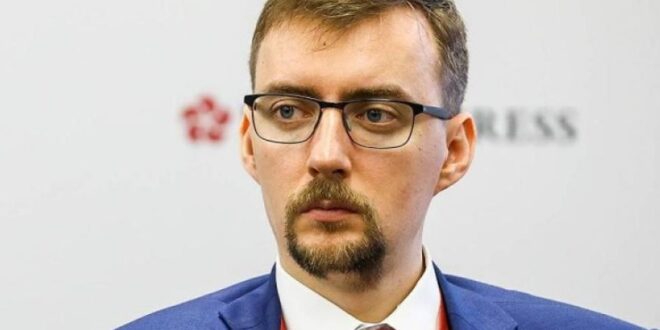
For Ivan Timofeev, director-general of the Russian Council on Foreign Relations, war demonstrates that smaller countries can be engulfed in conflicts they did not seek.
Despite Pakistan’s leadership in diplomatic mediation efforts between the US and Iran, Russia appears to be playing a significant role behind the scenes. The visit of Russian Foreign Minister Sergei Lavrov to Beijing on April 14th and 15th—to whom many attribute the true leading role in the Islamabad negotiations—was accompanied by numerous phone calls to his counterparts in Iran, the United Arab Emirates (UAE), Turkey, and Saudi Arabia. This was to be expected, given the strategic importance of the Russian-Iranian partnership, both being members of BRICS and the Shanghai Cooperation Organisation (SCO).
Brasil de Fato was received by the Director-General of the Russian Council on Foreign Relations (RIAC), Ivan Timofeev, at the organization’s headquarters in Moscow, to discuss the current state of the war, some perspectives for the future of the region, and the Russian position regarding the conflict, which could escalate again in the coming days.
According to Timofeev, who is also the program director of the prestigious Valdai Club, “it is evident that Iran faces enormous damage to its industry and economy. It will be very difficult to rebuild these capabilities, which have been eroded by the United States and Israel. But, at the same time, Iran has demonstrated a high level of resilience.”
He agrees that, indirectly, Russia has gained some short-term benefits from the war, as it diverts focus—and potential resources—from Ukraine, while at the same time “oil prices are favorable to Russia, and the country has the opportunity to support its allies, such as India, China, and the ASEAN countries, which may suffer from deficits in the oil market,” but he warns that in the event of a prolonged war, a potential global economic recession could damage the Russian economy.
Regarding the conflict in Ukraine, Timofeev believes that the prolongation of the war depends on the amount of resources Ukraine receives from the US and the EU, although he still believes that US President Donald Trump is trying to find a way out. “Trump considers Ukraine more of a liability than an asset in his foreign policy investment portfolio,” he says.
The Director-General of RIAC also reflected on some challenges for the modernization of contemporary Russia and highlighted an important lesson to be learned from Chinese partners: “China has managed to create its own school of industrial engineering, which is increasingly independent of Western patents and technologies (…) they are quite autonomous and can make their own decisions.”
Below is an interview with Ivan Timofeev for Brasil de Fato:
Brasil de Fato: The last article you wrote about Iran was published about two weeks after the start of the war, on March 10th. I thought it was a bit pessimistic about Iran’s situation and its chances in the war. Now more than 40 days have passed and, according to many analysts, Iran is gaining the upper hand; even the former head of MI6 stated this a few weeks ago. Do you agree with this assessment that Iran is now at an advantage, or not? What is your overall assessment of the war?
Ivan Timofeev: Well, first of all, the war is not over yet. It is clear that these negotiations are only a kind of short, temporary pause in this military campaign against Iran, and it is very likely that we will see another round of bombing and air and missile attacks against Iran. I am not sure if there will be a ground operation, but the military pressure against Iran will continue. The problem for the US and Israel is that the political results of this military pressure are still limited. Of course, Iran faces enormous damage to its industry and its economy. It will be very difficult to rebuild these capabilities deteriorated by the US and Israel. But at the same time, Iran has demonstrated a high level of resilience, despite the death of the Supreme Leader and many other high-ranking officials. The country continues to operate, react, and counterattack. Therefore, we will see, of course, the level of this resilience in the future.
The US has sufficient capacity to wage a war of attrition against Iran. Therefore, Iran will have to deal with this threat from a long-term perspective. The situation surrounding the Strait of Hormuz remains in a sort of stalemate. The US has just declared a naval blockade of this strait. But the financial benefit of this transit is not the main motivation for Iran. The main motivation is political. Therefore, if Iran continues to effectively impede this transit through the Strait of Hormuz, the situation will remain quite tense, and Iran will continue to have the upper hand in this game.
Therefore, it’s clear that one of the most affected actors is, naturally, the Gulf monarchists. I’m referring to Qatar, Bahrain, and the United Arab Emirates, and to some extent, Saudi Arabia. And, of course, Iraq. Iraq is not a monarchy, but it remains an important supplier of oil to Basra. Therefore, they are hostages to the situation. In a way, they have to accept the situation as it is, with few instruments to influence it in their favor.
Do you think US hegemony in the region is threatened? Because the bases were destroyed, security was not guaranteed.
The US campaign is a problem for them. They’re not part of this game. They have to accept the situation as it is. Therefore, at the same time, they are the target. And Iran continues with the attacks, including against the oil infrastructure, which is not critically destroyed, but still suffers from potential attacks. The region remains risky, unlike the situation before the war, when it was a safe haven. In fact, Dubai is an important logistics and financial center. Other emirates are also very prosperous. Saudi Arabia is a rich state. Others are also in good financial standing, including Qatar—which is very influential in the media, etc. But now they are under enormous pressure because of this situation. And this campaign against Iran has not increased their security. It has decreased their security.
Recently, Foreign Minister Abbas Aragchi gave an interview to Al Jazeera. At one point, he said: “The security of our region can only be guaranteed by ourselves, not by any foreign power. Therefore, we have to work on this from now on.” When I heard this, I understood that he was saying diplomatically: “Guys, if you want to talk about security, talk to us. Because we can guarantee it, not the US.” What do you think of this assessment?
It is true that the security of the region must be guaranteed by regional actors. This is very reasonable and legitimate. At the same time, the US cannot be neglected. The US is an important actor. It has military bases in the region. It maintains alliance relations with several countries in the region. Therefore, this is a reality that cannot be ignored.
But do you think the foundations will be rebuilt?
Yes, and I’m almost certain they aren’t critically compromised. Therefore, the US will remain in the region. That’s quite clear. However, it’s better for Washington to maintain relations with the region based on respect and trust. For several reasons. Respect and trust work better than force. Especially in the Islamic world. Anywhere in the world, everyone needs trust and respect and values it much more than force. Therefore, probably in a long-term strategy, it might be wise for the US to better involve its allies in its plans. But the current situation is, naturally, something that could significantly undermine that trust and respect.
Let’s talk a little about Russia now. Due to the war against Iran, the US is spending an enormous amount of resources—money, people, energy, everything. And at the same time, the US has fewer resources for Ukraine, which wasn’t even on the priority list, but it’s another war nonetheless. Meanwhile, with the high prices of oil and gas, Russia is making a lot of money. There are some estimates, perhaps almost a billion dollars a day. So, would you say that Russia is one of the indirect beneficiaries of this war?
Of course, technically speaking, Russia has some gains. The overall focus has now shifted to Iran, although even before the Iran war, Ukraine had almost disappeared from the global agenda; therefore, it’s not 2022 or 2023. Ukraine receives far less global media coverage, and there’s a kind of fatigue regarding this issue. It can’t be constantly on the agenda. And Iran has accelerated this campaign, accelerated this process. Ukraine is not the priority on the US foreign policy agenda as it used to be under [former President Joe] Biden. Now, the Middle East has re-emerged as a major issue on the list. Of course, allies in the Gulf will demand more equipment supplies, and I’m sure the US will be able to meet those demands. However, Ukraine may suffer from shortages for some time. It’s unclear what the real numbers are, but that’s possible. It is also true that oil prices are favorable to Russia, and Russia has the chance to support its friendly countries, such as India, China, and the ASEAN countries, which may suffer from oil market deficits. And Russia can compensate for these volumes in one way or another.
Especially now that the sanctions have also been lifted, right?
Well, they weren’t suspended; there are exemptions, they weren’t suspended as legal mechanisms. But, in the end, these are tactical gains. There are some challenges, of course, strategic challenges at the same time. One of the challenges is that if the situation deteriorates for a long period, it could affect the global economy; the decline in the global economy could decrease the demand for oil and commodities, which could affect prices. Therefore, strategically, there are challenges for Russia that must be taken seriously.
Speaking about the challenges: Russia has a very important relationship with Iran, from the military sphere (Iran helped Russia at the beginning of the war with drones) to logistics (with the construction of the North-South Corridor). From BRICS and the SCO to the nuclear program for peaceful purposes (Russia is a key partner), and also financial cooperation (since both countries are under sanctions and excluded from SWIFT). Is Russia providing any kind of assistance to Iran?
Russia has expressed its absolute political support for Iran, calling things by their proper names, stating that this is a military aggression. Russia is fully committed to the 2025 treaty with Iran. Russia does not support Iran’s enemies, and Russia does not deteriorate the existing partnership with Iran because of war. Therefore, Russia fully complies with the commitment established in the treaty. This treaty does not imply [military] alliance relations , therefore Russia is not obliged to engage in military action to defend Iran? We do not know the numbers and the essence of military cooperation between Russia and Iran. This is something that, naturally, is shrouded in the fog of war. But, in short, Russia is a country that is an important neighbor of Iran and an important partner of Iran. At the same time, Russia maintains good relations with the Gulf monarchies, with Saudi Arabia and with the United Arab Emirates. These countries have never adhered to Western sanctions against Russia. They are good friends and, in fact, are not enemies of Iran either.
Therefore, they suffer from the conflict, but they will not join this campaign. In this sense, the war against Iran is not something that will lead Russia to harm relations with monarchies. These relations are fully safeguarded, remain in good shape, and Russia is demonstrating a high level of diplomacy in maintaining these relations. I would say that, even in relations with Israel, we have well-established relations. Of course, Russia criticizes the attack against Iran, but tries to maintain relations with Israel at an acceptable level. Even in the case of the US, talks and interaction between Russia and the US on Ukraine continue. They have not yet brought any success, but Russia is not closing the door. Therefore, overall, Iran is an important partner of Russia.
But if Iran loses, how much do you think Russia would lose?
If Iran loses, it will be a major problem for the idea of sovereignty in general, for the idea of trust in international relations. Therefore, it will be a bad sign for diplomacy as an institution, globally speaking, due to the assassination of national leaders, due to the attack during negotiations. This is something that is not generating trust. On the other hand, the losses for Russia will not be critical, although they could be delicate, since Iran is a large neighbor. And in the south, Iran is a stakeholder in the North-South corridor, and if there is a change of power in Iran, we are not sure what the outcome of that project would be.
Does the same apply to the nuclear program?
The same goes for the nuclear program, the same goes for trade, which has accelerated in the last four years. And then another question is: what kind of power will emerge in Iran? Would it be some kind of stable political system? I’m not sure, because some countries can be stable under the control of a foreign country, especially a country as old as Iran, which is a civilization in itself. So, would it be stable under someone’s external management? I’m not sure.
Therefore, Russia is interested in a stable Iran, a stable and prosperous Iran, where political power is recognized and legitimized by its people. Of course, we are aware of the internal problems in Iran; there have been protests, etc. But this is a sovereign matter for Iran, so the Iranians must resolve it on their own. If someone helps them, it will not be stable or sustainable.
So far, mediation efforts have been publicly led by Pakistan, but many people argue that it is actually China that is behind the scenes, because Pakistan went to China, they met there, and then presented the five points, etc. But do you think that if the current situation doesn’t work out, Russia could play a role in mediation, given that it maintains good relations with all the other parties involved?
I’m not sure. Mediation is a huge responsibility, and when a mediator embarks on their mission, they must make a sober assessment of the chances of success for that mediation. And if success is doomed, then it’s simply not reasonable to conduct such mediation. Therefore, I’m not sure if it’s reasonable for Russia to be a mediator. Probably, for Pakistan, it’s a little more comfortable, for one reason or another, but I’m not sure Russia has a chance of being a successful mediator at this time.
You recently wrote an article published on the Valdai Club website, which was also the first article in the new Valdai Club column in Brasil do Fato. It was about the Iranian crisis and the lessons for Russia. You said there are seven lessons. Could you summarize these lessons in your reflections?
Well, there are several important lessons. One lesson is that diplomacy alone does not guarantee, does not prevent war. War can start at any moment, leaders can be targeted, sanctions can be a precursor to war, and diplomacy is necessary to avoid diplomatic isolation. When war begins, there must be some security guarantees, so as not to be left alone. And the main lesson is that the balance of power remains the backbone of foreign policy. Therefore, if you want to be secure, you must counterbalance a specific attack against you or a specific hostile action, because when your opponent understands that you can counterbalance, they become demotivated to attack. This old-time logic is resurfacing in international relations. And, unfortunately, we are returning to the world of the balance of power.
Do you think it’s time for the global majority to start discussing or reconsidering military alliances as a way to counterbalance the aggression of some countries?
I’m not sure if the global majority is ready for this right now, to establish some military alliances, because the global majority is very diverse and very heterogeneous. However, small countries, medium-sized countries, and even larger countries, which now find themselves in a kind of diplomatic isolation, will have to think about this, about alliances and the sustainability of those alliances. On the other hand, the United States’ allies will also have to reconsider, review their relationships. They will probably remain allies, but this is a lesson for them: that alliance can bring not only security but also insecurity, when strategic interdependence leads to involvement, to conflict, even when this is not sought by these smaller participants, as is the case with the Gulf countries currently.
Now, shifting slightly to the situation in Ukraine. It’s been almost a year since the Anchorage meeting. There was great hope at that time. Everyone expected a solution. But recently, the Russian Foreign Minister, Sergey Lavrov, said that the spirit of Anchorage is dead. What are your expectations regarding the course of the military uprising in the coming months? Are we now closer to a diplomatic resolution or to a prolongation of this war for some time yet?
It depends on the volume of aid, both military and financial, directed to Ukraine by the US and the European Union. If this aid remains stable, Ukraine will have the resources to continue its military efforts. Russia can also continue its military efforts. Therefore, both sides have the resources to continue fighting and little incentive to make concessions. Thus, the diplomatic outcome requires a decisive military victory. If there is a decisive military victory, diplomacy will emerge at some point. At the present moment, the situation does not offer such an opportunity. I am almost certain that Mr. Trump considers Ukraine more of a liability than an asset in his foreign policy investment portfolio. Therefore, it is something that requires resources but does not yield profits. He will probably continue to look for ways to get rid of this burden. I am not sure if he will succeed. But ultimately, what I see from the Russian side is that we will not compromise our demands or our core interests. There is no incentive for us to do so.
One thing that worries me is seeing the kind of narrative that has been constructed in Europe, especially in the last year, according to which Russia is now a threat of invasion to Europe. Therefore, Europe needs to rearm. For example, Germany approved a budget of 900 billion euros in the Bundestag a few months ago, of which about 500 billion is earmarked for rearmament. Do you think that, even with the resolution of the war in Ukraine, since the “Russian threat” is a very useful narrative for some leaders in Europe, the EU is still a major problem for Russia due to these conditions?
We are in hostile relations with the European Union. These hostile relations will remain hostile as they are. The increase in the military budget will be a fact. Europe will rebuild its military industry. However, the question is about transatlantic solidarity based on opposition to Russia. There are enormous contradictions within NATO. I am almost certain that NATO will remain in effect. It will not disappear. However, the level of integrity of the Western coalition, as it was in 2022 and in 2023-24, is not the same. And Russia is not the only reason. It’s Greenland, it’s China, in a way. So there are divergences on various issues. Again, NATO will not disappear. But I am not sure that Washington will take excessive risks for the sake of Europe in its relations with Russia. And I see no rational reason for Europe to start a war with Russia. It is very dangerous for Europe, considering Russian capabilities. And there is no similar reason for Russia to attack Europe. For what? We have enough, right?
You also just wrote a very interesting article about the legacy of Peter the Great and the challenge of modernizing Russia at that time. Thinking about today, let’s say the war ends in three months and Russia no longer has to worry about war, has more resources, more manpower, etc.; it could focus on other challenges, including the challenge of reindustrializing the country. What do you think would be Russia’s main tasks in the coming years?
Modernization remains a challenge. It involves the implementation of artificial intelligence, the implementation of digital technologies in industry, and the general modernization of society. And, on the other hand, it involves preventing the negative effects of these new digital realities. When the digital environment makes people intelligent in some aspects, but very stupid in others. When young people are losing the ability to read long texts, when their mental skills are overburdened by these digital technologies, when you don’t need to use your brain, it becomes less capable. Therefore, the challenge is to effectively use the new digital environment and prevent the “stupidification” of people.
And how do you think a strong partnership with China could help Russia modernize?
China is an important partner of Russia. And one of the reasons for this is that China has managed to create its own school of industrial engineering, which is increasingly independent of Western patents, technologies, etc. Thus, they don’t need to consult the US Department of Industry and Security and other agencies when they want to supply something to Russia. This is one of the main reasons why trade is so extensive, because they are quite sovereign and can decide for themselves.