 Eurasia Press & News
The US war against Iran has led to a serious deformation of the already declining system of relations between America and the Gulf states. At first, Washington chose not to warn its regional partners about the operation against Tehran, and then began to demand that they take over the costs of conducting hostilities. The blatant disregard for their interests from the American administration forces the oil countries of the region to seek new allies and build new alliances. Trump’s actions could benefit China, Turkey and Ukraine, which even together are still not able to undermine the hegemony of the United States in the Middle East, but are ready to demonstrate to the world that it is not eternal.
“Saudi Arabia’s oil infrastructure was attacked. There is reason to believe that we know the culprit, we are in full combat readiness in anticipation of confirmation, but we are waiting for information from the Kingdom about who they consider responsible for this attack and on what conditions we will act,” Trump wrote on Twitter in September 2019. With this short message, he launched the dismantling of the US system of relations with the countries of the Persian Gulf, not without problems, but still operating by that time more than seventy years.
Trump, who then served about half of his first term as president of the United States, violated the rule that all his predecessors strictly adhered to, starting with Franklin Roosevelt: he began to ask questions about what Washington could receive from Riyadh in exchange for military assistance.
The Carter Doctrine
Since February 1945, since the historic meeting of President Roosevelt and Saudi King Abdul Aziz, no one in America has asked such questions. The two leaders then agreed that Saudi Arabia would provide the West, first of all, of course, the United States – with uninterrupted oil supplies, and the Americans would retaliate to secure the security of their new Middle Eastern ally.
Already in the 1980’s, this agreement, known unofficially called “Oil for Security in Exchange”, became the basis for a new concept of the US relationship with the Gulf and gas-rich countries. It was called the Carter Doctrine. This concept involved active US participation, including force, in defending its interests in the Middle East. The main interest of Washington was, of course, the uninterrupted supply of hydrocarbons. The doctrine worked.
It was in pursuance of its provisions that the American fleet kept the Strait of Hormuz open to navigation during the Iran-Iraq war, resorting to force methods. The Carter Doctrine was largely behind the U.S. invasion of Iraq in 1991. The United States feared that Iraq’s occupation of neighboring Kuwait and the possible seizure of Saddam Hussein’s forces would also lead to an oil shortage, and therefore launched Operation Desert Storm.
Late with reaction
When in 2019 critical to the Saudi oil industry (and therefore for the economy of the whole country) objects were subjected to an unprecedented missile and drone attack, in Riyadh, it was quite rightly counted on a momentary and tough US reaction. According to the spirit of the doctrine, Washington saw threats to the oil industry of Middle Eastern allies as a threat to its own security.
It was expected that the response to the attack would be American strikes on the Yemeni proxies of Iran Houthis (which immediately fell suspicion of committing an attack) or even Iran. Without the technologies and equipment transferred to them, such a large-scale operation would not have been possible (it is enough to mention that due to the attack, global oil production decreased by as much as 5% for several months).
Instead, Trump literally asked the Saudis: what can they offer him in exchange for US intervention? Later, the United States still sent additional radars to the Persian Gulf and increased its contingents there. However, this reaction was belated and not at all as large-scale as calculated in Riyadh. The observers even talked about the death of the “Carter Doctrine”, that is, literally about breaking the model of US interaction with its Middle Eastern allies.
And those were not empty words. Without abandoning allied relations with the United States, the Middle Eastern countries began to look for an opportunity to defend themselves if the Americans continue to behave as not the most reliable partners. To break off relations with Washington, rich Arab monarchies simply cannot afford. Saudi Arabia, Kuwait and a number of other countries are critically dependent on the United States in the maintenance and repair of its air defense systems, aviation and armored vehicles, since almost all of their weapons are produced in America.
Saudis, Kuwait and a number of other countries are critically dependent on the U.S. in the maintenance and repair of their air defense systems, aviation and armored vehiclesProbably the most notable of such “additional”, parallel from American alliances was the Saudi-Pakistani. In September 2025, the two states signed the Treaty on Strategic Mutual Defense. Its full text has never been published, but it is known that several thousand troops from Pakistan are constantly staying in the implementation of this treaty in Saudi Arabia. Officially, they are engaged in combat training of Saudi soldiers and the integration of two national control systems of the armed forces.
In addition, an attack on one country of a new alliance would mean an attack on anything and require an immediate response from an ally. That is, Saudi Arabia was under the nuclear “umbrella” of Pakistan, which since the 1990-ies officially has its own arsenal of nuclear weapons and a serious fleet of their delivery.
In parallel and without much publicity, both Saudi Arabia and other Gulf countries were engaged in the creation of new security alliances with Turkey, China and other states that have their own interests in the region. This work has accelerated markedly after the U.S. attack on Iran, which began with which Washington decided not to warn any of its Middle Eastern allies. Because of this, they simply had no opportunity to prepare in advance for Iranian attacks on their territory.
Union with China: from live shield to cloud services
China, which has long and productively worked in the Gulf countries, after the outbreak of hostilities in the region presented to its Arab partners the only reliable way for vital for their economies to transport oil through the Strait blocked by Iran. Beijing simply agreed behind closed doors with Tehran that tankers with Chinese crews or those carrying oil to China would be provided with a green corridor. It is known that this corridor to China supplies oil from Iraq and Saudi Arabia.
Knowing Iran’s close cooperation with China, Kuwait decided to use Chinese citizens as a human shield against Iranian attacks. The country’s authorities in March 2026 requested emergency assistance from Chinese companies to complete the construction of a port on the Persian Gulf. Officially, of course, Kuwait does not say that they invite the Chinese in order to protect themselves at their expense. But how else to explain the sudden desire to urgently complete the port, the commissioning of which is scheduled for the mid-2030-ies?
Saudi Arabia and the United Arab Emirates (UAE) have backed a Chinese peace plan that is clearly contrary to Trump’s goals. It calls for respect for Iran’s sovereignty and abandoning attempts to forcibly change the regime that rules there, and even calls for the active involvement of the UN in resolving the problems of the region. The last point is, in fact, wrapped in a diplomatic euphemism call to take away from the United States the status of the main Middle Eastern gendarmerie.
The last point of the Chinese peace plan is, in fact, a call to take away from the United States the status of the main Middle East gendarmerieIn some industries, the United States is already beginning to give its position to the main regional partner. So, according to forecasts, at the end of this year, the trade turnover of the Gulf countries with China will be greater than with the United States and the European Union combined. And the dollar, although it remains a dominant currency in payments for energy supplies, is increasingly competing from the Arab currencies and yuan. And China is demonstrating its readiness for ever-increasing cooperation.
We are not happy in Washington. But what the American administration frankly frankly is being frankly, it is the increasingly close cooperation of the Arab states with China in the technical sphere. After the strikes of Iranian missiles and drones on American data centers in the UAE and Bahrain, China began to advertise its capacity as a safe and generally more reliable alternative. The Chinese corporation Huawei, which is under American sanctions, has begun to use the phrase “regional riots” in advertising its cloud services, pointing out that it is on their power that no riots affect.
Because of Huawei, which the United States is considered almost a high-tech unit of military intelligence of the PRC, the Americans have repeatedly deteriorated relations with Arab partners. So, in 2021, negotiations on the supply of modern American F-35 combat aircraft to the UAE were frozen due to the reluctance of Abu Dhabi to refuse to cooperate with Huawei, which received a contract for the construction of mobile networks in the Middle East country.
In 2025, for the same reason, negotiations on the supply of the F-35 to Saudi Arabia stalled. Americans fear that the entire territory of the Gulf of both countries Huawei mobile network can be used to identify and steal secret technologies used in the production of aircraft.
Against the backdrop of the war in Iran, Arab states not only do not break off relations with Huawei, but also increase the volume of cooperation with it. Saudi Arabia has been buying laser air defense systems from the Chinese for several years and, obviously, will do it further.
The US ban on the sale of its strike drones to the Middle East led to the fact that in the arsenal of several Gulf countries were their Chinese counterparts (with China supplying drones and Iran too). And the unexpectedly launched war accelerated the integration of Chinese AI solutions into the software of the armed forces of Arab states, which analyzes the situation on the battlefield and systematizes intelligence. And this is against the backdrop of Trump’s efforts and his administration to advance American military and dual-purposes.
With the obvious tilt of Middle Eastern partners towards China, the Americans are trying to fight with the help of both gingerbread (donate cooperation with Huawei – get the F-35), and the closer to the current administration of the whip.
Washington warns that China may begin to supply Iran with modern radar systems and portable anti-aircraft missile systems, and warn that in this case, tough sanctions will be imposed against the PRC. “China will have big problems,” Trump said.
His words should have been heard in the Middle East, as the “big problems” in its implementation are most often new financial sanctions on the source of concern to Trump and the active trading partners of this source.
It can even be assumed that one of the first under the sanctions strike – if it is applied, the electronic exchange mBridge will fall, on which almost Middle Eastern oil is traded for the yuan.
Turkey: drones and intelligence
New breath thanks to the war received the cooperation of the Arab countries with Turkey. This country has one of the largest armies in the region, its own and quite powerful defense production, its breakthrough technologies in the field of unmanned aircraft.
Military-technical cooperation with Turkey will allow the Gulf countries to close the holes in their own security, which was revealed by the war against Iran. They will be able to add an unmanned Turkish component to existing American air defense systems. Moreover, they will have the opportunity to compare not always fully supplied by the Americans intelligence with those that will come from Ankara. And in addition, with Turkish aid, the Gulf countries will establish their own production of technical means necessary for intercepting missiles and drones.
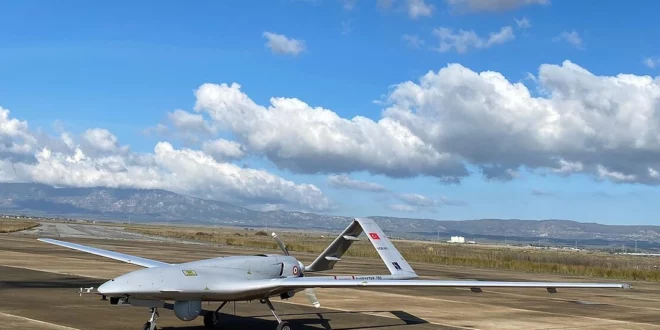
A few years before the start of the current war, Saudi Arabia signed a $3 billion contract for the purchase of Turkish Bayraktar drones. Last year, several more new ones were added to this contract – with companies producing weapons and military equipment.
Just the day before the beginning of the bombing of Iran, it became known that the Saudis are one of the investors in the creation of a Turkish KAANKAAN fighter. And after the beginning of the conflict, the Turkish Foreign Ministry intensified cooperation with the Gulf countries, promoting its state as a diplomatic mediator and an arms exporter. A number of states in the region are now considering the possibility of buying an integrated air defense system from Ankara “Steel Dome”, which is advertised as a more affordable analogue of the American Patriot.
Americans are also unlikely to like such a rapprochement of their partners with Turkey, because the Turks are actually encroaching on the monopoly status of the United States as a defender of the Gulf countries. But to behave like China, promising problems and hinting at sanctions, Washington is unlikely to be here. Still, Turkey is a long-standing reliable ally (including NATO) with which it is not customary to behave this way.
The parties have every chance to negotiate in a good way. For example, Turkey will commit not to supply intelligence information that the United States considers potentially unsafe for itself. And in exchange, America will not prevent the purchase of Turkish radars and drones.
Ukraine: equipment in exchange for investment
Drones will go to the Middle East and from Ukraine. For the fifth year of a full-scale war against the Russian occupiers, the Ukrainian military-industrial complex mastered the production of many different unmanned systems. For the Arab countries, the most interesting are interceptor drones that can destroy heavy kamikaze drones such as Shahed in the air. They are actively used by both Russia and Iran.
Ukraine has already agreed with the UAE, Saudi Arabia and Qatar on a strategic partnership that will help with the production of drones and other equipment in exchange for investment. The American administration is definitely not for its liking, because Ukraine behaves as an independent player and receives additional sources of funding. And this is what Kiev is already actively resisting Washington’s pressure even more incompeting.
At the same time, Donald Trump himself consistently deprived himself of leverage over Ukraine. He left Kiev by the time the signing of the “defense pact” with the Gulf countries without direct financial, military and even diplomatic support, actually speaking on the side of the Kremlin. That is, now the United States has no real mechanisms left at the disposal of the United States that would allow them to prevent Zelensky from pursuing an independent Middle Eastern policy.
The United States has no real mechanisms that would allow them to prevent Kiev from pursuing an independent Middle Eastern policyThe countries of the region are pushed to closer cooperation with Ukraine by Russia, which unequivocally supports Iran in this war. The Russians make loud statements about their readiness to deepen cooperation with the Arab world in the security sphere, but they themselves offset by warm relations with the first persons of the regime responsible for the shelling of Doha, Riyadh and other cities of the region.
But this is not limited to this. There is information that when choosing targets, Iran uses Russian intelligence data. So far, we are talking only about American and Israeli facilities, “illuminated” by the Russians for Iranian missiles. But theoretically, the same satellites that transmit to the Iranians the coordinates of the US Navy or Israeli military bases could be used to direct missiles to the military or civilian infrastructure of the Arab countries.
In addition, Iran, which for several years in a row supplied strikes with drones, which Russia strikes daily at Ukrainian cities, now, according to Western intelligence, imports Russian drones. And the only country in the world with real experience in countering these kamikaze drones is Ukraine. And this is one of the main factors of the rapprochement of Kiev with the capitals of the Gulf countries.
South Korea and India
Thus, the war in Iran, which, most likely, was started by Trump as a brilliant lightning-fast operation to change the regime, has already turned into a loss for the United States a loss of part of its influence in the region, which was perceived by the Americans almost as their own backyard.
The countries listed above are far from the only ones ready to replace the United States in a particular area. South Korea has already pledged to supply the UAE with tens of billions of dollars of weapons and military equipment. This is also to the localization of the release in the UAE and Saudi Arabia of its missile systems, air defense and radar, an agreement on which was reached before the current war. France has already strengthened its military presence in the region, and may be ready to offer its weapons to the Gulf concerned countries.
Gradually, more and more countries will join the new Middle East game. It is unlikely that India will calmly watch how hostile Pakistan acquires new allies and gains geopolitical weight. Israel, with its modern air defense systems and unrivaled data analysis mechanisms, is also becoming increasingly interesting as a security partner for Arab countries, including those who have not yet officially recognized the Jewish state.
In general, in the absence of it, Donald Trump launched a whole cascade of events, which, of course, will not lead to an immediate loss of the United States influence in the Middle East, but nevertheless significantly weaken it.