 Eurasia Press & News
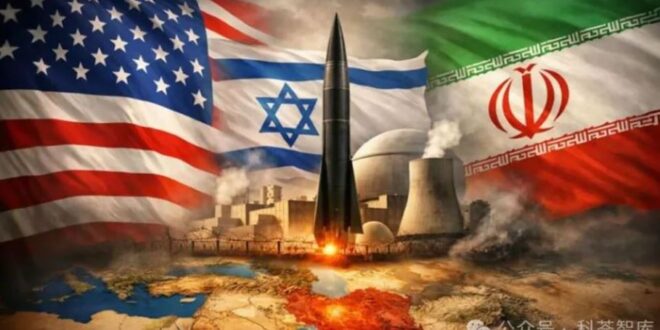
Russia’s Valdai International Discussion Club recently published an analytical article titled “From Unipolar Hegemony to a Multipolar Order: Lessons, Outcomes, Impact, and Future Trends of the 2026 U.S.-Israel-Iran Conflict.”
The article argues that this conflict was by no means a traditional war between states, but rather a pivotal moment in the transformation of regional and global security structures; it notes that its essence lies in a comprehensive, multidimensional confrontation encompassing military, economic, cyber, psychological, cognitive, and media dimensions. The author argues that this conflict not only accelerated structural changes in the international system and shook the United States’ “absolute hegemony,” but also highlighted the importance of asymmetric deterrence and strategic resilience in contemporary geopolitical competition.
The article develops its argument across four dimensions: first, the key lessons emerging from the conflict; second, the strategic gains achieved by Iran; third, the regional and international spillover effects; and fourth, the future trajectory of U.S.-Iran relations and regional security. Its core argument is that the war has disproved the decisive role of mere military superiority, confirmed the pivotal role of social capital and internal cohesion in modern confrontation, and reaffirmed the influence of geographical location, energy corridors, and cognitive warfare in shaping strategic outcomes.
The study further assesses that the post-war international order will increasingly take the form of multipolarity, strategic competition, controlled instability, and hybrid deterrence. The future security architecture of the Middle East will also likely be interwoven with confrontation, selective cooperation, and persistent geopolitical tensions.
I. Introduction
The 2026 U.S.-Israel–Iran conflict is regarded as one of the most significant geopolitical turning points of the early 21st century, erupting against a backdrop of intensifying global competition, a restructuring of power dynamics, and increasingly sharp disagreements over the rules of the international system.
Unlike traditional wars, which are characterized by clear front lines and defined military objectives, this conflict took the form of a classic hybrid confrontation. Conventional military operations were deeply intertwined with cyber warfare, economic sanctions, energy pressure, intelligence infiltration, psychological warfare, and extensive media narrative battles. It reflected the trend toward the totalization of modern warfare, in which the boundaries between war and peace, military and civilian, and domestic and international are becoming increasingly blurred.
At its core, the conflict is a clash between two strategic orientations: the U.S. and Israel pursue a coercive-dominance approach, aiming to maintain regional superiority, force the opponent to submit, and reshape the strategic environment through the use of force; Iran, meanwhile, adheres to a survival-defense strategy, with its core objectives centered on safeguarding sovereignty, asymmetric deterrence, social resilience, and the ability to withstand pressure.
This war has not only reshaped the regional balance of power but has also catalysed profound structural changes in the global system, manifested primarily in the waning of unipolar hegemony, the emergence of a multipolar landscape, the rise of asymmetric deterrence, and the growing trend toward the weaponization of economic and information tools.
II. Key Lessons
- The All-Domain Nature of Modern Warfare
The primary lesson of the conflict lies in the confirmation of the all-domain nature of contemporary conflict. War is no longer confined to the military domain but extends deeply into multiple interconnected spheres, including economic systems, cyber infrastructure, the media ecosystem, psychological operations, and cognitive perception.
The course of hostilities demonstrates that the success or failure of modern conflicts depends not only on battlefield victories but also on the comprehensive ability to shape narratives, manipulate perceptions, disrupt financial systems, and manage societal resilience. While military power remains important, it is no longer sufficient on its own to ensure victory.
- The Divide Between Dominance and Survival
The conflict highlights the fundamental divide between the two strategic orientations of “rule” and “survival.” Dominant great powers often seek a swift victory aimed at restructuring their opponents’ political systems, while survival-oriented states prioritize endurance, resilience, and long-term attrition.
The United States and its allies pursue strategies of forced transformation and regime change, while Iran characterizes the conflict as a struggle for survival. This asymmetry in strategic perception has not only shaped the course of the war but has also led to the complete failure of objectives based on intentions of domination.
- The Core Pillars of Social Capital
Conflict has underscored the strategic value of social capital. National cohesion, collective identity, political trust, and social solidarity have become the core pillars of strategic resilience.
For Iran, internal unity has had a significant force-multiplier effect. Social cohesion has not only effectively thwarted external attempts at subversion in the style of “color revolutions,” but has also maintained the continuity and stability of the system’s operations under the high pressure of crisis. This indicates that the outcome of modern warfare increasingly depends on the depth of social resilience, rather than simply the depletion of a nation’s hard power reserves.
- The Cost-Effectiveness Advantage of Asymmetric Warfare
The conflict has highlighted the importance of strategic autonomy and self-reliance in national defense. By deepening domestic capabilities, building a distributed defense architecture, and widely adopting low-cost military technologies, Iran has successfully demonstrated the feasibility of using asymmetric means to counter high-tech adversaries.
In particular, mass-producible strike systems such as drones, ballistic missiles, and fast-attack boat squadrons have played a decisive role in reshaping the cost structure of conflict. The conflict has shown that while the individual technical complexity of such systems may not match that of the opponent’s main battle equipment, they can, by relying on extremely low deployment and attrition costs, force technologically advanced opponents to bear severely disproportionate defense expenditures, thereby achieving strategic attrition against a powerful enemy at the macro level.
- The Prerequisite Advantage of Geospatial Factors
Despite rapid advances in military technology, the geospatial environment remains a prerequisite for determining the course of battle. Terrain, strategic depth, dispersed deployment, and weather conditions consistently constrain the full exercise of combat capabilities.
By leveraging complex mountainous terrain, underground fortifications, and distributed defensive infrastructure, Iran has significantly enhanced its battlefield survivability and operational resilience. This approach powerfully refutes the notion of “technological determinism” and once again demonstrates the enduring relevance of classic geopolitical principles in modern hybrid warfare.
- The Strategic Role of the Cognitive Domain
The conflict has further cemented the cognitive domain’s status as an independent battlefield. Narrative construction, cognitive guidance, and information flow have become deeply embedded in the entire process of strategic competition. All parties are attempting to monopolize the right to define the discourse on legitimacy, the determination of victory or defeat, and justice. Losing control of the narrative will directly offset military tactical advantages, while successful cognitive shaping can significantly amplify strategic effectiveness.
III. Iran’s Strategic Achievements
- The Stability of the Regime’s Survival
During the conflict, Iran’s primary achievement was maintaining the stable survival of its regime and institutions. Facing sustained high pressure, the state not only kept its administrative machinery functioning normally and maintained basic internal stability but also ensured the integrity of its core governance functions. Subversion plots orchestrated by external forces failed to succeed, and its political institutional framework remained stable under extreme pressure, showing no signs of fracture or failure.
- The Complexification of the Deterrence Framework
The conflict compelled Iran to refine its multi-layered deterrence architecture. This architecture has transcended traditional military parameters, integrating cyber warfare capabilities, maritime denial capabilities, missile strike systems, a network of regional allies, and cognitive deterrence measures. The nature of deterrence has thus undergone a qualitative transformation, evolving from a mere display of military force into a complex system that deeply integrates economic countermeasures, information manipulation, and geopolitical maneuvering.
- Bargaining Power of the Strait as a Strategic Asset
The Strait of Hormuz has emerged as Iran’s core strategic asset in this conflict. As a global energy chokepoint, its geopolitical value increases significantly in times of war. Control over shipping lanes and energy transportation grants Iran greater bargaining power in regional and global strategic competition.
- The Effectiveness of Cost-Imposition
Iran employed asymmetric tactics to effectively impose costs on an adversary with superior technology. The conflict demonstrated that cost asymmetry has become a defining feature of modern warfare, where low-cost attack systems are sufficient to force a powerful enemy into a costly and reactive defensive cycle. This mechanism dragged the conflict into a protracted stalemate centered on attrition and endurance.
- The Cohesive Effect on National Identity
Beyond tangible military gains, Iran has also reaped significant moral and symbolic dividends. The conflict has greatly stimulated national cohesion, strengthened public identification with the state, and consolidated social unity. This conflict has shaped Iran into a regional power steadfastly pursuing an independent path, showcasing to the world its unique historical and cultural heritage and strategic autonomy.
IV. Regional and International Impact
- The Collapse of the Unipolar Order
The conflict catalysed the collapse of the unipolar order that had prevailed in the late Cold War era. The fact that no single power could achieve decisive strategic dominance profoundly reflects the fundamental shift in the global balance of power.
- Domestic Constraints on Great Power Decision-Making
Conflict has highlighted the constraints that domestic political dynamics place on foreign policy decision-making. Political polarization, institutional friction, and pressures regarding the legitimacy of governance have significantly reduced the scope and flexibility of strategic decision-making among major powers.
- Internal Fissures in the Alliance System
The conflict has exposed deep fissures within the alliance system. Misaligned threat perceptions and divergent strategic interests among allies have severely undermined internal cohesion and the ability to conduct coordinated operations.
- The Weaponization of Economic Tools
Measures such as sanctions, trade restrictions, and energy embargoes have been thoroughly weaponized in geopolitical competition. Economic interdependence, in the traditional sense, is increasingly becoming a primary source of strategic vulnerability.
- Accelerated Formation of a Multipolar Order
Conflict has accelerated the formation of a multipolar international system. This is characterized by the coexistence of multiple centers of power, a clear trend toward differentiated alliances, and the fragmentation of global governance structures.
V. Trend Analysis
- Stability through Deterrence Based on Mutual Deterrence
The parties to the conflict have established a strategic balance based on mutual deterrence, thereby avoiding the outbreak of direct, large-scale confrontation. Although a competitive dynamic persists over the long term, both sides keep the escalation of the conflict below a certain threshold.
- Limited Confrontation Under Normalized Containment
Confrontation will solidify into a new normal of “fighting without breaking.” Although the parties do not seek comprehensive reconciliation, they will utilize existing communication channels and diplomatic contacts to establish crisis firewalls, preventing accidental escalation from causing the situation to spiral out of control.
- Hybrid Games in the Gray Zone
The nature of confrontation will shift toward the gray zone. Relying on non-state actors, cyber attacks and defenses, economic pressure, and cognitive warfare, the parties will continue low-intensity, high-frequency indirect games.
- Highly Fragile Diplomatic Engagement
Temporary compromises in specific areas may occur occasionally, but due to a deep-seated lack of mutual trust and domestic political shifts, any agreement reached faces an extremely high risk of being breached.
- A Multipolar Order in Transition
The Middle East will enter a prolonged period of transition toward multipolarity. As old and new powers rise and fall, a complex landscape will emerge characterized by the restructuring of strategic balances, the loosening of alliances, and the coexistence of competition and cooperation.
VI. Conclusion
The 2026 U.S.-Israel-Iran conflict marked a watershed moment in international politics, signaling the dawn of the post-hegemonic era. The conflict not only disproved the notion that traditional military superiority alone determines victory, but also established the central importance of asymmetric deterrence, social resilience, geospatial dynamics, and cognitive warfare in modern conflict.
The conflict has eroded the foundations of unipolar hegemony, forcing the international system to accelerate its evolution toward multipolarity. It reveals a harsh reality: the contemporary security environment has evolved into a complex system in which military hard power, economic structures, the information ecosystem, and social resilience are deeply intertwined and interact dynamically.
Looking ahead, the Middle East is likely to be characterized by “normalized strategic competition, controlled instability, and selective diplomatic engagement.” However, to achieve true long-term stability and peace, deterrence and attrition alone are far from sufficient; ultimately, success will depend on building an inclusive regional security architecture and sustained coordination among major powers.