 Eurasia Press & News
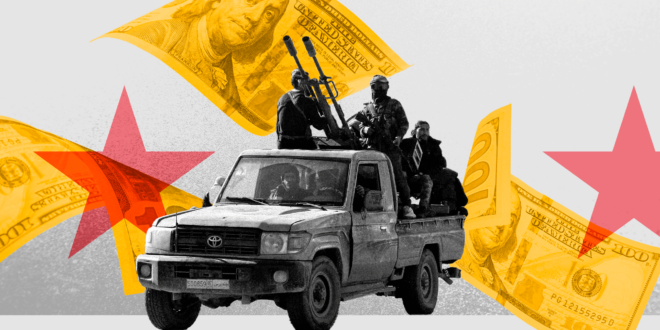
Leaked documents from the Free Syrian Army’s General Staff offer a rare look inside the FSA’s internal structure and operations during 2013, one of the most pivotal years of the Syrian conflict. The files—circulated by Iraqi hackers on Telegram—include correspondence, weapons-distribution orders, financial ledgers, military reports, and intelligence assessments. Taken together, they reveal how the General Staff attempted to organize armed factions and channel foreign support while confronting both the Assad regime and the rapid rise of jihadist groups.
The documents show that the General Staff was organized into regional commands—southern, northern, central, eastern, and Homs fronts—under the Supreme Joint Military Command. Two departments appear central to its functioning: administrative and financial affairs, and supply and equipment. These offices handled the receipt and distribution of weapons to factions such as Liwa al-Tawhid, Liwa al-Islam, Suqour al-Sham, Liwa al-Haq in Homs, the Eastern Front, and local military councils in Aleppo and Homs.
Most of the distributed weapons were light and medium arms, including Kalashnikov rifles, DShK machine guns, mortars, hand grenades, sniper rifles, and ammunition. But the files also reference more consequential systems—most notably the Chinese-made “Red Arrow” anti-tank missiles supplied by Saudi Arabia. One document records the delivery of more than 200 missiles to operations rooms between June and October 2013. Another notes a request for ten missiles for the “Qadimoun” battle aimed at breaking the siege of Homs.
Foreign support extended beyond Saudi Arabia. The documents cite intelligence coordination with British, French, American, and Italian officials, as well as Arab intelligence services operating from the Ankara operations room. They also describe a U.S.-supervised training trip to Qatar, where officers were flown from Turkey to Doha for air-defense instruction on the Chinese FN-6XL missile using simulators. Additional files mention medical supplies from Germany and the United States and food aid from Turkey.
At the same time, the documents reflect growing alarm within the General Staff over the expansion of jihadist groups, particularly ISIS and Jabhat al-Nusra—both designated terrorist organizations responsible for extensive violence and human rights abuses. In one message, the chief of staff requests updates on Raqqa after ISIS seized control, asking about the stance of local brigades and whether residents were pledging allegiance. Intelligence reports describe Jabhat al-Nusra as an effective anti-regime force but warn that it was accumulating spoils, money, and weapons to consolidate its own power.
From Infighting to Collapse
The files also reference the al-Madumah massacre in rural Idlib, attributed to extremist factions including Ahrar al-Sham. A month later, the FSA declared a “state of war” against Jabhat al-Nusra and ISIS and designated other Islamist factions—including Ahrar al-Sham, Liwa al-Islam, and Ahfad al-Rasoul—as hostile forces. These exchanges underscore the deepening rift between the FSA and Islamist groups that were increasingly challenging it both militarily and politically.
One of the most striking incidents documented is the December 2013 raid on the Bab al-Hawa warehouses, known as the “First Battalion incident.” A report to the General Staff says armed men, including individuals wearing explosive belts, entered the site under the pretext of preparing for a visit by Abu Muhammad al-Julani. Their actual aim, the report states, was to seize weapons and ammunition. The looting of the stores and the detention of the battalion commander as a hostage highlight the General Staff’s limited authority in the face of stronger armed factions.
Overall, the documents depict an FSA attempting to build a coherent military institution while being squeezed between the Assad regime and the rise of Islamist and jihadist factions. They also show that foreign support—though significant—was fragmented and insufficient to forge a disciplined force capable of shaping the battlefield or halting the erosion of the FSA’s influence. After the fall of the regime, some figures from that period appear to have retained advisory roles, but without real authority in a military landscape now dominated by factions formerly aligned with Hayat Tahrir al-Sham.