 Eurasia Press & News
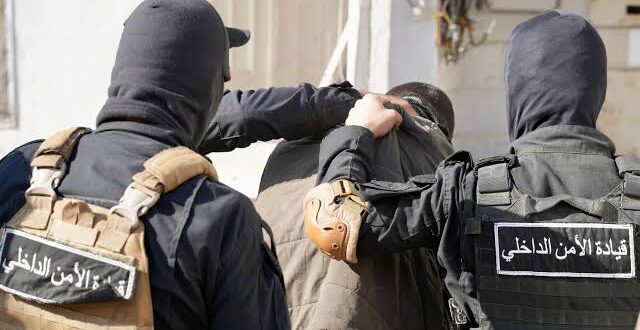
Syria’s Ministry of Interior has released the results of a sweeping three-month counter-terrorism campaign, underscoring a major shift in the country’s security architecture following the fall of the Assad regime. The joint operation, conducted by the General Intelligence Service and the Ministry’s Counter-Terrorism Directorate, led to the arrest of 235 ISIS operatives across multiple provinces.
According to official data, arrests peaked in April with 99 detainees, following 80 in March and 56 in May. The suspects — 198 Syrians and 37 foreign fighters — were apprehended in Damascus, Deir ez-Zor, Homs, Hama, and Aleppo. Security forces also seized significant quantities of weapons, explosives, and logistical materials.
Intelligence-Driven Operations Replace Old Security Tactics
Security analysts say the figures reflect a decisive evolution in Syria’s counter-terrorism doctrine. Instead of broad, localized military sweeps, the newly restructured intelligence services are relying on precision targeting, cross-provincial data integration, and actionable intelligence extracted from high-ranking detainees.
Extremism researcher Orabi Orabi told Al-Thawra that ISIS leadership in Syria has been in a state of deep fragmentation since the political transition in Damascus. This vulnerability was evident when security forces dismantled a cell plotting an attack on the Sayyidah Zaynab shrine, followed by the arrest of the group responsible for the bombing at the Mariamite Cathedral in the Dwelaa district. Interrogations from these two cases provided the breakthrough that exposed multiple interconnected sleeper cells nationwide.
Journalist and political commentator Ammar Jallou attributed the recent successes to the strategic priorities of the new Syrian state. “The relative stability established since the fall of the Assad regime has been crucial,” he said. “It enabled the formation of disciplined, institutionalized security frameworks within the Ministry of Interior and the Intelligence Services.”
A Shifting Threat: From Territorial Control to Lone-Wolf Attacks
Syria’s counter-terrorism landscape has undergone a fundamental transformation. Operations are no longer confined to remote desert areas like the Badia but now span all provinces, reflecting improved logistical coordination and rapid-response capabilities.
While ISIS remains a threat, experts agree its operational capacity in Syria is at its lowest point in years. Orabi noted that the group’s activities in Syria and Iraq have largely devolved into sporadic attrition attacks carried out by isolated operatives. He added that ISIS’s strategic focus has shifted toward expanding influence in Africa’s Sahel region, particularly in Nigeria, Niger, and Mali.
Jallou said ISIS had expected Syria to collapse into prolonged infighting after the regime’s fall — a scenario that would have allowed it to rebuild. “The new government’s ability to maintain institutional stability effectively neutralized those ambitions,” he said.
The Ideological Front and Regional Cooperation
Since losing its last territorial strongholds in 2019, ISIS has increasingly relied on digital platforms to recruit and radicalize individuals remotely. This strategy targets vulnerable populations by exploiting socio-economic grievances and regional crises.
Experts argue that Syria must now adopt a dual-track approach: sustained kinetic pressure combined with robust ideological counter-radicalization programs. Jallou pointed to Saudi Arabia’s specialized rehabilitation initiatives as a potential model, emphasizing that long-term success requires close coordination with regional partners.
Syria formally joined the International Coalition to Defeat ISIS in November 2025. Since then, it has intensified cross-border operations. Last month, Syrian and Turkish intelligence services conducted a joint operation that resulted in the arrest of several ISIS operatives along the shared border. In March, a large-scale sweep in eastern Deir ez-Zor dismantled multiple financial support networks.
International Recognition and the Road Ahead
Syria’s evolving security capabilities were highlighted in a February 2026 U.S. Department of Defense report, which noted that ISIS no longer maintains broad territorial control — a major strategic shift. The Pentagon assessment emphasized that Syria’s newly established national security institutions, though still developing, are rapidly gaining the operational capacity needed to manage counter-terrorism responsibilities independently. This progress formed the basis for the U.S. administration’s decision to withdraw its military forces from Syria.
Still, experts caution that security gains alone cannot guarantee lasting stability. A durable victory over extremism will require sustained economic recovery, transparent governance, public trust, and comprehensive efforts to address the socio-economic drivers of radicalization.