 Eurasia Press & News
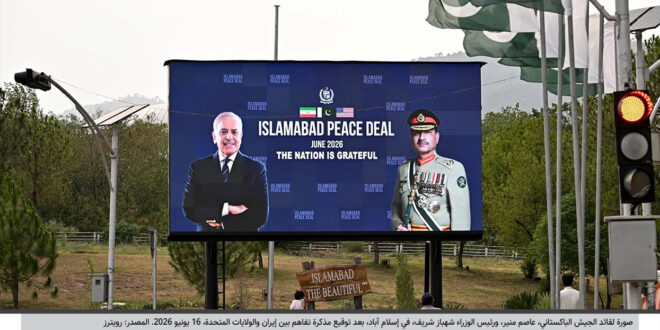
Although the understanding limits the prospects for direct confrontation between Washington and Tehran in the short term, it does not necessarily consolidate the basic pillars of a stable regional order, but may even lead to a gradual erosion of the US deterrent policy, especially as it reinforces the impression of Iran’s ability to withstand and impose its terms within the memorandum of understanding, contrary to the formula of concessions and dictates promoted since the start of the first rounds of negotiations in Muscat in mid-April 2025.
On June 14, 2026, the United States and Iran announced a memorandum of understanding to stop the war and engage in a 60-day negotiating track to reach a final agreement. It was signed by default and came into effect on June 17, after it was signed by US President Donald Trump and Iranian President Massoud Bzekchian. While this memorandum is seen as an alternative to continued escalation or renewed direct military confrontations, its first indications do not indicate a positive reflection on the regional security scene, but may open the path to a new wave of instability, amid expectations of opposition from some of Washington’s regional allies, especially Israel, as witnessed in the 2015 agreement.
“Memorandum of Understanding” Terms and context
The memorandum of understanding signed between the United States and Iran came in 14 items, and includes an immediate end to military operations on all fronts, and the commitment of the two parties to reach a final agreement within a maximum period of 60 days, extendable, in addition to Iran’s guarantee of the safe passage of commercial ships in the Strait of Hormuz and the absence of fees until a final agreement is reached, in exchange for the lifting of the US blockade of Iranian shores on the Arabian Sea and the Arabian Gulf within 30 days from the date of signing the memorandum.
The memorandum also includes immediate and long-term US pledges, including Iran’s obtaining exemptions that allow it to export oil and its derivatives immediately after signing, and making available frozen Iranian funds and assets with the start of implementation of its terms. In the long term, Washington has pledged to rebuild and economically develop Iran worth at least $300 billion, and to lift all kinds of sanctions imposed on Iran, including United Nations Security Council resolutions, IAEA Board of Governors resolutions, and all unilateral, primary and secondary U.S. sanctions. In return, Iran affirms that it will not seek to acquire or develop nuclear weapons, and maintain the status quo of its nuclear facilities and program until a final agreement is reached. If reached, it will be adopted by a binding resolution of the United Nations Security Council.
The signing of the memorandum comes about 68 days after the announcement of the fragile truce, which entered into force on April 7, 2026, and despite the subsequent involvement of the two parties in the Islamabad negotiating rounds since April 11, but the truce, which was set two weeks before its extension, witnessed several violations, as Iranian military activities against commercial ships in the Strait of Hormuz continued, including the exposure of the cargo ship of the Korean company HMM to an attack in the Arabian Gulf in early May, followed on 4 May by targeting an oil tanker while crossing the Strait of Hormuz, and then the announcement of the Revolutionary Guards and the headquarters of the “Khatam al-Anbia” officially on June 10 to close the Strait of Hormuz “in front of all ships”, and Iran did not stop its attacks on neighboring countries. In late May, US President Donald Trump announced the implementation of Operation Freedom Project to accompany and direct ships through the strait, in parallel with the imposition of a naval blockade on Iranian ports overlooking the Arabian Seas and the Arabian Gulf.
Memorandum of Understanding from the perspective of urgent priorities
The memorandum of understanding between the United States and Iran is not the result of a fundamental change in relations between the two countries, nor does it resolve their fundamental differences. Rather, it is designed primarily to serve the immediate domestic political interests of both sides. For the United States, the agreement represents an opportunity to show that the administration of US President Donald Trump has achieved significant diplomatic success without getting involved in a large-scale military conflict in the Middle East. President Trump was quick to compare the memorandum of understanding with the agreement that the administration of former US President Barack Obama had concluded in 2015 and from which Trump withdrew during his first administration in 2018.
In fact, the American public shows little desire for continued military intervention in the region, as the agreement that is supposed to achieve stability, protect freedom of navigation, and avoid a new war, is more politically valuable than a long military campaign, and one of the signs of this is the US Senate’s vote on June 24 on a non-binding resolution calling for the end of US military operations against Iran by a vote of 50 to 48, after the House of Representatives had approved it earlier. At the same time, President Trump argues that parallel, non-military pressure on Iran has forced Tehran to negotiate from a position of weakness.
For Iran, where the regime’s risks seem to be growing and aware of the enormous pressures its economy is facing, and its need for financial support and investment to promote internal stability. As a result, the deal in Tehran is seen as an economic and political opportunity. However, the message that Iran will seek to convey domestically and regionally that the memorandum of understanding is evidence of the regime’s success in withstood the pressures of the United States and Israel while maintaining its core capabilities and forcing Washington to reach an understanding.
On the other hand, Tehran believes that the agreement serves a broader regional purpose, in light of the increasing previous indications that the agreement is close, especially the repeated announcements from US President Donald Trump. Iran has sought to consolidate the strategy of “unity of the squares” that was severely damaged during the war, through the “Dahiya versus the North” equation, which links any Israeli targeting of the suburbs to an Iranian response targeting the Israeli north. Iran applied that equation on June 8, 2026, when it directed two waves of rockets on several areas in Israel hours after Israel bombed the southern suburbs of Beirut. In fact, Tehran is trying to create an impression beyond the June 2025 and February 2026 wars, and to return to their previous rules of engagement, especially in the series of limited Iranian responses against Israeli attacks in Syria and Lebanon, similar to the Iranian attack on April 13, 2024 after Israel bombed its consulate in Damascus, and then the Iranian attack in early October 2024 to respond to the assassination of Hassan Nasrallah on September 27.
In this way, Iran presents the agreement as evidence that the so-called “axis of resistance” and “unity of the squares” has withstood severe US-Israeli political and military pressures, and in Lebanon, this agreement is translated by Hezbollah and its political and popular incubator as strengthening its political and military position, especially in the face of the “tripartite framework” agreement between the United States, Israel and Lebanon, signed on June 25, 2026, which includes gradual security arrangements that are supposed to end with the disarmament of Hezbollah. At the same time, it retains the freedom of Israeli military action against threats or response to attacks, which prompted Hezbollah to reject the agreement, calling it “non-existent.”
Post-Memorandum of Understanding: 60 Days of Open Scenarios
Although the agreement limits the prospects for direct confrontation between Washington and Tehran in the short term, it does not necessarily lay the basic pillars of a stable regional order, but on the contrary, it may lead to a gradual erosion of the US deterrent policy, especially as it reinforces the impression of Iran’s ability to withstand and set its terms within the memorandum of understanding in contrast to the formula of concessions and dictates that have been filmed since the first round of negotiations in Muscat in mid-April 2025. However, in front of the memorandum of understanding, which was signed two scenarios:
The first scenario: The region may witness periods of tactical stability in addition to the continuation of strategic instability, which keeps many of the conditions that fueled the conflict and extremism for decades without a solution, and the indicators of this seem present; as Tehran continues to target neighboring countries even after the signing of the memorandum of understanding, on June 26, Iran attacked a ship using a drone, hours after the Revolutionary Guards warned ships to cross without the routes determined by Tehran, prompting the US Central Command to respond by targeting military sites inside Iran and in the vicinity of the Strait of Hormuz, and on June 28, Kuwait and Bahrain were subjected to Iranian attacks with missiles and drones that caused material damage.
In light of this, the correlation between the diplomatic negotiation tracks between Washington and Tehran and the sporadic military clashes is expected to remain prevalent until a final version of the agreement is reached, if it happens. On the other hand, the continuation of Iranian aggressions, in light of the growing Israeli concern over the recent outcome of the agreement, in addition to the failure to reflect the progress of negotiations on good-neighbourly relations between Iran and the Arab and Gulf countries, pushes Tehran to intensify its pressures in order to impose its conditions and establish a regional equation and new maritime arrangements, and establishes the conviction of everyone of the need and importance of the United States to continue military pressure on Iran as an indispensable tool to achieve deterrence.
The second scenario: that the direct gains that the American and Iranian sides aspire to in the short and medium term, foremost of which is the avoidance of a return to the military conflict, push towards concluding a final agreement within 60 days or more, especially since the memorandum of understanding limited reaching an agreement in the Iranian nuclear program without including other controversial issues such as Iran’s ballistic program, especially after US President Donald Trump’s statement on June 17, 2026 that he understands that Iran has ballistic missiles as long as other countries have. In this context, the fundamental question is not the technical steadfastness of the agreement, but its continued validity to serve the political and economic interests of both parties. On the one hand, President Trump managed to market the deal as a diplomatic achievement while avoiding engaging in a long war. On the other hand, Iran has access to financial flows and economic returns that ensure the stability of the regime while maintaining the narrative of steadfastness and victory.
However, this trend may in the long run reinforce the impression of the countries of the region that the US influence in the Middle East has declined, especially among its strategic partners, including Israel, where the dispute between the two countries has appeared publicly and reflected in the statements of their leaders and officials. Perhaps the context of the memorandum of understanding and Iran’s continued aggressions, despite repeated US threats of deterrence, raises the question of Washington’s desire or ability to impose its will. From this perspective, the agreement, if not read as a sign of strength, but rather as a reflection of Washington’s avoidance of risk and involvement in long-term military or negotiating operations, as well as providing solutions to address the ideological, political and security motives of Iran’s axis, contrary to what was expected is that the time is right to reach a comprehensive agreement that guarantees substantial Iranian concessions in three main files, namely the nuclear program and the ballistic missile program and its support for its proxies.