 Eurasia Press & News
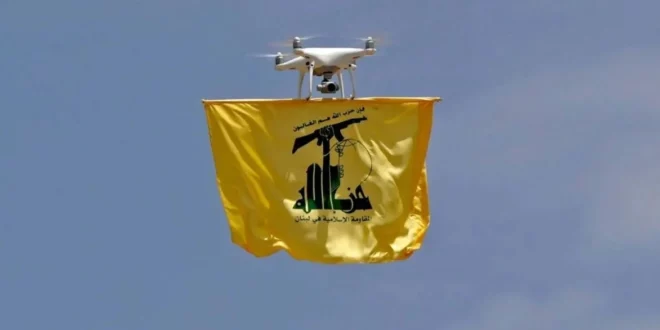
At the end of August, Israel resumed active attacks on the positions of the Shiite Hezbollah movement. The reason was attempts to attack Israeli soldiers with FPV drones in southern Lebanon. Among the victims of the Israeli army’s strike were civilians, which, in turn, again called into question the progress and prospects for a peaceful settlement in the region. Similar “cycles of escalation” are repeated again and again: despite agreements between Israel and the Government of Lebanon on a ceasefire, Hezbollah fighters continue to attack the Israeli military periodically. It is important that the main means of countering the IDF is now well familiar with the Russian-Ukrainian war FPV drones on fiber-optic management. They allowed Hezbollah to maintain the ability to conduct hostilities, despite the lost largely military potential and unconditional technological superiority of Israel.
What is happening in southern Lebanon
After trying to attack the drones of the soldiers IDF the Ali-Taher Ridge Israeli Aviation applied series of strikes on objects of movement Hezbollah near Nabatia. Military warehouses are defeated. Furthermore, died A woman, several civilians were injured.
Two weeks earlier, three Israeli military personnel were hit by a drone and were seriously wounded in the same area. In subsequent air raids, not only Hezbollah fighters and commanders were killed, but also at least 11 civilians, including women and children (according to the Israeli side, including family members of the militants killed).
This is how the “cycles of escalation” that accompany the negotiation process for a settlement in South Lebanon, in turn built into the broader process of ending the conflict between the US-Israeli coalition and Iran, look like in recent months.
The Lebanese Theater of War is one of the key topics of the negotiations, because it is here that Hezbollah retains the ability to influence the positions of the United States and Israel. Back in 2024, Israeli authorities announced their intention to “dismantle terrorist infrastructure” and free Lebanon from Hezbollah’s influence — still Iran’s most valuable and dangerous “asset” in the outer circuit.
Israel’s stated goals in Lebanon are to free the country from Hezbollah’s influenceOn the night of October 1, 2024, Israeli troops launched a ground operation in Lebanon to limit the Shiite movement’s combat capability. The fighting has been predominantly raidful for quite a long time, although in fact it is the third war in Lebanon (after 1982 and 2006), which continues with interruptions to this day. A truce was concluded at the end of November 2024.
On March 2, 2026, Hezbollah resumed shelling of Israeli territory following the death of Iran’s top leader, Ali Khamenei, in a missile strike by the US-Israeli coalition. In response, the IDF resumed a ground operation in Lebanon.
On 16 April, a ceasefire was announced, but the fighting continued. With the mediation of the United States, on June 26, an agreement was signed between the Israeli and Lebanese governments on a ceasefire, providing for the partial withdrawal of parts of the IDF from several areas in the south of the country, with the continuation of the Israeli presence until Hezbollah is disarmed.
Hezbollah leader Naim Qasem refused to acknowledge the agreement and said military resistance would continue. And thanks to the peculiarities of the Lebanese political system, without the support of the Shiite community, it is simply impossible to implement any settlement agreements with Israel.
UAV against the IDF
The main means of countering the Israeli military at the current stage of the war in southern Lebanon was FPV drones on fiber optic management. From March to July 2026 known On 33 incidents involving the deaths and injuries of the Israeli military in southern Lebanon, more than half of them used FPV drones. On some estimates, they limited by 80% Israeli offensive capabilities.
Observers note the initial stage of Hezbollah’s formation of the so-called reconnaissance and impact circuit: first, drones conduct aerial reconnaissance, followed by the launch of fiber-optic FPV drones for the identified targets. If the use of drones can be scaled and their strategy to counter the Israeli military is included, there will be a long-term threat without a clear solution.
In a sense, Hezbollah has successfully exploited the operational capability gap, based for the most part not on technological asymmetry, but on the different speed of adapting doctrines to technological progress in military affairs.
Hezbollah successfully adapts to technological progress in military affairsIt is noteworthy that before the truce announced in April, the published video with UAV attacks showed hits on static objects or combat vehicles. After the beginning of attacks, requiring situational awareness and complex coordination in real time. In particular, on April 26, 2026, Hezbollah’s FPV drone struck a tank, killing one and injuring six Israeli military personnel. After that, the drones barely managed to successfully attack the evacuation team with a helicopter arriving to pick up the wounded.
Apparently, it was the drones that took center stage in the strategy of depletion of Israeli forces adopted by Hezbollah. In a conversation with The Insider, Israeli military expert David Gendelman notes that the South Lebanese theatre of military action is doing the same as in Ukraine:
“FPV drones have shown themselves on the Russian-Ukrainian front an extremely effective price-quality ratio, so they are used there now by millions and partially occupy the niches of artillery, ATGM and the Air Force. This is happening in the symmetrical war of the two regular armies. And even more so, such weapons will be very effective for an asymmetric war against the regular army waged by Hezbollah against Israel.

The Russian and Ukrainian armies are the world champions in opposition to the FPV with many years of experience, and they carry losses of several hundred soldiers every day, because there is no wundervaffe, so there is no counter-vundervaffe. There is a set of partial solutions, both in the training of troops and in technical means, which reduces losses, but not to zero.

The same thing happens with other types of weapons, against which also no wunderwaffe is found, and FPV is no exception. As artillery, ATGMs, small arms and other means of battlefield remain with us, as well as with us will remain and FPV. This is a new reality to live with.”
Hezbollah missile stockpiles have been reduced from about 100,000 to 25,000 since 2023, with mostly short and medium-range, but drones have proven to be an extremely flexible and effective alternative, adapted for small combat cells in a decentralized command structure.
If we compare the active periods of fighting in Lebanon from October to November 2024 and from March to July 2026, the use of FPV drones by Hezbollah for attacks on Lebanese territory increased from 0 to 214 cases (21% of all attacks), conventional kamikaze drones from 21 (6%) to 244 cases (24%).
In attacks in Israel, the use of FPV drones increased from 0 to 16 cases (1% of all attacks), kamikaze drones from 176 (14%) to 343 (31%). According to estimates by the Israeli Alma Center, since the announcement of the truce on April 16 to June 21, 2026, Hezbollah carried out over 1,163 attacks, in 637 cases, drones of different types were used.
Why the IDF was not ready for a “drone war”
The first serious incident with Hezbollah drones occurred back on October 13, 2024, when a Sayad-107-type kamikaze drone struck a dining room at the base of the Golani brigade in the city of Benjamin. Four soldiers were killed and more than 50 were injured. The drone came to the target from the Mediterranean Sea, avoiding detection by the air defense system.
But the systemic transition to FPV drones as Hezbollah’s prime type of weapon is likely linked to the collapse of the Assad regime in Syria and the disruption of traditional missile supply channels. During the months of the land operation in southern Lebanon, the Israeli military has not solved the problem of FPV drone attacks.
David Gendelman draws attention to the fact that the resulting asymmetry in the use of drones and their opposition is mainly due to organizational differences between opponents:
“The experience of the Russian-Ukrainian war was studied by both Hezbollah and the Israel Defense Forces. The difference was that Hezbollah, as a relatively small non-bureaucratized structure, introduces and masters such novelties as FPV, quickly, it does not need a large number at once to launch attacks.

For the IDF, the main issue was not so much the implementation of the FPV itself, which was also carried out, but opposition to FPV. And this is a much more laborious process, as protective equipment needs to be introduced everywhere, tactics need to be changed everywhere, budgets and human hours for this purpose need to be allocated to all, and time and resources are limited. Plus, since 2023, there has been a continuous war on different fronts, which has diverted resources to other urgent issues, plus the traditional bureaucracy of regular armies and large organizations in general.

As a result, by the beginning of another war with Hezbollah, it turned out that the army had studied the experience of Ukraine for several years and wrote recommendations for the implementation of conclusions, but practically no conclusions against the FPV were introduced and began to do it only when the war began.

One Hezbollah used FPV, including fiber optic, back in 2024, and even in this round in 2026, the daily number did not exceed several dozen — no comparison with thousands a day in Ukraine. But because of the unpreparedness, even such a small number led to undesirable losses. <... And it was necessary to quickly introduce all the means that were recommended in the army itself years ago, taking into account the Ukrainian experience, applying to our conditions with a difference in relief, theater of military operations, forces and means of the parties, etc.

Protective networks, shotguns, field training of troops, counteraction tactics, acoustic, optical and radar warning systems, REB, various technological means of interception - everything went into work, but not all processes can be accelerated. The development of the still unprepared, the verification of the finished, the approval, the procurement, the distribution, the training, the application - from the moment of the decision the case is moving, but the decision itself is late for years. "
The threat of FPV drones has already led to certain changes at the operational level. In particular, some IDF units have moved to activity at night, although it is known that the fighters are trying to equip the drones with thermal imaging cameras. At the organizational level, changes are not yet visible.
What’s next
Changes in Hezbollah tactics show how quickly the process of adaptation and innovation in wars is taking place. A few years ago, the group used predominantly unguided missiles, ATGMs and classic aircraft-type UAVs. The mass use of commercial drones on fiber optics makes useless the means of electronic warfare. The cost of such a guided munition starts from $ 300-400 per unit, the components can be printed directly on the spot on a 3D printer or purchased components for civil purposes.
The conflict in southern Lebanon shows the speed of innovation in warsArtisanal ammunition and guerrilla organization, when the calculations of the UAV are in shelters in the mountainous area or in residential development, challenge the basis of the Israeli military doctrine, based on unconditional technological superiority over neighboring state and non-state military-political actors.
Unlike Ukraine in southern Lebanon, FPV drones play the role of cheap weapons in a low-intensity war, preventing sustained control over the established “buffer zone” and thus acting as an instrument of pressure on Israel in both the Intra-Lebanese and regional context in the interests of Iran. According to some estimates, there are fewer than 100 trained drone operators in all of southern Lebanon, but even this allows Hezbollah to maintain activity and create challenges for Israeli forces.
In Israel, they work on interceptor drones, the development of combined systems based on laser technologies and ECOs, as well as the so-called “smart sights” for firearms, which significantly increase the likelihood of hitting the drone. The IDF purchases multi-pupled ammunition and special anti-drone rifles as measures to protect the last frontier, adopts the experience of the Ukrainian war in the use of protective networks. In general, according to David Gendelman, Hezbollah will not be able to scale the use of FPV drones to the Ukrainian level due to objective restrictions, and as the various means of counteraction to the IDF are introduced, the threat will be largely leveled, but not completely reduced.