 Eurasia Press & News
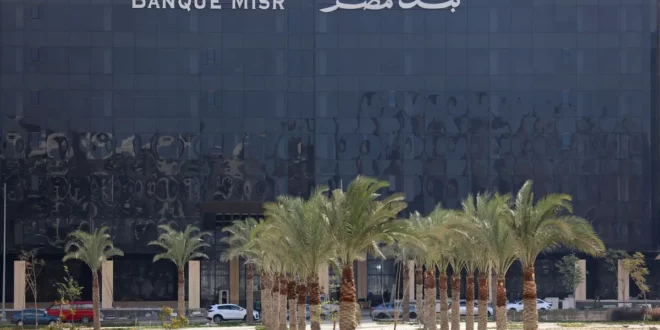
Middle Eastern banks face fresh hurdles in establishing and maintaining US correspondent relationships as the Trump administration intensifies efforts to choke off Iran’s global financial dealings.
US officials have targeted one institution in the UAE and Turkey each in the two weeks since they launched Operation Economic Outcast, and are heaping pressure on foreign regulators to crack down on Iranian evasion schemes in their jurisdictions.
More institutions across Mena are likely to feel the pinch as their US correspondent banks follow the money trail in search of payments that may lead back to Tehran, industry professionals told AGBI.
Banks provide correspondent accounts to one another to process transactions in their respective countries.
Correspondent banks may reclassify some regional institutions as being at higher risk of handling US-prohibited funds based on their proximity to named lenders; make more frequent and in-depth requests for information about their business and customers; delay services and, ultimately, terminate the relationship.
“There may be more questions from US correspondents, and in some cases, transactions might be rejected or held if they aren’t convinced they fully understand who the transactions are for and what they are related to,” said Nick Turner, a partner at the Akrivis Law Group in Washington.
The US Treasury Department has used different authorities to go after the Emirati branches of Egypt’s Banque Misr and Turkey’s Golden Global investment bank, threatening to sever the former’s access to the US financial system and blocking the latter’s US assets.
Both designations will have a similar effect of triggering enhanced surveillance from US correspondent banks, said Jeremy Paner, a partner at the Hughes Hubbard law firm in Washington.
“The Treasury is essentially saying: ‘We have a problem with this’,” Paner told AGBI. “For an investigator – somebody sitting in a bank trying to dig into the risk rating of its relationships – that’s very valuable information.”
Such an investigation typically follows a geographical footprint, he said: “So, for example, the risk is not only in Turkey, because the Turkish financial institution will have other partners around the region.”
Compliance controls
In the case of Banque Misr UAE, effects on its parent company in Cairo are probable. This is despite the fact the US Treasury’s anti-laundering office, the Financial Crimes Enforcement Network, explicitly stated that its proposed blacklisting would not apply to “Banque Misr operations in any other country”.
“Maintaining relationships with the Egyptian bank is going to be more expensive because there’s going to be more compliance controls as it’s deemed a riskier bank,” Paner said. “It’s nearly impossible to completely separate out a branch from its parent.”
Iran has been under sanctions for four decades, and banks in the US are not new to this type of exercise.
A large Turkish state-run lender, Halkbank, was criminally charged in 2019 with aiding Iran to bypass American sanctions. The case was dismissed earlier this year as part of a settlement.
Large banks have bolstered their probes of money flows with possible Iranian links since President Donald Trump returned to the White House last year, and tightened them further after the Iran conflict started six months ago, according to an intelligence analyst at a global financial institution in New York.
The correspondent banking team at the analyst’s financial institution is now frequently seeking feedback from the financial intelligence unit and compliance division about the risk of existing and prospective accounts.
“It becomes more stringent to maintain the correspondent relationship and harder to obtain,” the analyst told AGBI on condition of anonymity.
Paner, the attorney, said banks are always evaluating a client’s compliance burden relative to the business case: “If the cost of compliance is greater than the fees collected and the revenue generated from that relationship, then it’s an easy call for a bank.”