 Eurasia Press & News
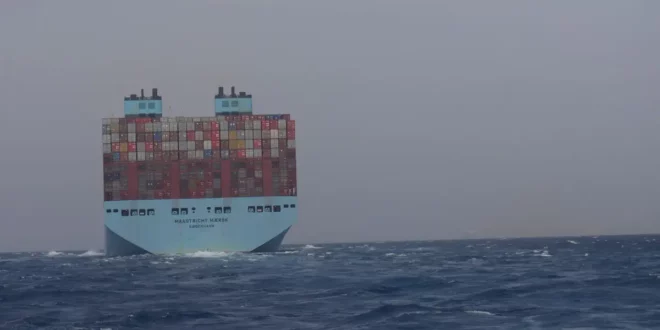
The Red Sea has become “operationally hazardous” for many operators but remains open to shipping following the latest Houthi attacks, according to regional and shipping experts.
Neil Quilliam, a Middle East specialist at Chatham House and an AGBI columnist, said vessels continued to pass through Bab al-Mandab, the southern gateway to the Red Sea, when contractual obligations or cargo economics justified the risk.
But many shipowners have concluded that Houthi attacks and the wider regional escalation make diverting around South Africa’s Cape of Good Hope safer than using the Red Sea, despite the additional time and cost.
“For many mainstream operators it has become commercially unattractive and operationally hazardous,” Quilliam said.
Shipping data from September 8 showed the Red Sea was severely disrupted.
Arsenio Longo, founder of maritime intelligence company Huax, said he had identified about 25 commodity-vessel transits through Bab al-Mandab that day.
These included Aframax and Suezmax tankers, which can carry about 700,000 and 1 million barrels respectively, and one very large crude carrier, capable of transporting about 2 million barrels.
While tanker and bulk traffic continues to move through the strait, mainstream container shipping remains more selective, Longo said. Much of the container market is still diverting around the Cape, although some services have begun returning to the Suez Canal on a limited basis.
“The presence of ships in Bab al-Mandab therefore, does not mean the corridor is functioning normally again,” he said.
The disruption follows Houthi attacks this week on energy and military infrastructure across four cities in southern Saudi Arabia. Aramco facilities were targeted in Abha, Najran and Jazan, a major Red Sea port and industrial centre, while King Khalid Air Base in Khamis Mushait was struck.
The rebel militants, which are based in Yemen and backed by Iran, have framed their actions as a targeted “maritime embargo” against Saudi Arabia and Israeli-linked vessels rather than a complete physical closure of the Red Sea.
With many ships switching off their automatic identification system (AIS) transponders, which broadcast identity and position, it was difficult to establish which vessels had Saudi links.
“Only a small share of the 25 would look obviously Saudi on AIS,” Longo said, adding that the proportion would be higher once recent Saudi port calls, cargo links and chartering were considered.
Limited alternatives
Saudi Arabia has more alternative export capacity than other Gulf producers, Longo said. Its East-West pipeline can transport crude from the Gulf side of the country to Yanbu, bypassing the Strait of Hormuz.
If Bab al-Mandab becomes too dangerous but the northern Red Sea remains usable, tankers can carry oil from Yanbu to the Egyptian port of Ain Sokhna on the Gulf of Suez. The crude can then pass through Egypt’s 320km Sumed pipeline, which has capacity of about 2.5 million bpd, to Sidi Kerir on the Mediterranean coast.
But that option becomes far less useful if the entire Red Sea is considered commercially unsafe.
“Getting crude to Yanbu does not solve the problem if tankers are no longer willing to sail north from there,” Longo said.
He said the August 24 attack on the Saudi tanker Amzan demonstrated the vulnerability of this route.
“She was hit while returning from Ain Sokhna to Yanbu, so even the shuttle traffic serving Saudi Red Sea exports has its own exposure,” he said.
The UAE has the clearest direct bypass of Hormuz through the Habshan-Fujairah pipeline, which has capacity of about 1.8 million bpd. Iraq has much less alternative capacity, while Qatar and Kuwait face greater physical constraints.
“If Hormuz and the Red Sea were genuinely unusable at the same time, there is simply not enough existing bypass capacity to maintain normal Gulf exports,” Longo said.