 Eurasia Press & News
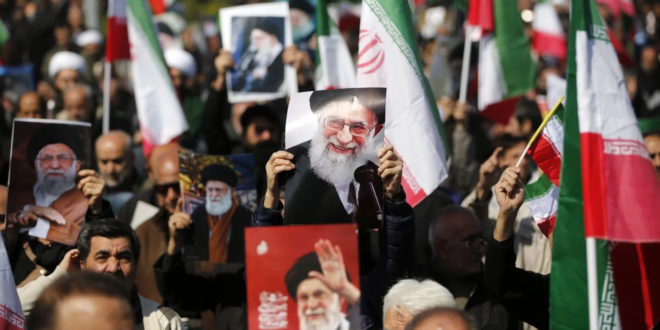
If the succession process can be carried out as Khamenei intended, it will likely bring a hardliner into power.
Ayatollah Ali Khamenei’s death on Saturday after U.S. and Israeli airstrikes hit his compound immediately re-invoked the succession issue inside Iran, along with threats from the U.S. president to interfere in the process. While serving as the supreme leader for almost thirty-seven years and as the longest-acting head of state in the region since the shah, Khamenei faced scrutiny and speculation for years over who he would favor as his successor.
As of publication, no successor has been named. Nonetheless, for the purposes of regime survival—particularly under severe strain by the U.S. and Israel—the succession process is significant for two reasons. First, it allows the regime to preserve the precedent set in 1989—the only time in the Islamic Republic’s history there has been a transfer of power, between Ayatollah Ruhollah Khomeini and his former student and longtime loyalist Khamenei. Second, the process enables the regime to signal to domestic dissidents and external enemies that it is maintaining continuity while confronting intense military pressure. Regardless, a moderate or reformist is unlikely to take the helm and shift Iran in a new direction.
Succession Process
As supreme leader, Khamenei was the highest religious and political authority in the Islamic Republic. He commanded the armed forces, appointed the chief justice, supervised the state media, and controlled the Guardian Council, which has the power to vet electoral candidates and veto parliamentary legislation. In this capacity, Khamenei had the final say on foreign policy and different areas of domestic policy—but not necessarily on who his successor would be. Highly premeditated and procedural, the process involves a combination of Khamenei’s political preferences and the state’s institutional parameters.
During the twelve-day war in June, Khamenei provided input and issued directives on the succession process from inside his bunker after Israel killed several of his senior commanders and targeted some of his top advisers. (One of those advisors, Ali Shamkhani, was killed by American and Israeli strikes the same day as Khamenei.) As he confronted assassination threats from President Donald Trump (despite reports to the contrary), Khamenei selected three individuals to succeed him in case he did not survive the war.
On Sunday, the day after Khamenei’s death, the succession process was set in motion. First, a three-person Interim Leadership Council assembled, per Article 111 of the Iranian Constitution, to act as the collective head of state and highest office while that of the supreme leader remains vacant. The council temporarily assumes the duties of the supreme leader until a new one is selected by the Assembly of Experts, an elected body of eighty-eight clerics.
The council consists of President Masoud Pezeshkian, Chief Justice Gholam-Hossein Mohseni-Eje’i, and Ayatollah Alireza Arafi, who is also a candidate for supreme leader. As a reformist politician, Pezeshkian supports economic reform, social liberalization, and nuclear diplomacy. Mohseni-Eje’i is a hardliner who is antagonistic toward the United States and Israel, along with Iranian protesters, having called for capital punishment during the latest demonstrations in January. A member of both the Guardian Council and Assembly of Experts, Arafi is a hardline cleric and longtime ally of Khamenei who advocates for religious restrictions at home and anti-American and Israeli resistance abroad.
The members of the Assembly of Experts select and supervise the supreme leader during their eight-year terms. During the assembly’s last election on March 1, 2024, and in preparation for the succession process, an aging and ailing Khamenei stacked the body with hardliners. Through the Guardian Council, he disqualified hundreds of candidates, many of whom were moderates and reformists. But with Khamenei out of the picture, some members may feel compelled to act on their own accord, even if he has already set the parameters of the decisionmaking process.
The Assembly of Experts is expected to swiftly elect the next supreme leader, especially to enable the regime or ruling system (nezam) to remain in place amid the war. But during the assembly’s first meeting on Tuesday, Israel bombed its building in the city of Qom and threatened to do so again if a successor to Khamenei is selected. Meanwhile, on Thursday, Trump insisted that he is “going to choose” Iran’s next leader. Though, for the time being, the Assembly of Experts appears determined to carry out its constitutional duty and appoint a new supreme leader.
Potential Successors
The prospective candidates for the next supreme leader comprise clerics with a range of religious credentials and political orientations. Given the preponderance of hardliners in the Assembly of Experts, moderates are unlikely to be chosen—or even considered. They include the former reformist or centrist president Hassan Rouhani and Khomeini’s moderate grandson Hassan—both of whom are midranking clerics (Hojjat al-Eslam).
Among the hardliners who could be in the running are two senior clerics with strong religious qualifications. One is the Islamic philosopher and theoretician Ayatollah Mohammad-Mahdi Mirbagheri, who serves as the head of the Qom Academy of Islamic Sciences and has been a member of the Assembly of Experts since 2016. The other is Ayatollah Hashem Hosseini Bushehri, who serves as the temporary Friday Prayer Leader of Qom and a deputy chairman of the Assembly of Experts alongside the Interim Leadership Council’s Arafi.
According to some media reports, the frontrunners appear to be the hardline clerics Arafi and Mojtaba Khamenei, the son of the late supreme leader.
As a potential successor, Arafi checks a lot of boxes. Religiously, he attained the rank of ayatollah after publishing over twenty books and articles on Islamic jurisprudence and philosophy. Politically, Arafi was appointed by Ali Khamenei to several prominent positions, including the president of Al-Mustafa International University, the Friday prayer leader of Qom, the head of Iran’s seminaries, a member of the Guardian Council, and a deputy chairman of the Assembly of Experts.