 Eurasia Press & News
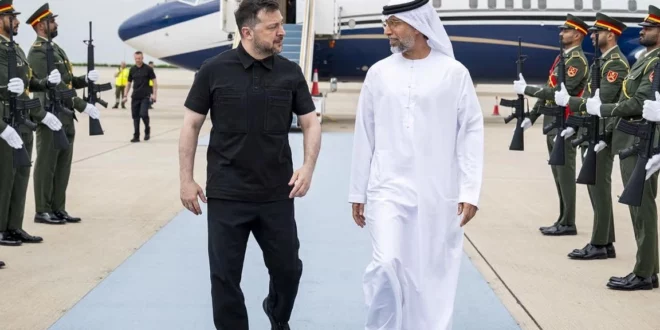
Ukraine’s increased activity in the Middle East and Africa, amid the US and Israeli war with Iran, makes Kyiv an equal security partner in one of the world’s key regions. Zelenskyy’s trips to the Gulf monarchies, Turkey, and Syria have resulted in security agreements with Arab countries. The geography of cooperation is expanding, but this does not mean Kyiv’s new partners will turn their backs on Moscow. Whether these new relations will persist after the war with Iran ends remains an open question. Moreover, there have already been instances of Ukraine waging military action against Russia directly from the territory of other countries, which even led to a rupture in relations with Kyiv. Ukraine’s current partners in Africa and the Middle East will be reluctant to engage in such a situation.
Drones in exchange for diesel
Ukrainian military expertise is in demand in the Middle East and the Persian Gulf, and combat experience “is becoming a strong component of partner defense.” Ukrainian President Volodymyr Zelenskyy wrote this on social media on April 13. He said he discussed the results of the first phase of work with partners in the region with Rustem Umerov, Secretary of the National Security and Defense Council of Ukraine.
“At this stage, Ukraine is in security communication with Saudi Arabia, the Emirates, Qatar, Jordan, Turkey, Syria, Oman, Kuwait, and Bahrain. There are requests regarding cooperation with Iraq,” Zelenskyy said. He added that he and Umerov also discussed the potential for joint work with the states of the Caucasus, East Asia, and Southeast Asia. “There are substantive requests from African states. We are also laying the groundwork for deeper security agreements in Europe—we expect to achieve results this week,” the Ukrainian president added. ( A strategic agreement with Germany was signed on Tuesday.)
This statement followed two visits by Zelenskyy to the Middle East in late March and early April. The first trip included talks with the leaders of Saudi Arabia, Qatar, the UAE, and Jordan. The second visit was to Turkey and Syria.
Following talks with Riyadh and Doha, 10-year agreements on strategic military cooperation were signed. Documents with Abu Dhabi and Amman are still being prepared. In Damascus, strengthening food security, sharing military expertise, and the consequences of the war in the region were also discussed. In Turkey, in addition to the regional situation, the topic of a Russian-Ukrainian peace process was traditionally raised.
The impetus for Zelenskyy’s intensive contacts was the war in Iran. At the request of Trump and Arab leaders, Kyiv sent over 200 Ukrainian specialists to the Middle East to help repel Iranian drone attacks and train local troops.
Cooperation in this area is planned to continue after the war. Zelenskyy also proposes sharing Ukraine’s experience in addressing maritime security issues. This is especially relevant while Iran maintains control of the Strait of Hormuz.
The partnership agreements also include Kyiv’s supply of drones, their joint production, and Arab investment in Ukrainian technology. Furthermore, Ukraine is counting on financial assistance from Gulf countries, energy cooperation, including diesel fuel supplies, and, importantly, political support from the region’s countries. This is emphasized in Zelenskyy’s aforementioned post. According to him, Kyiv is ready to “promptly and effectively” assist those who support Ukrainian statehood and independence.
East between Moscow and Kyiv
Kyiv, of course, had sought political support in the east before. In the summer of 2022, several months after Russia’s full-scale invasion of Ukraine, Kyiv turned its attention to regions where its presence had previously been minimal. Among other things, the position of Special Representative for the Middle East and Africa was created; diplomat Maxim Subh was appointed, serving in this position for three years. He is now Ambassador to Kuwait.
Since then, Ukraine’s contacts with the Middle East and Africa have sharply intensified. Over the years, Saudi Arabia, the UAE, and Qatar have repeatedly acted as mediators between Moscow and Kyiv, primarily assisting in resolving humanitarian issues such as prisoner exchanges and the return of Ukrainian children to their homeland. They have also provided a forum for negotiations.
A year ago, Russian-American and then Ukrainian-American talks took place in Saudi Arabia. Two rounds of trilateral talks (Ukraine, Russia, and the United States) took place in January and February of this year in Abu Dhabi.
In other words, the war between Russia and Ukraine has effectively elevated the Persian Gulf monarchies to global players. Kyiv sought to improve relations with them at any cost (especially given their very close ties to Moscow) – both in military cooperation and energy security. But now the emphasis has shifted somewhat.
At the Arab League summit in the summer of 2023, Zelenskyy tried to convey Ukraine’s concerns to those gathered in Jeddah. Now, for the first time, he has come to the Middle East not as a supplicant, but as an equal partner with something to offer. However, this doesn’t mean the Arabs will choose between Moscow and Kyiv—they will prefer to exploit all the opportunities available to their advantage.
Zelenskyy came to the Middle East for the first time not as a supplicant, but as an equal partner.
But will Kyiv be able to maintain ties with the Gulf states after the war with Iran ends? The London-based publication The Arab Weekly , which largely reflects the position of the ruling elites of the Gulf monarchies (primarily the UAE and, to some extent, Saudi Arabia), calls this “the million-dollar question,” as there are severe limitations on what Ukraine can achieve in the region.
According to the author of the article, the Persian Gulf states will not join sanctions against Russia or expel Russian companies, as Russia remains a major supplier of wheat, an important source of capital for Dubai’s economy, and, as one of the world’s largest oil exporters, an indispensable partner in coordinating global energy policy within OPEC+. “These structural advantages, built over decades, cannot be eroded by drone deals alone,” the author emphasizes.
According to him, the Persian Gulf states don’t like being forced to choose sides. Meanwhile, Ukraine is playing its cards skillfully: “If the air forces of the Persian Gulf countries integrate Ukrainian interceptors into their air defense systems and if investors from the Persian Gulf countries finance Ukrainian factories, then severing ties will become more difficult.”
There are concerns in the region that Zelenskyy views the war in Iran not as a separate conflict, but as another front in Russia’s war against Ukraine. And the Arabs are reluctant to intervene, just as they were reluctant to be drawn into the US and Israel’s war against Iran. “Even if Ukrainian drones prove more effective—and this requires further investigation and confirmation—they will not change the course of the war,” wrote the Qatar-affiliated Al-Arabi al-Jadeed newspaper even before the ceasefire with Iran . The article urged caution regarding Zelenskyy’s proposals, citing Israel as an example, “which knows it is foolish to provoke Putin.”
No explanation is given for this, but it should be noted that the Jewish state, despite a slight cooling in relations with Russia following the outbreak of the war in Ukraine in 2022 and the Palestinian group Hamas’s attack on Israel, continues to maintain contacts with Moscow and has been slow to provide military assistance to Kyiv. And if it has done so, it has been very cautious. Nevertheless, last year it became known that Israel transferred Patriot anti-aircraft missile systems (SAMs) to Ukraine, which it received from the United States and which were in service with the Israel Defense Forces in the 1990s.
It’s worth noting that the topic of Israel also comes up in the context of Zelenskyy’s visit to Damascus. “Syria needs an air defense system, but Israel appears to be opposed to the presence of Turkish systems there, and the West refuses to allow Russia to supply Syria with these weapons, so alternatives are needed,” Abdel Wahab Assi, director of the Jusour Center’s research division, told Al-Araby Al-Jadeed . According to him, in this context, Ukraine appears to be a suitable alternative for both air defense and electronic warfare systems.
Overall, Arab media outlets note that Zelenskyy’s visit to Damascus was overseen by Ankara. This is largely true, given that the Turkish presidential aircraft used for the flight to Syria was part of the Turkish presidential fleet, and Zelenskyy was accompanied by Turkish Foreign Minister Hakan Fidan. In addition to bilateral talks, trilateral talks were also held between Zelenskyy, Fidan, and interim Syrian President Ahmed al-Sharaa.
The Turkish president’s plane was used for Zelensky’s flight to Syria.
This was the Ukrainian president’s first visit to Syria. Relations between the two countries had been strained since the start of Russia’s military campaign in Syria under President Bashar al-Assad, and after Syria’s recognition of the independence of the occupied territories—the so-called “DPR” and “LPR”—in 2022, they were severed altogether.
In 2023, the first media reports emerged that the Main Intelligence Directorate (GUR) of the Ukrainian Ministry of Defense was operating in Syria against Russian forces, primarily the Wagner PMC. Furthermore, after the fall of the Assad regime, media outlets, citing sources , claimed that the terrorist group Hayat Tahrir al-Sham (HTS), which led the offensive on Damascus, had received approximately 150 drones from Ukraine, as well as other support from Ukrainian intelligence.
Kyiv has never officially confirmed this, but the role of drones during the confrontation between Syrian armed groups and Assad’s army was very noticeable. So Ahmed al-Sharaa, who has transitioned from the head of Hayat al-Sham to the new president of Syria, knows exactly how Ukraine can be useful. However, as Syrian experts emphasize , Damascus’s relations with Kyiv will not develop at the expense of Moscow, with which the Syrian government has also established ties, despite the fact that the Russian military has been one of Hayat al-Sham’s main adversaries for many years.
The Second Front in Africa
Syria was one of the first, but far from the only, battlefield between Russia and Ukraine away from the main theater of hostilities.
According to sources at The Washington Post , several GUR operations were conducted in South Africa aimed at disrupting arms shipments to Russia. Specifically, in December 2022, GUR agents discovered the Russian cargo ship Lady R docking at Simon’s Town Naval Base to receive a weapons shipment. The GUR relayed this information to Washington, and the US ambassador in Pretoria publicly protested to South African authorities. According to sources, GUR agents also disrupted an arms shipment from South Africa via a Russian cargo plane.
Other striking examples include the Tuareg rebel attack on a Wagner PMC convoy in Mali in the summer of 2024. Ukraine’s Main Intelligence Directorate (GUR) hinted at involvement in this operation, after which Mali severed diplomatic relations with Kyiv, accusing it of supporting the militants. Russian diplomats, in turn, accused Ukraine of opening a “second front” in Africa.
Mali has severed diplomatic relations with Kyiv, accusing it of supporting separatists.
Even earlier, reports surfaced about a possible confrontation between the GUR and the Wagner PMC in Sudan. In September 2023, a CNN investigation pointed to a “Ukrainian style” of drone strikes against units of the Rapid Reaction Forces, which were fighting the Sudanese army and allegedly receiving support from the Wagner PMC. Video footage obtained by CNN showed Ukrainian text visible on the drone’s control panel. Experts also noted that the tactic used—drones diving directly onto a target—was extremely unusual for Sudan and the entire African region. And this is not the only instance.
In the summer of 2023, Ukraine helped the commander-in-chief of the army and head of the Sovereign Council, Abdel Fattah al-Burhan, escape the besieged capital. As The Wall Street Journal notes , Zelenskyy had reason to take the request seriously. According to Ukrainian and Sudanese military officials, al-Burhan secretly supplied weapons to Kyiv after Russia’s invasion of Ukraine in 2022. And that’s not to mention the confrontation with the Wagner-backed militia.
Ultimately, a few weeks after the appeal, Ukrainian special forces landed in Sudan and entered combat. The article noted that Ukraine’s deployment to Africa is “part of a strategy to disrupt Russia’s military and economic operations abroad, increase Moscow’s war costs, and position itself as a bulwark against Russian incursions, including in regions where the West is reluctant to intervene directly.”
This standoff continues today. Ukrainian troops are stationed in western Libya, according to a Radio France International (RFI) investigation published in early April, which focused on “the shadow war unfolding on the African continent between Kyiv and Moscow.”
Specifically, on March 4, 2026, Russia accused Ukraine and British intelligence of attacking the Russian gas tanker Arctic Metagaz off the coast of Libya. The Russian Ministry of Transport stated that it was attacked by Ukrainian unmanned boats “from the Libyan coast.” The vessel is part of Russia’s “shadow fleet” created to evade sanctions. Loaded with liquefied natural gas, the tanker was en route through the Mediterranean Sea toward Port Said, Egypt. According to Ukrainian intelligence, the tanker was transporting gas from the Russian Arctic LNG 2 project to China’s Beihai terminal.
The Arctic Metagaz case is not isolated. In December 2025, Ukrainian media, citing a source in the Security Service of Ukraine, reported an unprecedented operation—an attack using an aerial drone on the Russian “shadow fleet” tanker Qendil, which was then in neutral waters of the Mediterranean Sea (roughly between Greece and Libya).
According to RFI sources, more than 200 Ukrainian military officers and experts are currently deployed in Libya under an agreement with Abel Hamid Dbeibah, the head of the Tripoli-based Government of National Accord (GNA).
It is noted that Ukrainian troops are stationed in three locations. The first is on the grounds of the Air Force Academy in Misrata, where forces from the Turkish, Italian, and US Africa Command, as well as a British intelligence center, are stationed. The second base is in the city of Zawiya, approximately 50 kilometers north of Tripoli; it is used to launch aerial and maritime drones, as it has access to the sea.
At a third base near the capital’s airport, located at the headquarters of the 111th Brigade of the Libyan army, coordination meetings between the two countries’ militaries are taking place. The brigade’s commander was Abdul Salam al-Zoubi. In July 2024, Dbeibah appointed him to the post of deputy minister of defense (the ministerial portfolio is held by the head of the Government of National Accord himself). According to publications, al-Zoubi oversees cooperation with Ukraine, as well as other external contacts of the Tripoli-controlled army.
RFI sources note that the agreement between Kyiv and Tripoli regarding Ukraine’s presence in Libya was reached through Ukraine’s military attaché in Algeria, General Andriy Bayuk, in October 2025. In exchange, Ukrainian specialists will train Libyans to operate drones. It is also claimed that the long-term agreement includes arms sales and Ukrainian investment in Libya’s oil sector.
No official agreement on Ukrainian-Libyan military cooperation was signed, but reports of drone purchases and the arrival of Ukrainian experts in Libya began appearing in Libyan media as early as August 2025. For example, Nasser Ammar, head of the Tripoli Operational Headquarters and the Directorate of Security and Operational Intelligence, accused Dbeibah of using Ukrainian drones in his fight to retain power and to settle scores with militia leaders opposed to him.
Ammar then stated that more than 20 combat drones and an equal number of reconnaissance drones were stationed at the old Tripoli International Airport. He also stated that 12 Ukrainian experts had arrived in Libya to train them in the assembly and operation of these aircraft. The names of Abdul Salam al-Zubi and Andriy Bayuk were also mentioned.
It was claimed that 12 Ukrainian experts arrived in Libya to receive training in the assembly and operation of reconnaissance drones.
Libyan journalists claimed that some of the drones were smuggled into Libya through Algeria with the help of intermediaries in Azerbaijan. According to media reports, this became the subject of an investigation by the Prosecutor General’s Office in Tripoli last October against al-Zoubi. However, the outcome of the investigation, if any, is unknown. Al-Zoubi remains in his post and acts in coordination with the head of the Government of National Accord.
In fact, the majority of publications that appeared in 2025 originated from Dbeibah’s opponents. One such resource critical of the GNA is the Cairo-based Center for the Future, a think tank focusing on regional issues. In October 2025, the center’s website quoted expert Anas al-Zeidani.
According to him, Ukraine’s initial benefit from selling drones to the Tripoli government was purely financial. But given the presence of Ukrainian specialists in Libya, this could all translate into political gains for Kyiv, including in the context of its confrontation with “certain countries.”
“It can be said that this deal is being carried out on the basis of a tacit agreement between Ukraine and the United States,” al-Zeidani said, explaining that some of the drones are being supplied to armed groups “to counter the Russian presence in Libya” in accordance with Western plans.
The topic of Ukrainian military presence in Libya resurfaced in the Arab media following the Arctic Metagaz incident and following an RFI report in early April. The Saudi newspaper Al-Sharq Al-Awsat not only reprinted the French newspaper’s report but also expanded on the topic.
Among the questions raised in the article is whether Libya will become “an arena of direct competition between Russia and Ukraine” and a new “theater of military operations,” given Russia’s long-standing military presence in eastern Libya. This region is controlled by the Libyan National Army, led by Field Marshal Khalifa Haftar . (Libya remains fragmented since the overthrow of Muammar Gaddafi’s regime in 2011 — The Insider . )
The author of the article also notes the intensification of contacts between Russian Ambassador to Libya Aidar Aganin and Libyan military and political figures in Tripoli in early April, including a meeting with Abdul Salam al-Zubi. However, it is clear that these contacts are ongoing, given that Moscow maintains relations with all parties to the Libyan conflict, despite military activity in the east of the country. The article also expresses the opinion that the Dbeibah government “will not take steps that could draw it into the conflict” between Moscow and Kyiv.
So, in this regard, Tripoli is hardly any different from other Arab capitals: it cooperates with Ukraine when necessary, but it also doesn’t turn its back on Russia. At the same time, Libya fears a “hot confrontation” on its territory. But as experience shows, this doesn’t always work out, especially if the situation in a given country is already unstable, as in Libya.