 Eurasia Press & News
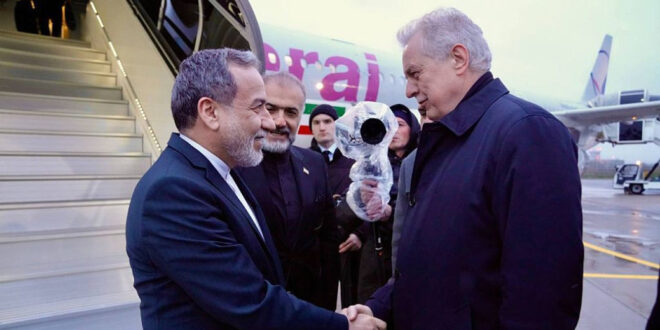
Iran has submitted a new proposal to the US that pushes for the reopening of Hormuz while postponing nuclear negotiations at a later stage.
Iran’s Foreign Minister Abbas Araghchi arrived in Russia on Monday to revive stalled negotiations with the US, amid continued deadlock over the future of the Strait of Hormuz and Tehran’s nuclear programme.
Araghchi is expected to meet Russian President Vladimir Putin later in the day, according to Tehran’s ambassador to Moscow, with Iranian state television reporting that the talks will take place in St Petersburg.
Mikhail Ulyanov, Russia’s envoy to international organisations in Vienna, criticised Washington’s approach to Iran, describing its military threats and sanctions as “blackmailing, ultimatums and deadlines”.
Araghchi echoed this sentiment in remarks to Iran’s Mehr news agency, calling the Trump administration’s strategy “flawed” and blaming “excessive American demands” for the deadlock in negotiations.
Over the weekend, Araghchi visited Oman, where discussions focused on regional security, particularly around the Strait of Hormuz, with the foreign minister saying that the two sides held “important discussions on bilateral matters and regional developments”.
Iran’s Fars news agency reported that Araghchi also conveyed written messages to Washington via Pakistani mediators, outlining Tehran’s red lines on the nuclear issue and Strait of Hormuz, as well as its conditions for resuming talks.
Iran submitted a new proposal to the US, prioritising the reopening of the key waterway and an end to the conflict, according to Axios, while postponing nuclear negotiations to a later stage – an apparent attempt to sidestep current disagreements over uranium enrichment.
However, analysts argue that lifting the blockade would remove the main leverage US President Donald Trump holds to force Tehran to curb its enrichment programme.
In an interview with Fox News on Sunday, Trump signalled he would maintain the naval blockade. “If they want to talk, they can come to us, or they can call us”, he said. “You know, there is a telephone. We have nice, secure lines.”
Trump is expected to convene a Situation Room meeting on Monday with senior national security and foreign policy officials to discuss next steps.
This follows his decision to cancel a planned trip by top envoys Steve Witkoff and Jared Kushner to Pakistan for talks over the weekend. The US has also reportedly withdrawn security equipment from Islamabad, according to Reuters, suggesting it may not send a delegation to the Pakistani capital in the near future.
Meanwhile, the US blockade of the Strait of Hormuz remains in place, while Iran continues to force its own restrictions in the waterway.
US Central Command said early Monday that American forces had directed 38 vessels to turn back or return to port, while the US Navy has begun clearing Iranian sea mines in an effort to reopen the passage.
With negotiations stalled and no resolution in sight for Hormuz, oil prices rose in Asian trading on Monday, with Brent crude futures climbing more than 2 percent to a three-week high of $107.97 per barrel.