 Eurasia Press & News
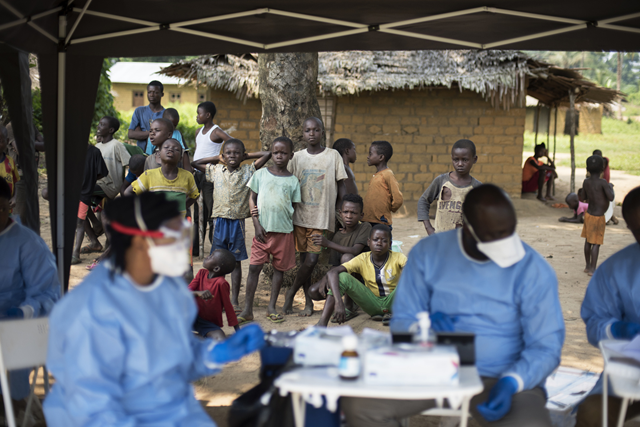
In February 2026, the United States officially completed its withdrawal from the WHO, leaving a debt of $280 million unpaid. Experts note that the consequences have already come: information about infections has become fragmented, funding is moving from systemic support to bilateral agreements. The WHO is considering several ways to solve the problems that have arisen, for example, a partial return of the United States to the global health system. However, the poorest countries have already suffered from a lack of funding and a gap in continuous data transmission.
During the fight against the COVID-19 epidemic, Donald Trump accused the World Health Organization of a pro-Chinese position, and a year ago began the procedure for the US withdrawal from the WHO.
WHO officials deny Trump’s claims and argue that this decision harmed both the United States itself and public health around the world. Now, instead of a global system of collective protection against epidemics, each side will independently determine how to deal with threats to the best of its own resources and ideas. Poor countries, which have already suffered more losses in outbreaks of infections than wealthy countries, will be hit hardest.
What is WHO?
The World Health Organization was founded in 1948 as a division of the United Nations. Its tasks include coordinating international action in the field of health: the organization formulates global standards and guidelines, collects and publishes scientific data, supports countries in building health systems, and acts as a platform for multilateral scientific cooperation. At the moment, it consists of 194 countries.
Among the key practical functions of WHO are the coordination of surveillance and epidemic alerts, the harmonization of clinical and laboratory protocols, the development of recommendations for vaccination and the management of outbreaks of infections, as well as the management of programs for the elimination and control of diseases (measles, polio, malaria, etc.). Many countries rely on WHO guidelines and protocols to develop their own national strategies for disease control.
WHO’s funding is made up of mandatory contributions from Member States and a significant proportion of voluntary targeted contributions from governments, foundations and private partners. When countries delayed or limited contributions for internal political reasons, the organization had to reallocate funds, delaying infrastructure upgrades, hiring of specialists and other processes.
The United States covered about 18% of the WHO budget annually. From January 20, 2025, that is, from the moment the decree on the country’s withdrawal from the organization was published, the United States stopped payments and contributions and withdrew all personnel. At the same time, a significant amount of membership fees for 2024-2025 remained unpaid – about $280 million, which is about 40% of the Polio Eradication program in the approved WHO budget for 2024-2025 ($694 million).
Breaking the global surveillance network
One of the key tasks of WHO is to coordinate global alert systems and data exchange when outbreaks occur somewhere in the world. To prevent the spread of infections, it is necessary to record dangerous areas as quickly as possible.
For example, the National Influenza Centers (GISRS) provide a continuous flow of information about these viruses and regulate the selection of strains for vaccines. It is on the basis of GISRS data that the WHO issues recommendations on the strain composition of the seasonal vaccine twice a year (in February for the Northern Hemisphere, in September for the Southern Hemisphere). The centers of the network compare circulating variants of the virus, assess antigenic and genetic similarities with candidate vaccine viruses and choose the options with the maximum expected match for the next season.
In cases where an emergency has already occurred, WHO deploys the Early Warning, Alert and Response System (EWARS) in the affected region. EWARS detects infection at an early stage, assists national services in the fight against the disease, transmits and structures epidemiological data from the regions. The system has shown its high efficiency: since 2015, more than 100 million people have received assistance.
EWARS, for example, played a prominent role during the cholera outbreak in Yemen (2017-2022), one of the largest in modern history. Then almost a million people were infected. The system made it possible to quickly identify clusters of the disease and direct resources to priority areas in the conditions of destroyed infrastructure. In the Democratic Republic of the Congo, during the Ebola virus disease outbreaks (2018-2020), the system provided rapid transmission of field data and accelerated the response of mobile teams.
Another illustrative case is the Rohingya humanitarian crisis in Bangladesh (since 2017), where EWARS is helping to detect and contain outbreaks of measles, diphtheria and acute diarrhea in overcrowded refugee camps.
Epidemiological surveillance requires continued investment in laboratory services in low-income countries. Global infection alert systems depend on a network of national and regional laboratories that receive equipment, reagents and training through WHO programmes. At the same time, The Lancet’s Commission on Diagnostics indicates that 47% of the world’s population has limited or no access to diagnostics.
With the U.S. gone, laboratory services will not be able to work as efficiently as before. Laboratories involved in surveillance are facing disruptions in the supply of reagents, reduced diagnostic coverage and reduced operational readiness of response services. This directly weakens the ability of health services to quickly detect and contain outbreaks of infections. In addition, the US withdrawal from the WHO “reduces access to real-time disease surveillance systems, technical guidance and early warning networks – resources that have proven vital during COVID-19.”
Vulnerability to future pandemics
WHO continuously publishes and updates recommendations for the surveillance of major infections, including MPOX, and coordinates the exchange of information about them between national epidemiological services. The refusal of the United States to participate in the global network of their exchange will lead to increased vulnerability to pandemics, since threat detection used to be based on collective monitoring: the faster countries share signals, the earlier quarantine, laboratory and vaccine measures are launched.
After the US left, data on the foci of infections are received by the WHO structures incompletely and with a delay. During pandemics, with the rapid spread of infection, such holes in the exchange of information are especially critical – the slightest delay in data transmission causes a sharp jump in the incidence of the population.
A break in the chain of data exchange will have a negative impact on health care in the United States itself. For example, withdrawal from the GISRS network, which tracks circulating strains and monitors their evolution, will lead to the fact that American doctors will again work in isolation from the global health mechanism.
Reduced support for low-income countries
WHO has established a system of support programmes for low- and middle-income countries (LMICs) to help them cope with infections and crises:
WHO’s Health Emergencies Programme (WHE) – assistance in a variety of emergencies, from outbreaks of infections to humanitarian crises, including surveillance in emergencies (war, natural disaster, mass displacement of people);
EWARS/emergency surveillance – early warning and response in emergency situations, which was mentioned above;
Global Malaria Programme, which coordinates WHO’s global efforts to control and eliminate malaria;
End TB Strategy, a global strategy to reduce TB morbidity and mortality;
Global HIV, Hepatitis and STIs Programmes – development of international recommendations and strategies for the prevention, diagnosis and treatment of HIV, viral hepatitis and STIs and supporting countries in implementing these standards and monitoring results;
Essential Programme on Immunization – Creating international standards and supporting countries with routine immunization: from vaccination schedules and vaccine evaluation to training, supply planning and coverage control;
WHO Prequalification is a WHO mechanism that assesses the quality, safety and efficacy of medicines, vaccines and diagnostic tests; It also contains a list of approved products that are the focus of international procurement and assistance programs in low- and middle-income countries.
WHO programs have worked quite successfully — it is enough to estimate the changes in mortality in poor countries over twenty years (from 2002 to 2021) depending on the “official development assistance” (ODA/Official Development Assistance). A recent study in The Lancet Global Health, which covers 93 low- and middle-income countries for the period 2002-2021, shows that ODA has significantly improved the global mortality situation:
overall child mortality (under five years of age) has decreased by about 39%;
HIV/AIDS mortality has fallen by about 70%;
Deaths from malaria and malnutrition have been reduced by about 56%.
The U.S. contribution to the budget to support programs for poor countries has been impressive. Just look at the percentage of U.S. aid and USAID from the general ODA:
OECD statistics for 2023 show that the poorest countries survive on a high level of foreign aid – an average of $71 per person. The population of these countries is 736 million people, the share of the United States in the total ODA is 22%, the share of USAID is 19%. Now, with the U.S. withdrawal, the estimated aid gap for the poorest countries is $71 × 22% ≈ $15.6 per person, or about $11.5 billion per year for the entire group ($15.6 × 736 million).
The poorest countries survive on high levels of foreign aid
Following the reduction of the overall financial resource for poor countries, tuberculosis/HIV/malaria and child health programmes in Africa and Asia have already begun to experience problems in the procurement and delivery of medicines and medical supplies. It also risks that fewer people will be able to learn the necessary skills to fight these diseases in the future, and laboratories will be less equipped.
Health care as a tool of political manipulation
With the withdrawal of the United States from the WHO, healthcare is increasingly turning into a political tool of influence of individual players. If earlier countries agreed among themselves on surveillance standards, data exchange, vaccination recommendations and emergency response, and then all participants relied on common guidelines and a single coordination network, now the US administration is going to switch to a strategy of multi-year bilateral agreements with individual countries.
Such agreements can create “alternative networks” of health care (with data exchange, drug supply, joint programs). However, in terms of coverage, they are inferior to the WHO, because it is its system that has become a kind of legal and operational framework for global medical care.
With the growing number of parallel funding channels, health policies are falling apart, with different donors setting different priorities, deadlines, metrics and conditions, which reduces the coherence and effectiveness of programmes for recipient countries. Experts believe that in the long term, this will lead to a global deterioration in the health of the population and an increase in the cost of crisis response.
American researchers and organizations will lose access to data important for national health and will fall out of cooperation with other WHO countries.
What’s Next
After the United States announced its complete withdrawal from the system, the WHO announced that a specific withdrawal mechanism would be discussed WHO Executive Board at the regular session, and then World Health Assembly at the annual session in May 2026.
The following issues are to be resolved:
what financial obligations remain with the United States (contributions, arrears, closing of budget periods);
what to do with the participation of the United States in programs and working mechanisms (which projects are stopped, which are transferred, which continue through other formats);
how further interaction is formalized (for example, cooperation in certain areas in the status of partnership or in other ways).
The WHO says it will try to find the best ways to resolve the situation in order to maintain cooperation with the United States on key issues.
Washington has its own plans. According to The Washington Post, the United States plans to create its own structure to replace the functions of the WHO: global surveillance, data exchange networks and rapid response systems. This initiative was put forward by the US Department of Health and Human Services, which requested about $ 2 billion per year for it.
Experts are very skeptical about this initiative. Atul Gawande, a professor at Harvard Medical School who served as assistant administrator for global health at the U.S. Agency for International Development from 2022 to 2025, said that “this idea means spending more than we spend on the WHO to create a structure whose sustainability is questionable, and which in any case will only be part of what we were able to do when working together with the rest of the world.”
One way or another, major damage to world health care on the part of the United States has already been done: the defeat of US foreign assistance to the world in the field of health, including the actual withdrawal of the US Agency for International Development (USAID), has already claimed the lives of more than 750 thousand people. This is mainly due to a lack of supply of HIV medicines, antimalarials and vaccines, reduced field surveillance, and the closure of some clinics in low-income countries. International agencies estimate that with a steady decline in U.S. participation in global health programs, additional deaths will reach about 23 million by 2030, primarily due to HIV/AIDS, tuberculosis, malaria, and preventable child mortality.