 Eurasia Press & News
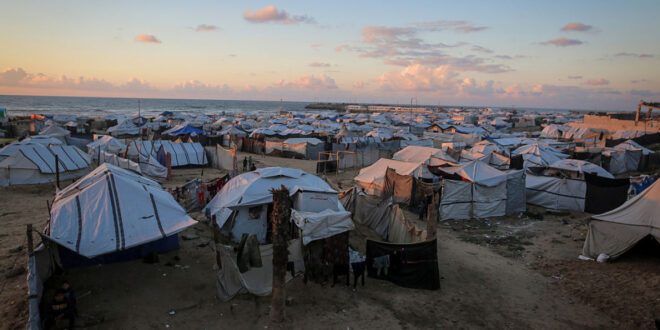
As the Middle East confronts a rapidly escalating confrontation between the US, Israel, and Iran, the already fragile ceasefire in the war-torn Gaza Strip has returned to the centre of regional political calculations.
What once appeared to be a tentative pause in the most devastating war in Gaza’s modern history could now become entangled in a broader regional conflict whose trajectory remains uncertain.
For months, mediators struggled to stabilise the truce that followed Israel’s devastating genocidal war in Gaza. Yet the eruption of direct tensions involving Iran has introduced new strategic considerations for all parties involved.
Diplomatic activity in recent days reflects growing international concern about the possibility that Gaza could become entangled in the expanding crisis.
Sources within Hamas told The New Arab that senior representatives of the movement held discussions in Cairo earlier this week with envoys representing US President Donald Trump’s Board of Peace.
According to the sources, who preferred not to be named, the meeting focused primarily on ways to prevent the Gaza ceasefire from collapsing as tensions across the region intensify.
The Cairo meeting marked the first publicly known contact between Hamas and the Board of Peace envoys since the war on Iran began.
Shortly after the talks concluded, Israel announced on Sunday that it intended to reopen the Rafah crossing – closed since the Iran war began – between Gaza and Egypt in the coming days. The decision was later reversed, with the crossing still closed.
A Hamas official familiar with the discussions told TNA that the move could be tied to mediation efforts aimed at stabilising the situation in Gaza while Israel focuses its military attention elsewhere.
“Regional actors understand that opening another front in Gaza now could create an uncontrollable escalation,” the official said. “There are attempts to keep the situation contained, at least temporarily.”
Yet despite these diplomatic manoeuvres, the situation on the ground remains highly volatile. During the Cairo discussions, Hamas representatives reportedly warned mediators that continued Israeli restrictions on Gaza could undermine the ceasefire framework. At the same time, the movement insisted it still considers itself formally committed to the truce.
A Hamas source told The New Arab that Israeli forces have killed more than 650 Palestinians in Gaza since the ceasefire was declared last October.
“This raises serious questions about the sustainability of the agreement,” the source said. “A ceasefire cannot exist only on paper.”
Regional war reshapes Gaza calculations
Many Palestinian analysts believe the widening confrontation with Iran has fundamentally reshaped Israel’s military priorities, altering the strategic importance of the Gaza front.
Taysir Abdullah, a Gaza-based political writer and analyst, argues that Israel has long attempted to frame Hamas as part of a broader Iranian-led regional axis to justify its military policies.
“Israeli political discourse has consistently tried to present Gaza as one front within a larger confrontation with Iran,” Abdullah told TNA. “This narrative allows Israel to link local developments in Gaza to its regional strategy.”
Abdullah pointed to a recent publication on the Israeli Foreign Ministry’s website, which claimed that Hamas had sent a message to Iran’s new Supreme Leader, Mojtaba Khamenei, urging escalation across the region. Israeli officials cited the alleged message as proof of Hamas’s alignment with Tehran.
But Abdullah believes such claims serve a broader political purpose.
“Israel benefits from portraying Hamas as an extension of Iran,” he said. “This framing helps justify any escalation in Gaza while simultaneously reinforcing Israel’s argument that it is confronting a regional threat rather than a local conflict.”
At the same time, Abdullah suggests that certain Israeli military actions in Gaza could be intended to test the durability of the ceasefire or provoke a response from Hamas.
One recent example was an Israeli airstrike targeting a police vehicle near the entrance of al-Zawayda in central Gaza, which killed nine people, including a security official, and wounded 14 others.
“These types of strikes can place Hamas under enormous pressure,” Abdullah explained. “If the movement responds militarily, Israel could then argue that the ceasefire has collapsed and resume broader operations.”
Yet he emphasised that Israel may not actually fear Hamas entering the regional war in its current condition.
“In fact, some Israeli strategists might view that scenario as an opportunity to dismantle what remains of Hamas’s military infrastructure,” he added.
Hamas between exhaustion and rebuilding
Inside Gaza, however, Hamas appears far from eager to re-enter a full-scale confrontation.
A senior Hamas source in the coastal enclave acknowledged that the movement’s military capabilities have been significantly weakened during the war.
“The last war inflicted enormous losses on the movement,” the source told The New Arab. “A large number of fighters and field commanders were killed, and many of our operational structures were severely damaged.”
According to the source, Hamas also lost a substantial portion of its rocket arsenal due to months of continuous Israeli bombardment.
“The ability to launch rockets on the scale that existed before the war is simply not available at this moment,” he said. “The infrastructure that supported those operations has been heavily targeted.”
These realities, he explained, have forced the movement to reassess its immediate strategic priorities.
“Entering a new confrontation under these conditions would be extremely costly,” the source said. “The movement needs time to reorganise and rebuild its capabilities before even considering another war.”
Beyond military losses, the devastation across Gaza itself has also become a major factor shaping Hamas’s calculations.
“The reality in Gaza today is entirely different from before the war,” the source continued. “Entire neighbourhoods are destroyed, and the population is exhausted after months of displacement, bombardment, and economic collapse.”
For the movement, he said, launching another round of fighting in the current circumstances would risk triggering a humanitarian catastrophe even worse than the previous war.
“Starting a new war now would be tantamount to suicide,” he said bluntly.
Tactical calm or temporary stability?
Other analysts argue that the regional confrontation with Iran could actually strengthen incentives for Israel to maintain relative calm in Gaza, at least in the short term.
Palestinian political analyst from Gaza, Akram Atallah, believes that Israel currently views the Iran confrontation as the central strategic battlefield.
“The war with Iran is directly linked to the events that followed the 7 October attack,” Atallah told The New Arab. “Israel believes Tehran played a key role in supporting the forces it confronted during the Gaza war.”
Because of this, Atallah says Israeli leaders may prefer to avoid opening additional fronts while they focus on the broader regional confrontation.
“In practical terms, Gaza has already been described by the Israeli military as a secondary front,” he explained. “When Israel faces multiple threats simultaneously, it must prioritise where to deploy its military resources.”
From this perspective, maintaining a ceasefire in Gaza may not reflect a stable political settlement, but rather a temporary tactical decision designed to reduce pressure on the Israeli army.
Gaza-based political analyst Hossam al-Dajani shares a similar assessment, though he warns that the situation remains highly unpredictable.
“The continuation or escalation of the Iran-related conflict will inevitably influence developments in Gaza, both directly and indirectly,” al-Dajani told The New Arab.
He argues that Israel’s current focus on regional dynamics could encourage it to avoid provoking a major escalation in Gaza for now.
“If Israel becomes deeply engaged in a broader confrontation with Iran and its allies, it may see calm in Gaza as strategically useful,” he said. “Opening another major front would stretch its military capabilities even further.”
However, al-Dajani emphasised that such calm would likely remain fragile and reversible.
“The decision to maintain stability in Gaza is not based solely on Palestinian considerations,” he explained. “It is part of a much wider regional calculation involving Iran, Hezbollah, and other actors.”
He also warned that diplomatic efforts related to Gaza could lose momentum if the regional crisis intensifies.
“Mediators who were previously focused on Gaza may find themselves shifting their attention toward the larger regional confrontation,” he said. “In that case, negotiations over Gaza could stall.”
For Gaza’s two million residents, such geopolitical calculations translate into a deeply uncertain future. While the ceasefire continues to hold for now, it remains vulnerable to the shifting dynamics of a rapidly evolving regional conflict.
If tensions between Israel and Iran continue to escalate, the quiet in Gaza may prove less a sign of lasting peace than a temporary pause shaped by forces far beyond the enclave’s borders.