 Eurasia Press & News
The Institute for the Study of War (ISW) and The Critical Threats Project (CTP) at the American Enterprise Institute are publishing daily updates to provide analysis on the war with Iran. The updates focus on US and Israeli strikes on Iran and Iran and the Axis of Resistance’s response to the strikes. The updates cover events from the past 24-hour period.
Key Takeaways
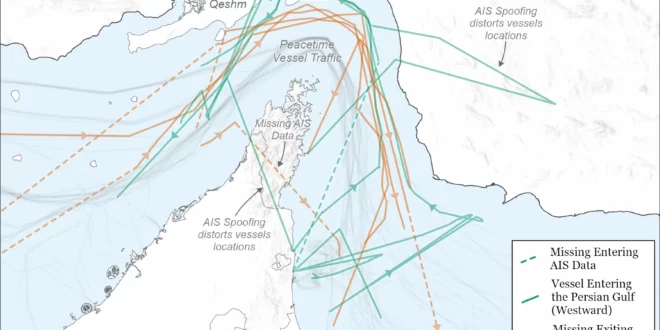
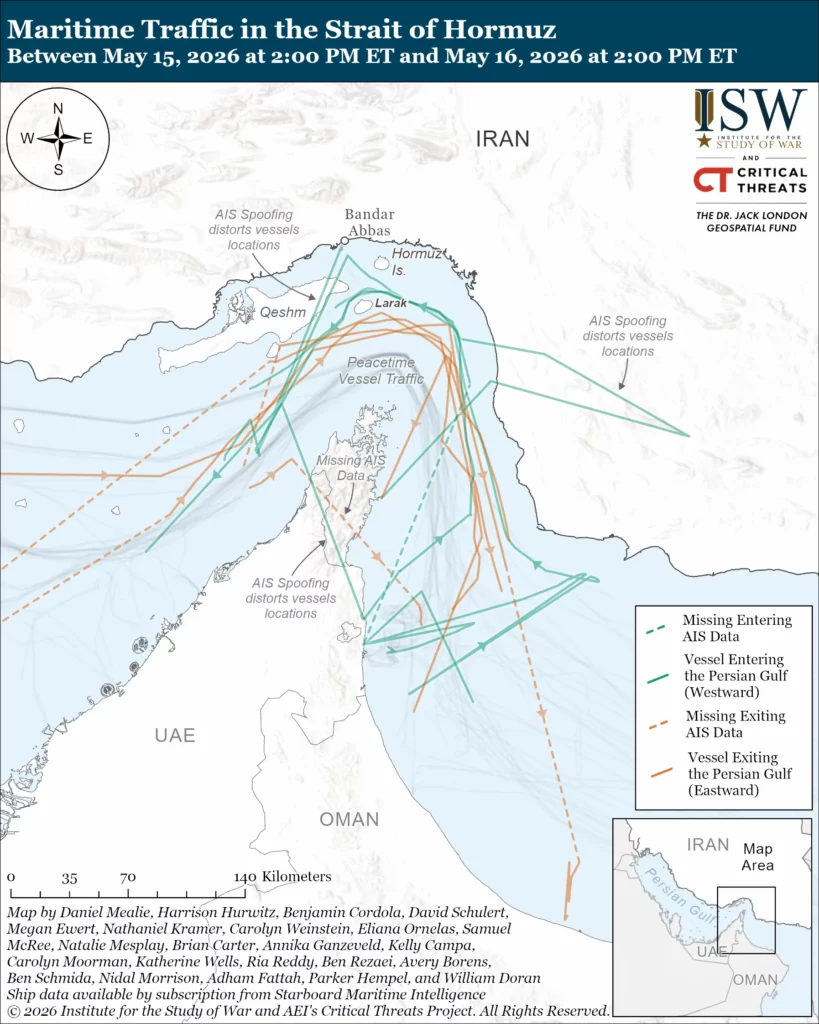
The Iranian regime is introducing a formalized toll system under the guise of maritime insurance policies and continuing to deploy incentives and threats to vessels in the Persian Gulf as part of their efforts to normalize and solidify Iranian control over the strait. This system appears designed to be more palatable than an outright “toll” by framing it as a “maritime insurance policy.” The insurance presumably insures the vessel against an Iranian attack.
Iran is trying to circumvent the US naval blockade by expanding alternative overland and rail trade routes through the People’s Republic of China (PRC), Pakistan, and Iraq. These alternative trade routes are unlikely to replace the scale and efficiency of maritime trade through the Persian Gulf and the Strait of Hormuz, however.
Israel and Lebanon have agreed to continue dialogue and extend the ceasefire but appear to remain at odds over key issues surrounding Hezbollah and its status. Israeli and Lebanese officials have long disagreed on the implementation mechanism, timing, and other political details related to Hezbollah’s disarmament and Israel’s military presence in southern Lebanon.
Toplines
The Iranian regime is introducing a formalized toll system under the guise of maritime insurance policies and continuing to deploy incentives and threats to vessels in the Persian Gulf as part of their efforts to normalize and solidify Iranian control over the strait. This system appears designed to be more palatable than an outright “toll” by framing it as a “maritime insurance policy.” The insurance presumably insures the vessel against an Iranian attack. Iran’s Economy Ministry is pursuing a new scheme to force shipping companies to pay “verifiable insurance policies,” according to a document viewed by Islamic Revolutionary Guards Corps (IRGC) affiliated media outlet Fars on May 16.[1] Iranian Parliament National Security Committee Chairman Ebrahim Azizi also stated on May 16 that Iran has prepared a “professional mechanism” to manage traffic along Iran’s designated route “within the framework of its [Iranian] national sovereignty while guaranteeing international trade security.”[2] Azizi said that the details of the plan will be revealed soon.[3] Azizi’s comments are consistent with the document that Fars cites.[4] Iran would collect fees for unspecified “specialized services” as part of the scheme that Azizi described.[5] These ”specialized services” may be ”insurance.” Azizi clarified that “only commercial vessels and parties cooperating with Iran” would benefit from the new mechanism, which likely means countries that cooperate with Iranian protocols and have ”friendly” or ”non-hostile” relations with Iran. The IRGC Navy is permitting the passage of ships from East Asian countries such as the People’s Republic of China (PRC), Japan, and Pakistan, according to Iranian state media on May 16. Iranian regime media also reported that the IRGC Navy has begun negotiations with unspecified European actors for passage through the strait.[6]
Access would remain restricted for actors associated with the US-led Project Freedom, however, which demonstrates that Iran seeks to retain the ability to coerce other states into adopting policies palatable to Iran by withholding access to the strait.[7] The United States launched Project Freedom to secure traffic through the internationally recognized traffic separation scheme in the strait.[8] US President Donald Trump temporarily paused Project Freedom on May 5 amid ongoing negotiations with Iran.[9]
Iran continues to employ both incentives and threats in order to solidify its control over the strait. The Iranian Port and Maritime Organization announced on May 6 that it would provide fuel, medical, and mechanical assistance to vessels operating in regional and Iranian waters.[10] Armed Forces General Staff-run outlet Defa Press on May 16 also continued to highlight Iran’s capability to interdict shipping through fast attack craft swarm tactics designed to intimidate larger vessels, however.[11]
Iran is trying to circumvent the US naval blockade by expanding alternative overland and rail trade routes through the PRC, Pakistan, and Iraq. These alternative trade routes are unlikely to replace the scale and efficiency of maritime trade through the Persian Gulf and the Strait of Hormuz, however. IRGC-affiliated Fars News Agency reported on May 16 that Iran-PRC rail trade has tripled since the start of the US naval blockade on Iranian ports.[12] Fars stated that Pakistan has launched a new transit route with Iran that allows third-country goods to transit through Pakistani territory into Iran.[13] Fars added that new Iraqi Prime Minister Ali al Zaidi directed Iraqi customs authorities in northern, central, western, and southern Iraq, in addition to Baghdad International Airport customs and air cargo authorities, to activate transit transport and re-export operations with Iran.[14]
US Central Command (CENTCOM) reported on May 16 that US forces have redirected 78 commercial ships and disabled four ships “to ensure compliance” with the blockade.[15]
Maritime Development
See the topline section.
US and Israeli Air Campaign
Nothing significant to report.
Iranian Internal Dynamics
Nothing significant to report.
Israeli Campaign Against Hezbollah and Hezbollah Response
Israel and Lebanon have agreed to continue dialogue and extend the ceasefire but appear to remain at odds over key issues surrounding Hezbollah and its status.[16] Israeli and Lebanese officials participated in high-level political and security talks in Washington, DC, on May 14 and 15.[17] The officials agreed upon a framework for negotiations that aims to advance “lasting peace” and full recognition of each other’s territorial integrity, according to the US State Department.[18] Israeli and Lebanese officials agreed to launch security talks, which will begin on May 29.[19] The May 29 meeting will reportedly focus on disarming Hezbollah, strengthening and deploying the Lebanese Armed Forces, and withdrawing Israeli forces from Lebanon.[20] The United States will work to facilitate dialogue and enhance military coordination channels between the two countries in the meantime.[21] Both sides also agreed to reconvene on June 2 and June 3 to continue political discussions.[22] US sources told Lebanese media on May 15 that the United States believes that Israel and Lebanon both acknowledge the need to address the issue of Hezbollah, but noted that the two sides see the issue in ”different ways.”[23] Israeli and Lebanese officials have long disagreed on the implementation mechanism, timing, and other political details related to Hezbollah’s disarmament and Israel’s military presence in southern Lebanon.[24]
Other Axis of Resistance Response
Nothing significant to report.