 Eurasia Press & News
Despite Iranian intransigence, the U.S. blockade of the Islamic Republic’s ports, which began on April 13, is already generating real pain — and real results — for the Islamic Republic.
Iran exported a total of 29.45 million barrels of oil in April, down from a reported 35.7 million the previous month, according to data from Tanker Trackers. But that number obscures a crucial turning point: the overwhelming majority of Iranian exports occurred in the first half of the month. Then, they plunged once the blockade went into effect. Since taking effect, the blockade has reduced Iran’s exports to roughly 200,000 barrels per day (bpd) for the period from April 13 to May 18. As of May 15, U.S. Central Command reported that it had interdicted or redirected 89 commercial vessels attempting to reach or depart from Iranian ports. Provisional data for May indicate that if the United States maintains its blockade, Iran’s oil exports could continue falling.
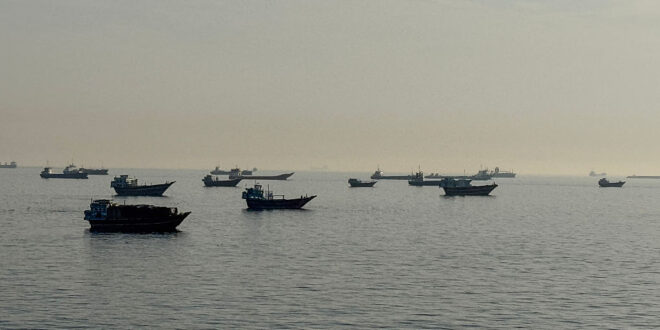
Before the U.S. and Israeli war against the Islamic Republic began on February 28, 20 percent of the world’s seaborne oil trade passed through the strait. Currently, a reported 200 vessels from 87 countries remain trapped inside the Persian Gulf due to fears of traversing the strait.
Provisional Data for May Show Even Steeper Decline
In April, Iran exported 29,455,506 barrels of crude oil and naphtha, an average of 981,850 barrels per day. That is a reduction of nearly 15 percent from March, when the figure was 1.15 million bpd and more than half from February exports, when the figure was 2.12 million bpd.
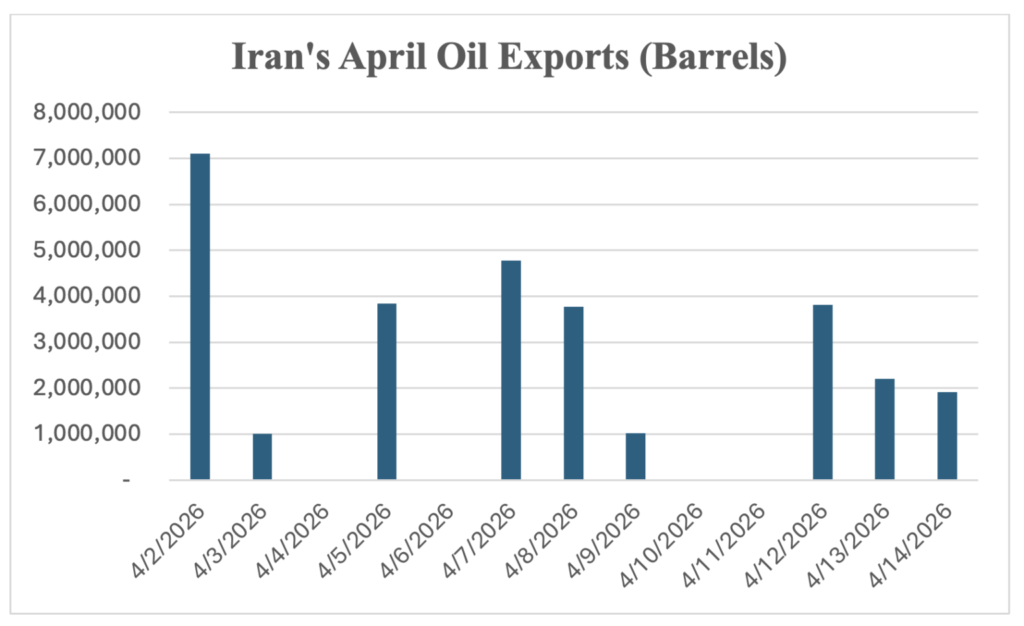
Eighty-six percent of Iran’s April exports took place before the blockade went into effect. During its first two days, April 13 and 14, Iran managed to export some oil, reflecting the fact that the blockade is not a hermetic seal and that the regime might be able to slip through using circuitous routes and smaller vessels.
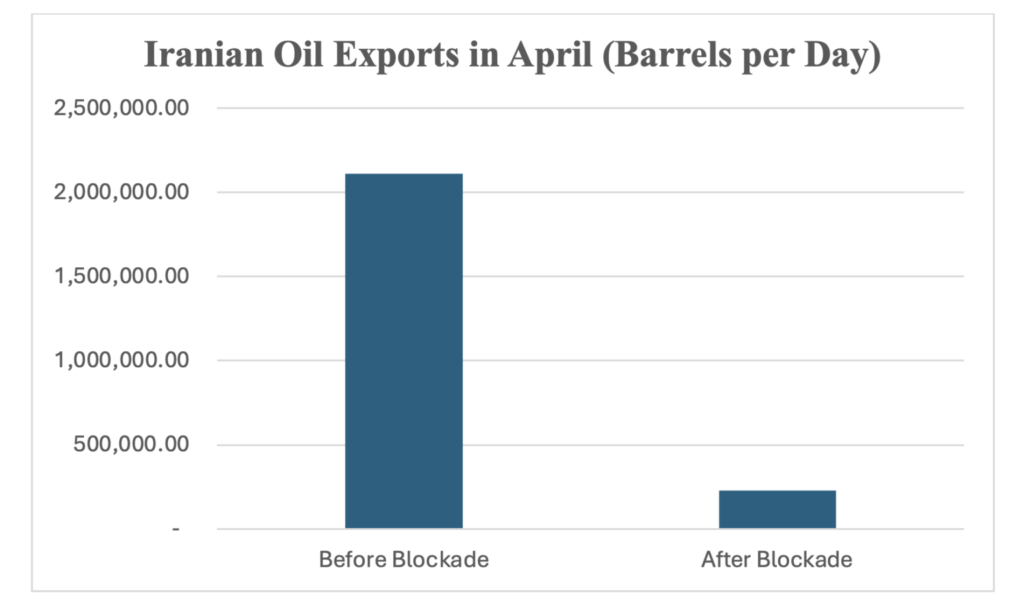
From April 15 to the end of the month, data from Tanker Trackers show that average exports fell to 228,000 bpd, just 10.8 percent of the pre-blockade level. In the absence of a blockade, that figure would likely have remained above 2 million bpd.
Early data from May show a further reduction in exports. In the first 18 days of the month, Tehran managed to export just 2 million barrels of naphtha (which trades at a higher spot price than crude oil) and no crude. That translates to average exports of just 111,000 bpd.
Given the lack of credible information about any level of discount Iran may be offering its wartime customers, it is difficult to estimate how much Iran earned from these exports. However, assuming an average price per barrel of between $100 and $110, Iran may have earned anywhere between $2.9 billion and $3.2 billion in April.
Iran’s Oil Trade Continues Via Illicit Networks
When Iran did manage to export oil in April, nearly 80 percent went to China for purchase by what are called teapot refineries, and 6.5 percent was destined for India. The destination of the remaining 13.5 percent is unknown and likely accounts for oil that has undergone ship-to-ship transfers or has been sold through multiple buyers to mask the ultimate end user. Such oil is often marked as a “Malaysian blend.”
Iran’s petroleum and petroleum-product customer profile has changed slightly since the war, reflecting a change in both geopolitics and geoeconomics. The United Arab Emirates has been removed from the list of usual customers, while India has been added. The regime’s bombardment of the United Arab Emirates, traditionally home to significant sanctions busting, as well as illicit financial and procurement activities by Tehran, has convinced the Emirates not to allow the Islamic Republic to use its ports for re-export.
An April letter from the Treasury Department to banks in the United Arab Emirates (as well as to financial institutions in China, Hong Kong, and Oman) — and new sanctions this month against illicit oil shippers — are also believed to be having an effect. On the other hand, the issuance of a limited sanctions waiver for Iranian oil already in transit or in floating storage has allowed India to import oil from Iran for the first time in seven years.
Of the 19 tankers that transferred Iranian oil in April, 10 were Iranian-flagged vessels. Other flags included Curacao, Botswana, Guyana, Nicaragua, Comoros, and Hong Kong. All the tankers involved in transporting Iranian oil in April had previously been engaged in sanctionable activity.
Let the Blockade Continue Working
As Tehran drags its feet in talks with the United States and tests the resolve of the Trump administration, Washington should continue to keep and enforce the blockade. Absent kinetic options, it is America’s main source of leverage against the Islamic Republic and should be given the proper time and resources to work. As Iran is set to face a brewing domestic energy crisis magnified by wartime supply shocks, the post-war blockade policy can rub salt in the regime’s wounds and further rob it of its major source of revenue.