 Eurasia Press & News
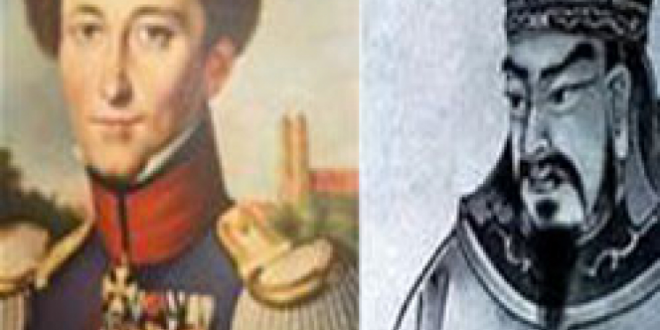
The first part of this study explores Clausewitz’s truly systems-based approach to war and demonstrates how useful this approach remains for formulating a definition of war that can conceptualize the full diversity of modern warfare’s manifestations. To successfully accomplish this, Clausewitz’s definition of war as a chameleon, his unusual theoretical trinity, and the corresponding concept of war as an extended duel will be interpreted and applied to the various phenomena manifested in modern warfare. Furthermore, Clausewitz’s tactical reflections on attack and defense will help explain why powerful states are not always able to win “small wars.”
In the second part of the study, Sun Tzu’s definition will be used and assessed for its relevance to modern warfare. The main observation will concern the sources of differences between Sun Tzu and Clausewitz’s views, stemming from Sun Tzu’s broader scope of analysis, which makes his analytical work more relevant to the strategic dynamics of modern warfare. It should be noted that Sun Tzu’s emphasis on the importance of military information, which is evident throughout The Art of War, may be useful in understanding the inability of powerful states to always win small wars, but proves inappropriate for conceptualizing the diversity of modern warfare.
War is more than a chameleon
In recent years, Clausewitz’s ideas have often been dismissed as outdated because his emphasis on state actors as the primary participants in wars is out of touch with current events. This is precisely the focus of Mary Kaldor’s critique, which argues that because sub-state actors (commanders-in-chief, drug traffickers, terrorists) now exert the greatest influence in what Kaldor calls the “new wars,” Clausewitz’s stated definition of war as an instrument of the state to achieve political goals is out of touch with the fluid nature of war (Kaldor, 2003, p. 15). Another prominent critic is Martin van Creveld, who argues that the dominance of low-intensity conflicts has made Clausewitz’s idea irrelevant (Creveld, 2004, p. 88). However, these critiques have often opted for a simplistic definition of Clausewitzian war (Daase in Strachan, 2007, p. 182). By defining war as more than a chameleon (Clausewitz, 2007, p. 30), Clausewitz acknowledges that the face of war always changes depending on the circumstances surrounding it. “According to Clausewitz, an essentialist definition of war is unacceptable. War must be defined in light of political, economic, and cultural conditions” (Münkler, 2007, p. 4). Depending on the actors involved and the goals pursued, the type of violence used will change (Ruloff, 2007, pp. 10-11). However, as mentioned above, Clausewitz defines war as more than a chameleon, easily changing its face along with the changing environment. This shows that Clausewitz supported the argument that even the generally accepted characteristics of war’s internal tendencies (which he described as the strange trinity) can vary proportionally. This becomes extremely clear when we see Clausewitz’s definition of war: “War is not only a true chameleon – since it changes slightly in each particular case – but in its general external manifestation it is also, because of its inherent properties, a strange trinity” (Clausewitz, 2007, p. 30).
Clausewitz’s Trinity
The components of Clausewitz’s trinity are:
“Primitive violence, hatred, and enmity, considered as blind forces of nature; the play of chance and possibility within which the creative spirit is free to roam; and a certain element of subordination as an instrument of politics, making it dependent on pure reason” (Clausewitz, 2007, p. 30).
Clausewitz continues: “The first of these three aspects concerns the population to a greater extent, the second the general and his army, the third the state” (Clausewitz, 2007, p. 30). The essence of the Clausewitzian trinity stems from the permanent changeability of the relationship between these three elements (Bassford in Strachan, 2007, p. 81). That is why Clausewitz calls it a strange trinity. He writes: “The task is… to keep our theory afloat among these three directions” (Bassford in Strachan, 2007, p. 81). The word “afloat” clearly enshrines dynamism. Otherwise, the three elements are dynamically related to population, military force, and state power (and therefore not only to population, but to something more than population).
Clausewitz views the first element of his trinity, violence, not only as physical violence but as an emotion motivating entry into war (Bassford in Strachan, p. 82). Once the decision to enter war is made, the second element, the play of chance and opportunity, constructs the analytical basis for tactical behavior in war. The play of chance is generated by the realities of the physical world (mountains, roads, vehicles, weapons, demographic and economic characteristics, technology, etc.), as well as by the personalities, potentialities, hopes, dreams, plans, and wills of the subjects involved in the conflict, in which their plans and actions will develop in sync (Bassford in Strachan, 2007, p. 89). Thus, the second element is meant to reflect the precision and complexity of the empirical reality of war. The third element presents war as a strategic instrument and, therefore, as an extension of political activity. This third element of Clausewitz’s trinity, in particular, is often criticized as irrelevant because it cannot be applied to wars waged for economic purposes (Strachan, 2007, p. 9). However, this simply depends on how we define politics. If one uses a narrow definition of politics as the art of statecraft, then Clausewitz’s idea clearly becomes unsuitable for conceptualizing wars involving non-state actors. However, this is misleading. A more accurate definition of politics would be “a highly fluid process by which power is extended to any social entity” (Bassford in Strachan, 2007, p. 84), thus including both state and non-state actors. This may not correspond to Clausewitz’s account of political experience, but it can explain the conditions in which politics is literally equated with statecraft.
Using this fluid trinity, Clausewitz constructs a concept of war that reflects its inherent characteristics, such as unpredictability and multifacetedness, and which can also be used to analyze modern warfare. To summarize, the nature of war, despite the changes occurring in the actors and their goals, can be adequately conceptualized by Clausewitz’s approach.
War as an extended duel
However, the trinity idea is not the only one that can be used to construct the complexity of war. Clausewitz presents a framework that helps us reduce the complexity of war by defining it as an extended duel. He formulates the goal of such a duel as: “to force our enemy to fulfill our will” (Clausewitz, 2007, p. 13). This framework reduces the complex war to war “as the use of violence to realize military objectives in order to achieve political designs” (Daase in Strachan, 2007, p. 186). This trinity, combined with the idea of the “extended duel”, leads to a conceptual framework of violent conflict consisting of five elements: “offensive, defensive, violent methods, military objectives, and political designs” (Daase in Strachan, 2007, p. 185). This framework can describe all forms of political violence; Both traditional wars between states and newly emerging phenomena of warfare: guerrilla warfare, the military logic of the emergence of mass violence in civil wars (Münkler, 2010, p. 146), or terrorism. Terrorism, for example, using this framework can be described as a non-state actor (the “attacker”) practicing surprise attacks on the civilian population (the “methods”) to spread panic among the population (the “military objective”) with the goal of forcing the political power (the “defender”) to make changes in its policies (the “political intent”). An excellent example is the terrorist bombing attacks carried out in Spain in 2004 to influence the election campaign with the aim of influencing the government, which led to the withdrawal of Spanish troops from Iraq.
Confession: Why Powerful States Lose ‘Small Wars’
Clausewitz’s ideas, as contained in the Bekenntnisschrift (the original document in which Clausewitz calls for patriotic guerrilla warfare against the French occupation forces), can help us understand the difference between traditional “great” interstate wars and the “small wars” that arise between powerful states and supposedly less powerful non-state actors (Daase in Strachan, 2007, p. 193). In traditional wars, the participants seek to organize the struggle through a strategy of attack and a tactical defense. In small wars, non-state actors plan the opposite. Because they are militarily too weak to attack the enemy on their own territory, they use offensive tactics through a strategy of defense (Daase in Strachan, 2007, p. 190). Clausewitz writes:
“Within the front we have decided to defend, we can attack the enemy anywhere and anyhow. Here we have every means to destroy the enemy’s army, just as in any attack. Indeed, on our own front, this will be far easier for us than for our enemy” (Daase in Strachan, 2007, p. 189).
This idea of ”counter-defense” fits perfectly with the logical basis of modern guerrilla warfare.
Another element introduced by Clausewitz that helps explain why powerful states lose “small wars” is that wars waged on foreign soil are much easier to endure (Clausewitz, 2007, p. 284). Furthermore, Clausewitz also notes: “National sentiments, decisive for motivation, arise more easily and are more durable when they are evoked by the goal of national self-preservation and defense than by the goal of conquest and offensive measures” (Daase in Strachan, 2007, p. 193).
This idea also corresponds to the first element of Clausewitz’s trinity.
Overall, the notion that Clausewitz’s ideas are only relevant to wars between state actors has been proven wrong. His clear and precise framework and concepts make it possible to understand both conventional and unconventional warfare. His writings on offense and defense, combined with the ideas expressed in the Confessions, provide new clues to why states may encounter difficulties managing asymmetrical wars. Thus, Clausewitz’s ideas remain highly relevant to modern warfare (Duivestein, 2005, p. 220).
Sun Tzu: War is like water
When searching for a detailed definition of the essence of war in Sun Tzu’s The Art of War, one may not find the answer as readily as in Clausewitz’s work. However, despite the cultural, temporal, and methodological gaps between the thinkers, both arrive at similar conclusions. The title of the work, The Art of War, suggests that Sun Tzu partially defines war as subject to chance and friction; however, Sun Tzu also emphasizes the importance of a military leader’s intuition in order to adapt to unforeseen circumstances (Handel, 2005, p. 22). Otherwise, Sun Tzu’s understanding of the fluidity of war’s essence is reflected in the following quote: “Just as water has no permanent form, so war has no permanent conditions” (Sun Tzu, 1986, p. 22).
Combined with some poetic metaphors, this statement highlights the complexity of war: “Musical notes are only five in number, but their melodies are so numerous that no one can hear them all. Primary colors are only five in number, but their combinations are so countless that no one can detect each one. Odors are only five in number, but their mixtures are so manifold that no one can smell each one. In battle, there are only the primary and the extreme forces, but their combinations are so limitless that no one can comprehend each one. They are fruitful in interactions whose number is locked in infinity like interlocking rings. Who can determine where one ends and another begins?” (Sun Tzu, 1986, p. 17).
This quote clearly demonstrates that Sun Tzu, like Clausewitz, recognizes the inherent complexity of war. For Sun Tzu, the complexity of a conflict originates in the interaction with the enemy, which is similar to the second element of Clausewitz’s trinity, which postulates that the complexity of war is linked to the physical conditions in which the opponents’ strategies and tactics are transformed through mutual influence: “I have control over what depends on me, but I cannot be certain of what depends on the enemy. Therefore it is said: one knows how to win, but this does not make victory inevitable” (Sun Tzu, 1986, p. 15).
By emphasizing the unpredictability of war, Sun Tzu creates the principle of chaos (in the modern scientific sense), corresponding to the complexity of modern wars, also reflected in Clausewitz’s concept of war.
An obvious difference between the two thinkers’ ideas is that Clausewitz tends to focus on the “lower,” tactical levels of war, while Sun Tzu introduces the “upper,” strategic layers into his theory (Handel, 2005, p. 24). The main difference between Sun Tzu and Clausewitz is therefore based not on the difference in their definitions of war, but on the levels of analysis. Another difference lies in their assessment of the categories of information and deception. While Sun Tzu considered these categories to be essential components in the war process, carrying them through as a leitmotif throughout his work, The Art of War, Clausewitz, despite understanding their tactical value, did not regard these categories as of primary importance and ignored the significance of surprise attacks and other manifestations of cunning at the strategic level (Handel, 2005, pp. 168-172). We will now present these distinctions in more detail and examine their relevance to understanding modern wars.
Levels of Analysis
The conceptual model of The Art of War is much broader than that of On War. Clausewitz is primarily interested in the art of warfare (however, Clausewitz does not consider diplomacy unimportant; for him, war begins when diplomacy fails, which is why he conducts an analysis that differs from Sun Tzu’s), while Sun Tzu focuses on the strategies that precede the battle itself: from military preparations to diplomatic actions (Handel, 2005, p. 24). For Sun Tzu, strategic superiority leads to tactical success (Sun Tzu, 1986, p. 12). As for Clausewitz, he draws a peculiar distinction between political, economic, and logistical preparations and the command of battle. This is somewhat of an unfortunate thought, given that a strong diplomatic strategy and a well-functioning economy—advantages emphasized by Sun Tzu—undoubtedly play a colossal role in winning a war. This is especially true today, when scientific progress and technological advances, as well as the production and delivery of food, fuel, and weapons, are as important for winning a war as tactical success on the battlefield (Handel, 2005, p. 28). Given the multifaceted nature of this analysis, Sun Tzu’s thinking seems undoubtedly more relevant to modern warfare than Clausewitz’s.
Another significant difference arising from Sun Tzu’s emphasis on strategic preparation is the idea of achieving numerical superiority, in contrast to Clausewitz’s emphasis on the tactical level and the corresponding theory of forming the basis of combat potential (Handel, 2005, p. 40). Sun Tzu believes that the key to victory in war is numerical superiority (Sun Tzu, 1986, p. 22). Clausewitz clearly agrees with the assertion that the probability of victory in battle increases with the superiority of the army’s numbers, but he also believes that a battle can be won by creating an internal numerical superiority (Clausewitz, 2007, p. 243).
The application of Sun Tzu’s teachings on numerical superiority was highly evident in China’s strategy during the Korean War (1950-53), which was expected to achieve tactical success against the US-led UN forces (Friedman, 2001, p. 43). Furthermore, the same type of strategy was employed by the USSR after World War II. The Soviet Union significantly outnumbered NATO forces in terms of non-nuclear assets. This situation influenced President Eisenhower to decide “to cease attempts to compete in weapons power and to convert the used resources into capital rather than to build up the United States’ missile arsenal” (Friedman, 2001, p. 48). This clearly demonstrates the ability of Sun Tzu’s ideas to help explain some modern military-strategic constellations.
Sun Tzu and Intelligence
Throughout The Art of War, Sun Tzu emphasizes the importance of information. According to Sun Tzu, warfare, both at the strategic and tactical levels, relies entirely on deception and surprise, and thus on intelligence (Sun Tzu, 1986, p. 9). Sun Tzu argues that the constant use of information about the enemy’s strategy (his political objective, coalition capabilities, etc.) and his tactical situation (the number and types of troops, military equipment, available resources, etc.) is the only effective way to exploit his weaknesses, and it is on this basis that military strategic planning should be formed (Sun Tzu, 1986). Critics believe that Sun Tzu overrelies on information, thereby making the element of surprise and deception a panacea (Handel, 2005, p. 194). Furthermore, the question arises: does Sun Tzu’s belief in the attainability of reliable intelligence and the ability of such intelligence to facilitate accurate forecasts (Handel, 2005, p. 193) contradict his aforementioned idea of the infinite possible transformations of war? Nevertheless, the importance of intelligence in modern warfare should not be ignored on these grounds. Today, information, surprise, and deception do play a significant role in warfare. For example, during the Persian Gulf War, Saddam Hussein’s loss of aerial reconnaissance allowed the United States and its allies to successfully employ deception tactics, which, in addition to the overwhelming superiority of the US military, contributed to the swift defeat of the Iraqi forces (Finlan, 2003, p. 33).
Another side of the thinking generated by Sun Tzu’s ideas on intelligence and concerning the understanding of modern warfare is more elusive. Sun Tzu recognized that intelligence and information gathering are extremely difficult tasks. The chapter “The Use of Spies,” in which Sun Tzu writes about disinformation activities, countering disinformation, and countermeasures against counter-disinformation, clearly reflects his understanding of this difficulty. When considering the historical world surrounding Sun Tzu, his ideas about the difficulty of gathering information can be examined more deeply. Sun Tzu’s political world consisted primarily of two entities: the emperors of Chinese states and the rulers of barbarians (Kane, 2007, p. 30). The chapter on tactics points out that the vast majority of direct military clashes took place in a conflict zone (Sun Tzu, 1986, p. 15). This contrasts with the complexity of modern conflicts. Today’s conflicts often involve a vast array of actors with different motives and strategies (states, warlords, terrorists, securities traders, criminal organizations, etc.), as well as different methods of warfare (traditional tactics, guerrilla warfare, terrorist attacks, etc.). Therefore, it can be assumed that the task of adequate information is extremely difficult, if not impossible, today. Consequently, Sun Tzu’s insights on the complexities of information can help explain why powerful states misjudge certain situations and underestimate the political and military capabilities of non-state actors, leading them to adopt erroneous strategies. This leads to their defeat in asymmetric conflicts.
Conclusion: Both thinkers remain relevant
This essay has shown that the ideas of both Clausewitz and Sun Tzu remain essential for understanding contemporary conflict. Clausewitz’s writings on offense and defense, complemented by ideas expressed in the Confessions, offer an analytical understanding of modern guerrilla warfare. One minor weakness of Clausewitzian theory is its overemphasis on the tactical level of war and its neglect of the strategic level. Given this, Sun Tzu’s broader approach has continued relevance for the strategic dimension of war. Furthermore, Sun Tzu’s discussion of intelligence is useful in considering the difficulties faced by states engaged in asymmetrical warfare. However, Sun Tzu leaves little room for conceptualizing warfare. This, in fact, is a strength of Clausewitz’s analytical thought. Clausewitz’s definition of war as more than a chameleon, seemingly timeless and universal, complemented by his concept of the “trinity,” helps explain the dynamics of modern warfare of all types. Clausewitz thus transcends the boundaries of his own experience, imposed by the political and technical conditions of his time (Howard, 2002, p. 1). Furthermore, his framework of war as an extended duel is extremely useful in conceptualizing various forms of modern political violence. Sun Tzu does not offer such a conceptual framework, making Clausewitz’s On War more suitable for understanding and structuring modern warfare.