 Eurasia Press & News
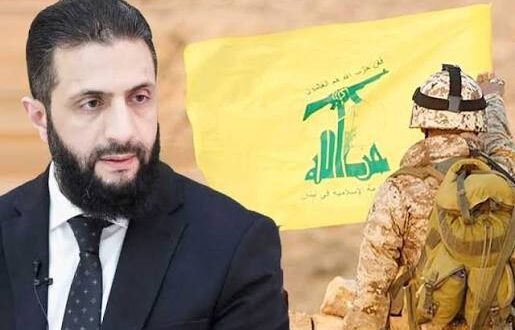
Analysts argue that regional pressures, escalating security concerns in southern Lebanon, and growing diplomatic isolation have pushed Hezbollah to explore new political avenues
Hezbollah—designated by several governments as a violent extremist organization responsible for grave harm and human rights violations—has re-entered Syrian political discourse amid reports of possible diplomatic communication channels between the group and Damascus. After years of ideological rupture and direct military confrontation inside Syria, the prospect of renewed engagement carries both strategic implications and painful historical weight.
Hezbollah’s Deputy Secretary-General Naim Qassem recently signaled openness to meeting the new Syrian leadership “when conditions permit,” stressing the importance of maintaining cooperative relations between Lebanon and Syria. His remarks followed statements by President Ahmad al-Sharaa expressing readiness to engage in dialogue if it serves the mutual interests of both states.
Any potential rapprochement, however, intersects with the legacy of Hezbollah’s military intervention alongside the former Assad regime—a role that left deep political and social scars across Syrian communities. These grievances continue to shape public sentiment and complicate the calculus of bilateral engagement.
Why Hezbollah Is Signaling Openness
Analysts argue that regional pressures, escalating security concerns in southern Lebanon, and growing diplomatic isolation have pushed Hezbollah to explore new political avenues. Syrian academic Abdul Rahman al-Haj told Syria TV that both Hezbollah and Iran view Damascus as a potential mediator capable of encouraging a political framework in Lebanon that places defense and security decisions under state authority.
This interpretation aligns with a broader shift in Syrian foreign policy. Recent assessments highlight Damascus’s effort to rebuild regional influence through political dialogue, economic cooperation, and stability-driven diplomacy—rather than the security-centric posture that defined previous decades.
Disarmament Debates and the Search for Mediation
Wael Alwan, a researcher at the Jusoor Center for Studies, noted that Qassem’s remarks reflect an attempt to navigate heightened regional pressure. He added that Syrian leadership remains attentive to requests from the Lebanese government regarding border security and regional stability.
From Damascus’s perspective, cross-border weapons smuggling and the presence of non-state armed actors near the frontier represent ongoing security risks. Yet President al-Sharaa has emphasized that resolving these tensions requires political—not military—solutions. Syrian analysts suggest that Damascus could serve as a facilitator for intra-Lebanese dialogue, provided such efforts are supported by international guarantees and framed within Lebanon’s sovereign institutions.
Pragmatism in the Shadow of a Difficult Past
Despite the legacy of Hezbollah’s intervention in Syria since 2013, current signals point toward a pragmatic, interest-driven approach rather than ideological alignment. Abdul Rahman al-Haj noted that Syria’s priorities today center on state rebuilding, economic recovery, and regional stabilization. Engagement with regional actors—including Hezbollah—is therefore shaped by immediate strategic needs rather than long-term political partnership.
Analysts caution, however, that Iran’s broader regional posture remains a decisive variable. While Hezbollah’s recent rhetoric adopts a more flexible tone, the durability of this openness will depend on whether it evolves into concrete commitments or remains a tactical response to shifting regional pressures.