 Eurasia Press & News
The Lebanese government measures taken against Hezbollah and its decision to open direct negotiations with Israel increased the tension between Hezbollah and the Lebanese leadership, as senior figures in the organization and its supporters accused President Joseph Aoun and Prime Minister Nawaf Salam of betraying the “resistance”[2] and collaborating with Israel. According to reports, the IDF Intelligence Directorate also warned that direct negotiations could put Aoun’s life in danger.
The concern that the escalation of Hezbollah’s rhetoric will threaten and possibly compromise the lives of Lebanese senior officials has put Hezbollah’s Unit 121 in the spotlight. The Unit is a covert entity subordinate to the organization’s secretary general and has been responsible for a series of assassinations of Hezbollah opponents in the political and security arena during the past two decades. The most prominent case was the assassination of former prime minister Rafik al-Hariri in February 2005.
The operational patterns of the unit, as revealed in the proceedings of the Special Tribunal for the Hariri assassination, indicated high intelligence, technical proficiency and the use of deception to disrupt and sabotage the efforts of investigative bodies attempting to discover responsibility for the assassinations, and therefore, none of the unit’s operatives has ever been arrested.
In Amit Institute assessment, Hezbollah’s inability to change the decisions of the Lebanese government from within, since its ministers represent less than a third of the total number, together with the growing internal pressure from the state leadership determined to implement the state’s monopoly on weapons and to conduct direct negotiations with Israel, may lead the organization to renew political assassinations to halt moves perceived as an existential threat to Hezbollah and to reestablish its deterrent power. In such a case, Hezbollah will most likely exploit the capabilities of Unit 121 and its years of accumulated experience.
The Escalation of Hezbollah Threats Against Senior Lebanese Officials
- In recent weeks, Hezbollah’s rhetoric against the Lebanese leadership has escalated, especially President Joseph Aoun and Prime Minister Nawaf Salam, because of government measures against Hezbollah and the decision to open direct negotiations with Israel amid the renewed hostilities. American efforts to promote a meeting between President Aoun and Israeli Prime Minister Netanyahu also hardened Hezbollah’s rhetoric:[3]
- After the Lebanese government decision in August 2025 to disarm Hezbollah, secretary general Na’im Qassem warned that they did not want a civil war, “but it could happen.” He called negotiations with Israel “defeatist,” said they would not be recognized by the organization and it would not recognize its final results. He accused the Lebanese authorities of trying to “stab the resistance in the back,” and asked if there were “another country in the world in which the government agrees with the enemy in order to confront resistance to the occupation?”
- The deputy chairman of Hezbollah’s political council, Mahmoud Qamati, opined that after the end of the campaign against Israel, a “popular tsunami will sweep away this government, its political sins and its policies.” He said that by agreeing to negotiate with Israel, the state was “rushing toward humiliation and disgrace, and toward relinquishing sovereignty, step by step.”
- Hussein al-Hajj Hassan, a member of the Hezbollah faction in the Lebanese Parliament, claimed the government had lost its authority the regime in Lebanon was “not proficient in politics, but rather in submission to the United States.”
- An op-ed piece published in Hezbollah’s daily al-Akhbar entitled, “The Vichy Government in Lebanon: Between Loss of Legitimacy and a Trial for Treason,” compared the Lebanese government’s policy to collaboration with the enemy during wartime (al-Akhbar, March 6, 2026).
- The editor-in-chief of al-Akhbar, Ibrahim al-Amin, claimed that President Aoun and Prime Minister Salam, whom he called the “American-Saudi guardianship duo,” were not reading the map correctly and did not understand Hezbollah’s strength in Lebanon and its “military” power. He said “no agreement will pass without Hezbollah’s approval” and threatened that if President Aoun met with Prime Minister Netanyahu, he would effectively become a “president on behalf of the occupation” and therefore every form of “resistance” to him would be “a duty, at all times and in every way.”
- Hezbollah supporters also intensified the campaign in the public sphere and on social networks with posters that accused Aoun and Salam of collaboration with the “Zionist enemy.”
- Reportedly, an intelligence briefing by the IDF Intelligence Directorate to the Knesset Foreign Affairs and Defense Committee noted that the negotiations conducted by the Lebanese president with Israel put his life in danger (N12, April 29, 2026). The report was widely covered in Lebanese media and was amplified Aoun’s supporters. Richard Kouyoumjian, head of foreign relations in the Lebanese Forces Party, said various members of the Hezbollah leadership had publicly stated that Aoun’s fate would be similar to that of Bashir Gemayel, the Lebanese president who was assassinated in 1982 because of his ties with Israel (al-Jadeed, May 2, 2026). Sources close to President Aoun were quoted as saying that Israeli assessments on the issue were being taken seriously by those close to the Lebanese president (MTV, April 29, 2026).
- Concern that Lebanese officials might be in danger was manifested by a report stating that the Lebanese army had erected a checkpoint in front of the building where former ambassador Simon Karam resides in the Achrafieh neighborhood in Beirut. According to the report, security was being increased because of assessments that he will head the Lebanese delegation for direct negotiations with Israel after he had already headed the civilian delegation in talks as part of the ceasefire monitoring mechanism (MTV Lebanon, April 27, 2026).
Unit 121 and Political Assassinations
- Over the years, Hezbollah has often assassinated its internal Lebanese rivals. That was widely exposed by the activity of the Special Tribunal for Lebanon, established by the UN Security Council with Resolution 1757 of May 2007 to investigate the assassination of former Lebanese prime minister Rafic al-Hariri in February 2005.[4]
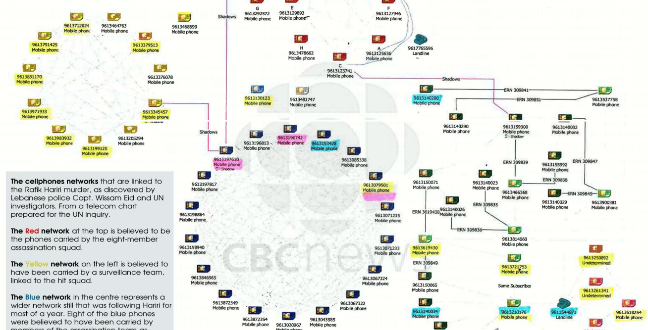
- The Tribunal operated between 2009 and 2023, and during the proceedings evidence was presented of the assassins’ advanced capabilities to surveille and track targets, the use of operational communication methods and of deception and misdirection systems to attribute the assassinations to other parties. For example, a network of operational communication circles used by those responsible for the Hariri assassination was revealed through a series of anonymous mobile phones that tracked his movements in the days preceding the attack and efforts to present the assassination as a terrorist attack carried out by extremist Sunni elements, including a false claim of responsibility to divert blame from Hezbollah.
- The proceedings were conducted against five Hezbollah operatives who were indicted in absentia: Mustafa Badreddine, a senior figure in Hezbollah’s military wing who was appointed head of the organization’s operational array in 2008 after the elimination of Hezbollah chief of staff Imad Mughniyeh,[5] who was his cousin and brother-in-law; Salim Jamil Ayyash, who was accused of commanding the cell which assassinated Hariri and of involvement in three other assassinations;[6] Hussein Hassan Oneissi, Assad Hassan Sabra and Hassan Habib Merhi, who were accused of making preparations for the assassination and efforts to conceal Hezbollah’s involvement. After Badreddine was killed in Syria in 2016 during an internal Hezbollah dispute, his name was removed from the indictment.
- In August 2020, the Tribunal determined that only Ayyash was guilty of the charges and sentenced him to life imprisonment, while stating that there was insufficient evidence to convict the other three living defendants. Regarding Badreddine, the Tribunal said there was no clear evidence to establish that he held a command role at the time of the Hariri assassination. In addition, according to the verdict, there was no evidence of Hezbollah leadership involvement in the assassination. However, following an appeal, Oneissi and Merhi were also convicted of involvement in the Hariri assassination (al-Akhbar, March 10, 2022).
- Only after the August 2020 verdict were details revealed about Hezbollah’s Unit 121, which was responsible for the Hariri assassination. According to several security figures “past and present” from the United States and countries in Europe and the Middle East, the Unit is directly subordinate to Hezbollah’s secretary general and behind other assassinations in Lebanon between 2007 and 2013, including those of Wissam Eid and Wissam al-Hassan, officers in Lebanon’s internal security forces who were investigating the Hariri assassination, and of Muhammad Chatah, former minister of economy and ambassador to the United States who was a vocal opponent of Hezbollah and the Assad regime in Syria. Two former American officials said the information had been provided to the Tribunal panel but the judges could not use it publicly because of the risk of exposing sources and methods (The Washington Post, August 25, 2020). Unit 121 has also been attributed with assassinations of journalists known as Hezbollah opponents, such as Samir Kassir from the daily al-Nahar, who was killed by car bomb in June 2005, and Gebran Tueni, editor and publisher of al-Nahar, who was killed by a car bomb in December 2005 (the Breaking Hezbollah’s Golden Rule podcast, Washington Institute for Near East Policy, November 15, 2023).
- In November 2024, it was reported that Salim Ayyash was eliminated in an Israeli strike in Syria. According to one version, the strike occurred in the Syrian town of al-Qusayr near the Lebanese border, while according to another he was eliminated in a strike on an apartment belonging to Hezbollah in the Sayyida Zaynab area near Damascus (al-Arabiya and L’Orient Today, November 10, 2024). Ayyash’s presence in Syria may have indicated that Unit 121 exploited Syria to assassinate the organization’s rivals in Lebanon. According to the IDF spokesperson, Ayyash commanded the Unit until his death (IDF spokesperson, November 14, 2025).
Toward the end of 2025, with rising tensions between Hezbollah and the Lebanese government, the IDF Arabic spokesperson revealed the involvement of Unit 121 in five more assassinations in Lebanon:
- On August 2, 2023, the body of Elias al-Hasrouni was found; he was secretary general of the Lebanese Forces party in Bint Jbeil and known for his opposition to Hezbollah. The organization claimed he was killed in a car accident, however the IDF spokesperson reported that Unit 121 was responsible for his assassination. According to the statement, Unit 121 operatives ambushed al-Hasrouni on a road near his home in Ain Ebel in south Lebanon, kidnapped him, poisoned him and broke his ribs. To create the impression that he veered off the road and died in a car accident, they replaced his body in his car and lodged it against a tree in a ditch (Avichay Adraee X account, November 14, 2025).
Unit 121 also assassinated individuals connected to Hezbollah’s involvement in the massive explosion at the Port of Beirut in August 2020. Joseph Skaf, who served as head of the port’s drug control department, was reportedly thrown to his death from a height of three meters by Unit operatives in 2017 after he demanded Hezbollah remove quantities of ammonium nitrate from the port. Mounir Abu Rjeili, head of the customs anti-smuggling department, was stabbed to death by Unit operatives in December 2020 following information he provided regarding Hezbollah’s connection to the explosion. Joe Bejjani, a photographer who was among the first to document the scene of the explosion and was recruited by the Lebanese army to assist in the investigation, was shot to death inside his car in December 2020 by Unit operatives who stole his mobile phone and fled. Lokman Slim, a prominent political activist and journalist critical of Hezbollah, was shot to death inside his car in February 2021 by Unit operatives shortly after accusing Hezbollah and the Assad regime in Syria of responsibility for the explosion (X account of Avichay Adraee, the IDF spokesman in Arabic, December 2, 2025).
Another assassination suspected of having been carried out by Unit 121 was that of Pascal Sleiman, a district official in the Lebanese Forces party who died under suspicious circumstances in April 2024 after being kidnapped and transferred to Syrian territory, where he was murdered. The speed with which Lebanese security authorities attributed the murder to a gang of car thieves of Syrian origin increased suspicions, and Lebanese officials pointed a finger at Hezbollah and claimed that Pascal had in fact been the target of political assassination by the organization (L’Orient Today, April 10, 2024).
Hezbollah has never acknowledged the existence of the Unit and its current head is unknown. One possibility is that command was transferred to Talal Hamiyah, one of the last members of Hezbollah’s old-guard generation who for years commanded Unit 910, responsible for overseas attacks. The United States administration placed a reward of $7 million on his head (Rewards for Justice website, October 10, 2017)