 Eurasia Press & News
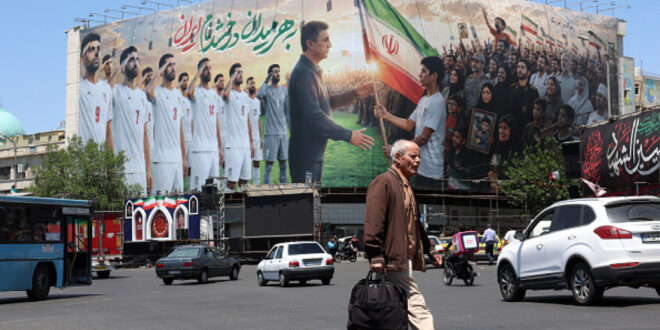
Iranian analysts say Washington has softened parts of its negotiating position as US officials warn Tehran used the ceasefire to strengthen its military power.
A cloud of uncertainty continues to hang over relations between Tehran and Washington as the region swings between renewed military confrontation and a fragile political settlement, after US President Donald Trump announced he had postponed a planned attack on Iran to allow more time for negotiations.
A preliminary understanding has emerged in recent negotiations between Tehran and Washington, including an agreement to dedicate 30 days to discussions over unresolved disputes, Iranian analyst Hadi Mohammadi told The New Arab.
The US side has reportedly shown “increased flexibility” in recent talks, including over ceasefires across multiple fronts, including Lebanon, Mohammadi said, while Iran had agreed to discuss the future of its stockpile of 60% enriched uranium during the proposed negotiation period.
Washington has “stepped back” from its earlier demand that the enriched material be fully removed from Iran and transferred abroad, marking a notable shift from previous US positions, he said.
Discussions also included Iranian demands for compensation through a reconstruction and development fund, Mohammadi added, while disagreements remained over the scale and timeline of releasing frozen Iranian assets.
“There were no major disputes over easing some sanctions, particularly those targeting Iran’s oil sector,” he said.
US concerns grow over Iran’s military ‘resilience’
The apparent shift in Washington’s position comes following reports on Tuesday that US military officials believed Iran had spent the month-long ceasefire adapting its tactics for any future confrontation with the United States.
The New York Times reported that Iran had dug out a significant number of ballistic missile sites previously buried by US strikes, repositioned mobile missile launchers and reinforced underground facilities carved into granite mountains.
US officials cited by the newspaper said Iranian commanders, possibly with Russian assistance, had studied American flight patterns during the ceasefire, while the downing of an F-15E jet and groundfire that struck an F-35 exposed weaknesses in increasingly predictable US flight tactics.
The officials also acknowledged that despite months of intensive bombing and the killing of senior Iranian commanders, the war had produced a more hardened and resilient adversary capable of threatening US aircraft, Gulf energy infrastructure and the Strait of Hormuz.
Mohammadi cautioned against optimism over the chances of a breakthrough, saying deep differences still remained between Tehran and Washington despite what he described as increased flexibility from both sides.
He also warned that the contradictory nature of US messaging made it difficult to determine whether Washington’s recent shift reflected genuine diplomatic intent or a tactical pause before another military escalation.
Iranian analyst Ali Gholhaki told The New Arab that Trump had been “fully determined” to launch strikes last Saturday before Tehran received warnings from “friends in the region”, likely in Qatar, regarding the planned assault.
Gholhaki argued that the postponement reflected uncertainty in Washington and Tel Aviv over whether military objectives could actually be achieved, including fears of broader regional retaliation and doubts over the feasibility of assassinating senior Iranian political and military leaders.
He also said Tehran had rejected a recent US proposal calling for a comprehensive agreement to be signed immediately, instead insisting first on ending the war, lifting the naval blockade, reopening the Strait of Hormuz and allowing Iranian oil exports to resume before nuclear issues were fully addressed.
According to Gholhaki, Iran’s leadership remains committed to preserving domestic uranium enrichment and keeping its stockpile of 60% enriched uranium inside the country, while only considering reducing enrichment levels in exchange for significant concessions from Washington.
Meanwhile, Pakistan has continued mediation efforts between Tehran and Washington. Iranian state media reported that Pakistani Interior Minister Mohsin Naqvi met Iranian Foreign Minister Abbas Araghchi in Tehran on Monday evening to discuss efforts to end the war.
Iranian Foreign Ministry spokesman Esmail Baghaei said negotiations with Washington were continuing through Pakistani mediation despite the US rejecting Tehran’s latest proposal and returning amendments through Islamabad.
Baghaei reiterated that Iran’s right to uranium enrichment remained “non-negotiable” under the Nuclear Non-Proliferation Treaty.