 Eurasia Press & News
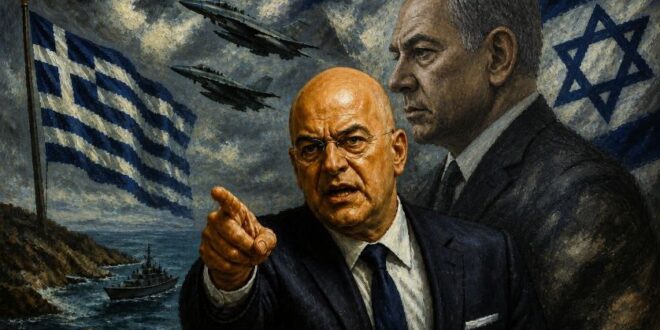
May 4, 2026 – Türkiye does not accept impositions in its vital areas of sovereignty, does not allow faits accomplis, and responds on the ground when necessary.
Greek Defense Minister Nikos Dendias attended the 3rd Summit held in Athens. He gave a speech at the International Maritime Security Conference. Before we get into the details and evaluation of the speech, let’s talk about the event. The conference series, hosted by the Eugenides Foundation, stands out not only as an academic event but also as a tangible reflection of Greece’s effort to institutionalize maritime geopolitics, maritime security and multi-domain warfare approach.
The Eugenides Foundation was founded in 1956 by Greek Shipowner and philanthropist Eugenios Eugenidis to contribute to maritime education, but has recently become the center of geopolitical and maritime security discussions. The last conference, held under the main theme of “Maritime security in the age of geopolitical, geoeconomic and technological ruptures”, is a platform where a system-based and multi-layered security architecture that goes beyond the classical understanding of maritime power is discussed.
The panels held at the conference focused on the security of global maritime trade, critical straits (Hormuz, Bab El-Mandeb), artificial intelligence-supported warfare systems, technological transformation in the maritime area and gray zone conflicts. These titles show that the maritime perspective of Greece, which operates the world’s largest maritime merchant fleet (including ship ownership and flag ownership), is not limited to the Aegean, but covers a wide range from the Black Sea to the Indian Ocean, from the Eastern Mediterranean to global trade routes.
The organizational structure of the event is remarkable. It includes the state, academia, private sector and think tanks, as well as shipowners, port operators and logistics actors. The conference presents a hybrid model that brings them all together on the same ground as if in preparation for a war period. At the international level, the participation of Rodger Baker and Mackinder Forum circles, who are linked to institutions such as the American Stratfor (Shadow CIA), shows that the conference is based on a network of thought integrated not only with the national but also with the Western (+Israeli) security architecture.
Dendias’ Speech.
The most challenging speech of the conference was made by Greek Defense Minister Nikos Dendias. Dendias’ speech is a clear declaration of the transformation in Greek defense doctrine. In his speech, which he made by pushing both the limits of the Greek National Power and the guidance of universal logic and knowledge, Dendias both gave remarkable messages about Türkiye and explained the plans for the future of Greek naval power.
We will attack from anywhere, with every weapon.
Referring to the Turks, Dendias said, “In the future, the potential aggressor will have to know that we will be able to respond with a large number of strategic missiles not only from the Aegean, but also from the Eastern Mediterranean and wherever we deem necessary, from protected platforms.” He adds the following about the force structure and strategy of the future: ‘’Of course, we will protect the Aegean. And we will protect it much better than we have done so far. But we will do it in a much more complex way. We will do this with missiles. We will do this with unmanned sea vehicles. We will do this with small platforms that work on the water. We will do this with unmanned systems that will operate underwater. Thus, we will ensure the security of the Aegean in a much more economical way compared to the past. We will give our large platforms freedom of movement and deterrence… Within the framework of Agenda 2030, we have launched an initiative called “Achilles’ Shield”. This system consists of five layers: Sea, Land, Air, Cyberspace, Space…’‘
This approach, put forward by Nikos Dendias, describes a transformation that captures the spirit of the age at first glance. Distributed structures, low-cost strikers, unmanned systems and network-centric warfare… However, the issue is not to produce fancy concepts and doctrines, but to make it sustainable. Multi-layered and technology-intensive models like “Achilles’ Shield” look flawless on paper, but the battle itself is not a showcase of technology, but a test of endurance. The real determinants of this type of structure are blood and iron. What feeds the blood is the war-ready manpower, and what feeds the iron is continuity, durability, production power and the industrial and financial infrastructure that supports them. Considering Greece’s current economic capacity, foreign dependency in the defense industry and very limited production capability, it is a serious question mark how the imagined and conceptualized system will be maintained in a long-term conflict. What will be replaced when the missile stocks are depleted? How will the sensor-network architecture survive under electronic jamming and the kinetic attacks of suicide UAVs? How will satellite-supported systems be operated uninterruptedly in times of crisis and war? These are not theoretical questions, but questions that directly determine the fate of the war. Therefore, although the model drawn by Dendias points in a technologically correct direction, unless the production, logistics and economic sustainability behind it are ensured, it risks producing a fragile dependency rather than a decisive advantage in the field.
To deter Türkiye.
In his speech, Dendias says: “All we have to do is to be strong enough to deter any threat from our neighbor. Greece should have a 360-degree perspective. 220-230 degrees of these 360 degrees faces the sea. Therefore, how we move in the maritime environment is of vital importance to us… We will give our large platforms freedom of movement and deterrence… Expressing the scenario they will face if they create a fait accompli against Türkiye in the Aegean, he adds: “Because the scenario we have faced so far has been this: Someone will come and invade a small island of ours. Then the following question is put in front of Greece: What are we going to do? Are we going to declare total war? Are we going to enter Eastern Thrace? Or are we going to organize an extremely difficult operation to get it back?”
The main problem here is that the concept of “deterrence” is misplaced. Greece’s aim should not be to deter Türkiye. Because for Türkiye, some topics are not ordinary competition, but a matter of direct vital interest. Initiatives such as the unilateral declaration of 12 miles in the Aegean Sea, the creation of a de facto fait accompli on our continental shelf in the Aegean or Eastern Mediterranean, or the imposition of the Seville map on the ground are not only seen by Türkiye as moves that disrupt the status quo, in such a case, the problem arises from the perspective of deterrence and escalation and is promoted to a existential priority area for Türkiye. Türkiye reserves the right to intervene against such steps. This is in international law, Article 51 of the UN Charter. It uses the right of self-defense clearly defined in the article. In short, if Greece, which started the crisis, establishes a narrative of deterrence, and Türkiye sees it as a vital struggle, the equation will change completely. In short, trying to “deter” Türkiye has the opposite effect when miscalculated. Türkiye does not take a step back, especially on issues that directly concern the Blue Homeland, such as maritime jurisdiction areas and the KKTC-TRNC. These areas are not a matter of bargaining for Ankara, but of rights. Therefore, every maximalist step taken here increases tensions instead of producing deterrence. Especially if it is acted upon by the push of external actors – France and Israel – this becomes even more risky. Because who stands by whom and how much in a crisis, history has shown many times, especially to the Greeks, that this is not always guaranteed.
Greek Israeli Alliance.
When we read Dendias’ speech from a broader perspective, it is seen that the recent outbursts of Greek politicians are not a coincidence in parallel with their developing relations with Israel. Throughout its history, Greece has always acted in the shadow of the great powers. In this way, Greece constantly expanded its borders when Turkiye was weak, and when Türkiye became stronger, it focused on the maritime objectives by using the great powers against Türkiye. Today, this goal is to get Türkiye to accept the Seville map together with the Greek Cypriot Administration, and to put an end to the Turkish military presence in the TRNC. After capturing these targets, there is no doubt that new goals will follow.
It is very interesting that Greece and Israel are states with the same characteristics. Both have their own Great Ideals (megali Idea). One engraves Byzantium and the other Arz-ı Mevud in the minds from infancy. Both act with the reflex of the religious state in essence. While the Greek Constitution clearly stipulates that the religion of the state is Orthodox Christianity, Israel, on the other hand, has rapidly moved away from its secular character, especially in the last 20 years, and evolved into a society shaped by religious, fascistic and eschatological chemistry. In this process, the population of the secular (hiloni) segment, most of which are technocrats, is declining in Israel, and a significant part of the middle class—including secularists—is leaving the country.
The fact that Greece did not react to the intervention of Israeli warships in the Sumud flotilla carrying aid to Palestine within its own search and rescue area on May 1, 2026, and almost cooperated, is actually an expression of the fact that both states are now acting jointly in every field. As a result, the Zionist/Evangelical front in the USA being flesh and nail with the Greek lobby gave life to the Eastern Mediterranean Maritime Security Initiative between Israel, the Greek Cypriot Administration, Greece and the USA, which are against Türkiye in the Eastern Mediterranean. In this context, it is noteworthy that apart from the fact that Greece and the Greek Cypriots are on the same front with Israel, which is a war criminal and is completely humiliated in the world in terms of morality and ethics, Israel has put both states in the position of voluntary proxies in order to put pressure on Türkiye. On the other hand, France’s signing of strategic defense cooperation agreements with both Greece and the Greek Cypriot Administration has been concrete indicators that Türkiye is surrounded by NATO partners on the Blue Homeland and TRNC fronts. Dendias wrote his speech in such a conjuncture.
Dendias are overly confident in Israel’s technology, intelligence and precision target strike capacity. However, real life, especially the Ramadan War with Iran, clearly shows that these capabilities alone are not decisive. In addition to military developments such as the collapse of Israeli air defenses in the war, the hitting of many strategic areas, the people living in shelters for days, the damage to the Israeli ground force in the face of Hezbollah’s military capabilities in Southern Lebanon, the war costs of more than 130 billion dollars in Israel put the economy in difficulty; weaknesses such as the limits of social mobilization (especially 100 thousand people from large religious segments cannot be recruited), pressure on capital and qualified manpower, dependence on maritime transportation lines, and the cessation of activities of some ports on the Red Sea-Mediterranean axis make it difficult for Israel to transform its operational superiority into strategic sustainability. In such an equation, risks such as disruption of maritime transportation, contraction of foreign trade and limitation of land transportation lines through Jordan and Egypt will also come into play in a possible enlargement scenario. For this reason, the issue is not only the ability to strike, but also how long and on what economic and social ground it can maintain that ability. At this point, it may turn into a serious strategic mistake to interpret Israel’s current kinetic agility as a permanent superiority in the face of an actor like Türkiye, which has a wide geography, deep industrial infrastructure and multidimensional power generation capacity.
A mindset full of contradictions.
Dendias’ speech contains contradictions from time to time. While he puts Türkiye at the center for almost half of his speech, he takes a different approach. He says: “ I want to make this clear: Greece should not be a Türkiye-centered country. Türkiye is not our main problem. And it should not become our main problem.” Yes, he says “Türkiye is not our main problem”, but when he looks at the whole speech, Türkiye is at the center of the system he has established, the investments he has made and the threat picture he has drawn. There is an approach that puts Türkiye at the center, tries to balance it, and even tries to suppress it. So, the discourse is one thing, the reality is another. He says, “We are looking at 360 degrees”, but the center of gravity of those 360 degrees is the Aegean and Eastern Mediterranean. This means a de facto Türkiye-oriented security architecture. There is no point in hiding it. If Dendias really says that “Türkiye is not the main problem”, as he said in his speech, then Greek foreign policy should be in line with this. In other words, theory and practice must match. But the picture seen today is the opposite.
Or he can set worldwide goals when talking about balancing his goals with his capabilities. “In this environment, we, as Greece, have to make choices. We do not pursue goals that are beyond our reach. We are a small, medium-sized country. But we also have the largest merchant fleet in the world. We depend on sea lines of communications. The effect of this is not only seen in numbers or statistics. Inflation is killing the economy and especially hitting the poorest segments of society… Greece has to develop a broad maritime security perspective extending not only to the Aegean, but also from the Black Sea to the Red Sea, from the Eastern Mediterranean to the Indian Ocean,” he says. On the one hand, he talks about deterring Türkiye, and on the other hand, he talks about having a presence in the Red Sea and the Indian Ocean. The bill for this approach is on the Greek people. The economy, already in a difficult situation, is further burdened by billions of euros in defense spending.
A freak approach to the full maritime jurisdiction for the islands.
Perhaps the record-breaking part of his speech in terms of detachment from reality was his comments on the law of the sea. “But I don’t forget a challenge that is closer to home. Because we still have a neighbor who interprets the law of the sea in a unique way. For example, our dear neighbor Türkiye openly claims that the islands do not have a continental shelf. It argues that regardless of the size of the islands – for example, Crete – cannot constitute an Exclusive Economic Zone. He claims that the Aegean islands are located on the Asian continental shelf. These allegations are seriously expressed on international platforms. However, if a first-year university student taking an international law course wrote such a thing, he would either fail the exam, or his friends would laugh to tears. But we are confronted with these theses in serious forums around the world.” Dendias’ words are scientifically problematic. Because international maritime law is not black and white. Interpretation, jurisprudence and geography are the main determinants.
Türkiye opposes the view of the islands as if they have equal rights with the mainland, without taking into account their location. This approach is in line with the jurisprudence of international law based on the principle of equity, as well as a necessity imposed by the unique geography of the Aegean. The United Nations Convention on the Law of the Sea (UNCLOS) grants rights to islands in principle, but “equity” is essential in delimitation. It is incompatible with equity to give a continental shelf to these islands, which are in the sphere of influence of the Anatolian peninsula in the semi-closed sea where there are thousands of Greek islands such as the Aegean and still have 6 miles of territorial water. It is unfair to give continental shelf to islands a few kilometers from Anatolia and to cut off the mainland from the sea. In short, the Aegean is a dense private sea with semi-closed islands, islets and rocks, and the standard method cannot be applied here.
As a matter of fact, while a control of approximately 50% has already been achieved in the Aegean with 6 miles of territorial waters, giving full influence on all islands with the continental shelf with unreasonable Greek theses means that the remaining area will largely turn into Greek maritime jurisdiction. Increasing the territorial waters to 12 miles would create a de facto “Greek lake” by transforming more than 70% of the Aegean into Greek territorial waters. They can get their own public opinion to accept this, but I laugh at the fact that they expect Türkiye to say yes to such a result or that they attribute tens of thousands of square kilometers of maritime jurisdiction to the island of Meis, which has a circumference of approximately 9 km in the Eastern Mediterranean, ignoring the Anatolian coastline of 1700 km.
Conclusion.
This speech by Dendias in Athens is not only a presentation of a defense doctrine, but also a clear reflection of the strategic mindset in which Greece finds itself. This mentality is based on an understanding that grows with foreign support, especially from Israel and France, ignores the gap between its own capabilities and its goals, and constantly produces maximalist claims to balance Türkiye. However, history has shown us time and time again that geopolitics is shaped not by dreams, but by capacity and sustainable power generation.
The picture drawn by Greece today is an approach that has excessive confidence in technology and foreign alliances, but puts the most basic fact of war, the dimension of continuity and durability, in the background. However, war is a matter of access to energy, production power, human resources, resilience, logistical depth and economic resistance. Any brilliant concept or doctrine that is established without these elements and is not thoroughly evaluated reveals its fragility in the first crisis. On the other hand, the deepened mono lateral military-technological and defense industry cooperation established with Israel and the defense ties developed with France provide Athens with self-confidence in the short term, but in the long term they produce dependency. This dependency is also encouraged for the sale of weapons. Greece is almost invited to the Thucydides trap. Macron’s arrival in Greece does not come from the love of fake Hellenic culture, but from his motivation to sell more frigates, fighter jets and weapons to Greece. Moreover, such alliances do not guarantee absolute support in times of crisis, but rather make Greece an outpost of great power competition. Throughout history, Greece has been one of the countries that has paid the heaviest price for this. The fact that the same mistake is repeated in a different format today is the result of cyclical courage rather than strategic mind.
More importantly, the Greek side’s discourse on “deterring Türkiye” is the product of a misreading. Because for Türkiye, the TRNC, Aegean, Eastern Mediterranean and Blue Homeland titles are not a choice, but a direct area of sovereignty and existential interests. Any actual situation to be created in these areas leaves the classical deterrence equation and moves to the ground of self-defense. From this point on, the game changes, the stakes multiply, and the field of control shrinks. Therefore, every maximalist step taken by Greece has the potential to have an escalating effect rather than producing deterrence.
In the final analysis, although Greece says “Türkiye is not the main threat” in the discourse, it practically builds its entire security architecture on Türkiye. This contradiction is not sustainable. Türkiye, on the other hand, can produce resistance against such pressures with its wide geography, deep industrial infrastructure, multidimensional military capacity and historical reflexes. For this reason, what will determine the balance in the TRNC, the Eastern Mediterranean and the Aegean is not the narrative superiority, but the real balance of power on the ground and the continuity of this power.
In short, the picture painted by Athens is a search for a transfer of power. However, if this transfer is not based on a solid production, economy and strategic mind, it does not produce a permanent superiority at sea and on land, but a temporary dream. Türkiye, on the other hand, does not accept imposition in vital sovereignty areas, does not allow fait accompli and responds on the ground when necessary. The way to real stability in the region is not through maximalist dreams and brainwashing young children with megali ideas, but through reason, seeking peace and equitable balance.
The Greeks don’t have to go far to see what the war brings.