Lebanese Hezbollah Secretary-General Naim Qassem said the group does not object to meeting the Syrian leadership at a time that both sides consider appropriate. Speaking during an event marking the Arbaeen commemoration for Imam Hussein in the Lebanese city of Baalbek on Tuesday, August 4, Qassem said, “A stable Syria …
Read More »Blog Layout
Can Iraq Rein In Iran-Backed Armed Factions Before Sept. 30 Deadline? – Analysis
Key Takeaways:Iraqi Prime Minister Ali Al-Zaidi has set a September 30 deadline for all armed groups to place their weapons under state authority, but recent attacks by Iran-aligned militias and a failed government raid on a Nujaba facility have exposed the limits of Baghdad’s ability to enforce the order.Jordan issued …
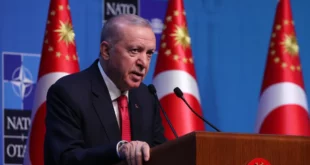
Read More »Turkey Submits Long-Waited PKK Disarmament Law To Parliament
Key Takeaways:New framework law targets PKK disarmament: Turkey’s parliament received a comprehensive bill that provides the legal basis for the Kurdistan Workers’ Party’s dissolution, weapon surrender and related judicial procedures after four decades of conflict.Broad political support but not unanimous: The draft, backed by the ruling AKP, MHP, pro-Kurdish DEM …
Read More »Can The US And Europe Cooperate In Africa? – Analysis
Key Takeaways:Africa’s demographic surge will reshape global influence: By 2050, Africa’s population is projected to reach nearly 2.8 billion (28% of the world total), driven by a youthful median age of about 25 and rapid urbanization rising to 65%, positioning the continent as a major engine of future economic growth …
Read More »Spain: Balancing Openness, Risk Management And Industrial Strategy In Dealing With China’s Technological Rise – Analysis
Key Takeaways:Spain pursues selective engagement with Chinese technology: Madrid balances opportunity and risk by limiting Chinese suppliers in sensitive 5G core networks while continuing to rely on them in radio access, photovoltaics, and storage, and by attracting EV and battery investment under industrial conditions.Chinese investment is treated as a tool …
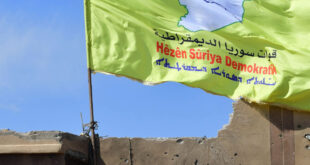
Read More »High-Level Syrian–Kurdish Summit: Strategic Implications for Economic Integration and SDF Transition
Syrian President Ahmad Al-Sharaa’s meeting with Nechirvan Barzani, President of the Kurdistan Region of Iraq (KRI), at the People’s Palace in Damascus marks a notable inflection point in Syrian–Kurdish relations and a broader recalibration of regional policy. Barzani’s first official visit to Syria since the fall of the Assad regime …
Read More »Political Calculations Drive Potential Engagement Between Syrian Leadership and Hezbollah Despite Legacy of Conflict – The Syrian Observer
Analysts argue that regional pressures, escalating security concerns in southern Lebanon, and growing diplomatic isolation have pushed Hezbollah to explore new political avenues Hezbollah—designated by several governments as a violent extremist organization responsible for grave harm and human rights violations—has re-entered Syrian political discourse amid reports of possible diplomatic communication …
Read More »Athens vs Brussels: How National Interests Shape EU Sanctions Policy
The European Union agreed on its 21st sanctions package against Russia on July 23, 2026, after weeks of difficult negotiations. The European Union agreed on its 21st sanctions package against Russia on July 23, 2026, after weeks of difficult negotiations. The package adds 32 Russian banks to the transaction ban …
Read More »Athens vs Brussels: How National Interests Shape EU Sanctions Policy
The European Union agreed on its 21st sanctions package against Russia on July 23, 2026, after weeks of difficult negotiations. The European Union agreed on its 21st sanctions package against Russia on July 23, 2026, after weeks of difficult negotiations. The package adds 32 Russian banks to the transaction ban …
Read More »Ceuta : une revanche des États-Unis et d’Israël contre l’Espagne ? La migration instrumentalisée comme arme par procuration
La traversée massive et soudaine vers l’enclave espagnole de Ceuta, en Afrique du Nord, soulève des questions que l’Europe ne peut plus se permettre de réduire à «une crise migratoire de plus». Le timing, le comportement du Maroc et l’alignement stratégique croissant entre Rabat, Washington et Tel-Aviv laissent entrevoir autre …
Read More »
Eurasia Press & News